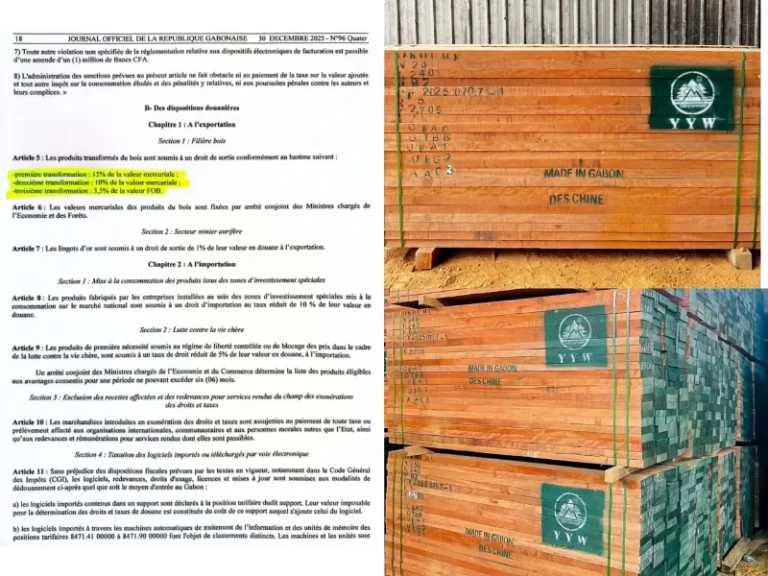

In recent years, the African timber industry has been undergoing continuous structural adjustments. Changes in export policies, processing requirements, and regulatory frameworks across key producing countries are gradually reshaping how African hardwood enters the global market.
Rather than isolated policy decisions, these adjustments reflect broader market signals — including sustainability governance, value-added processing, and long-term resource management. For international buyers, understanding these developments is becoming increasingly important for supply planning and sourcing strategy.
Export Policy Adjustments as Market Indicators
African timber-exporting countries such as Gabon, Congo, and Cameroon have introduced various measures aimed at encouraging local processing and improving traceability. These include revised export duties, processing-level classifications, and stricter documentation requirements.
Such adjustments do not only affect export procedures; they also influence cost structures, lead times, and product availability across different hardwood species. For buyers relying on African hardwood, these changes highlight the importance of working with suppliers who closely follow regulatory updates and adapt operational processes accordingly.
Shifting Supply Dynamics in African Hardwood
As policies increasingly favor processed timber over raw material exports, supply dynamics continue to evolve. Kiln drying, grading, packaging, and warehouse preparation are becoming standard expectations rather than optional value-added services.
This shift signals a gradual move toward more standardized, export-ready hardwood supply chains. For manufacturers and distributors, this can offer greater consistency and predictability — provided that sourcing partners maintain stable processing capacity and compliance awareness.

Implications for International Buyers
From a buyer’s perspective, market adjustments often translate into indirect impacts rather than immediate disruptions. Changes may affect pricing trends, shipment scheduling, or species availability over time, especially for widely traded African hardwoods.
Proactive buyers increasingly monitor industry updates not to react to short-term fluctuations, but to improve long-term procurement planning. Understanding market signals allows importers to align inventory cycles, production schedules, and logistics strategies with evolving supply conditions.
Transparency and Information Sharing
In an environment shaped by policy evolution and regulatory refinement, transparent communication becomes a key factor in supply reliability. Timber suppliers who actively share industry information, processing updates, and market observations help reduce uncertainty across the supply chain.
Rather than focusing solely on transactions, information-driven cooperation supports sustainable partnerships between African producers and international buyers.
Conclusion
African timber export adjustments should be viewed as part of a broader market transformation rather than isolated regulatory events. For global hardwood buyers, staying informed about these changes offers valuable insight into future supply patterns, operational expectations, and sourcing stability.
Hong Kong Yueyou Wood continues to share industry knowledge and market observations related to African hardwood supply, supporting international partners with timely information and professional insight.
For more industry updates and timber knowledge, please visit www.yywtimber.com.