Key Takeaways: The Sonic Signature of Aged Padauk
- Acoustic Velocity: Aged Padauk exhibits exceptional sound velocity, often rivaling Brazilian Rosewood due to hemicellulose crystallization over time.
- Stability & Reliability: The aging process significantly reduces equilibrium moisture content (EMC), minimizing the risk of warping or cracking in finished instruments.
- Tonal Spectrum: Known for a “glassy” tap tone with a robust low-mid response and brilliant high-frequency overtones.
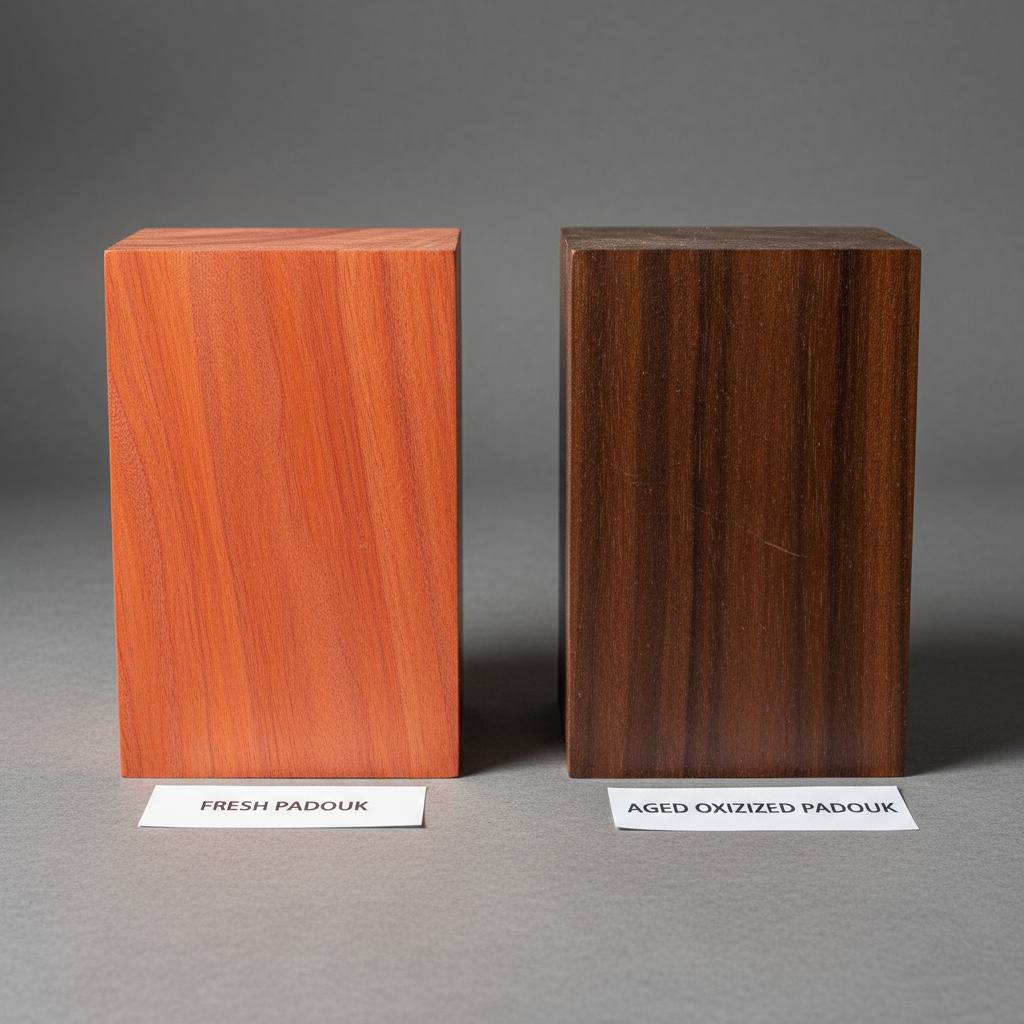
- Oxidation Esthetics: Naturally transitions from vermilion orange to a deep, sophisticated maroon-brown, requiring specific finishing techniques to maintain clarity.
In the realm of high-fidelity luthiery and antique restoration, the selection of tonewood is not merely a structural decision—it is an acoustic engineering challenge. While traditional choices like Indian Rosewood and Mahogany dominate the market, Aged Padauk Wood (Pterocarpus soyauxii) has emerged as a premier choice for luthiers seeking uncompromising tonal projection and dynamic range.
For the professional luthier, understanding the electrochemical and physical changes that occur in Padauk during the aging process is critical. This article provides a technical deep-dive into why aged Padauk is superior to fresh stock, analyzing its density, damping factors, and application in high-end instrumentation.
The Physics of Aging: Why Time Matters for Padauk
Freshly cut Padauk is vibrant and stable, but aged Padauk operates on a different acoustic plateau. The superiority of aged wood stems from cellular changes that occur over decades of air drying or controlled seasoning. This is not simply about moisture loss; it is about structural polymerization.
Hemicellulose Degradation and Crystallization
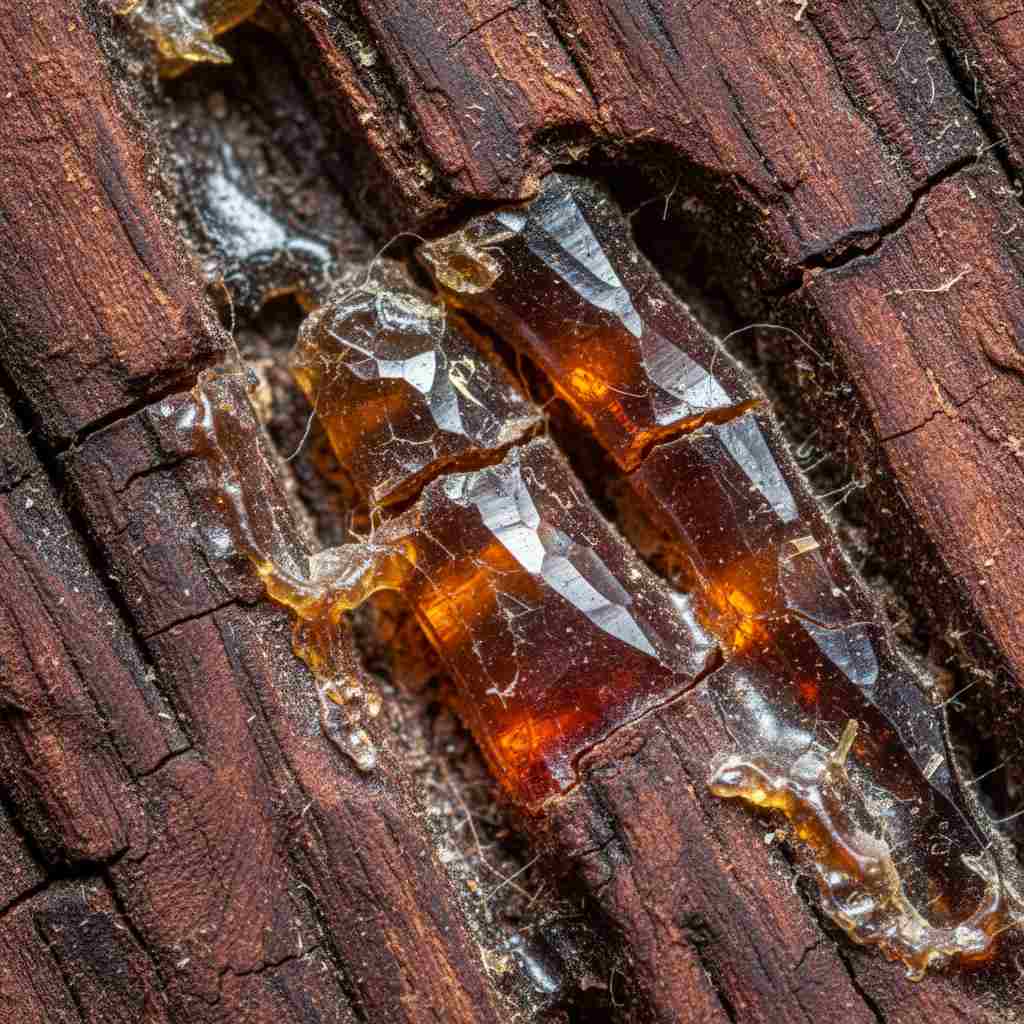
Over extended periods, the hemicellulose within the wood’s cell walls naturally degrades and volatile oils crystallize (resin polymerization). This process results in a material that is lighter in weight but retains its structural stiffness. In acoustic engineering terms, this increases the stiffness-to-weight ratio, a primary determinant of a soundboard or back-plate’s responsiveness.
For the audiophile, this translates to improved transient response. The energy from a plucked string transfers through the bridge and into the body with less resistance (impedance), allowing the note to bloom faster and sustain longer.
Technical Comparison: Aged Padauk vs. The Standards
To quantify the value of Aged Padauk, we must benchmark it against industry-standard tonewoods using specific gravity and hardness metrics. Padauk is frequently cited as a viable—and often superior—alternative to Indian Rosewood.
| Property | Aged Padauk (Pterocarpus soyauxii) | E. Indian Rosewood (Dalbergia latifolia) | Honduran Mahogany (Swietenia macrophylla) |
|---|---|---|---|
| Average Dried Weight | 745 kg/m³ | 830 kg/m³ | 590 kg/m³ |
| Janka Hardness | 1,725 lbf | 2,440 lbf | 900 lbf |
| Modulus of Rupture | 115.0 MPa | 125.0 MPa | 78.0 MPa |
| Elastic Modulus | 14.00 GPa | 12.50 GPa | 10.00 GPa |
| Tap Tone Character | Glassy, Long Sustain, Metallic Ring | Dark, Reverb-heavy, Warm | Woody, Focused Mid-range, Fast Decay |
| Damping Factor (Q) | Low Damping (High Q) | Medium Damping | High Damping (Low Q) |
Analysis of the Data
The Q-Factor Advantage:
Aged Padauk exhibits a remarkably low damping factor (High Q). When tapped, the wood rings like a marimba bar—fitting, as Padauk wood is the primary wood used for high-end marimbas. For guitar backs and sides, this means the wood reflects energy efficiently rather than absorbing it, contributing to a loud, articulate instrument with distinct separation between notes.
Weight vs. Stiffness:
Notice that Aged Padauk is lighter than Indian Rosewood (745 vs. 830 kg/m³) yet possesses a higher Elastic Modulus (14.00 GPa vs. 12.50 GPa). This is the “Holy Grail” for luthiers: lighter wood that is stiffer creates a more responsive, resonant air chamber.
Workability and Restoration Considerations
Working with aged Padauk requires sophisticated handling. While the acoustic payoff is immense, the material properties present challenges for the manufacturing and restoration process.
Grain Interlock and Tearout
Padauk features a unique interlocking grain structure. In aged wood, where the fibers have become more brittle due to the loss of bound water, planing can result in tearout if not executed with sharp blades and correct angles. We recommend abrasive thickness sanding over planing for final dimensioning of aged plates to preserve surface integrity.
The Oxidation Trajectory
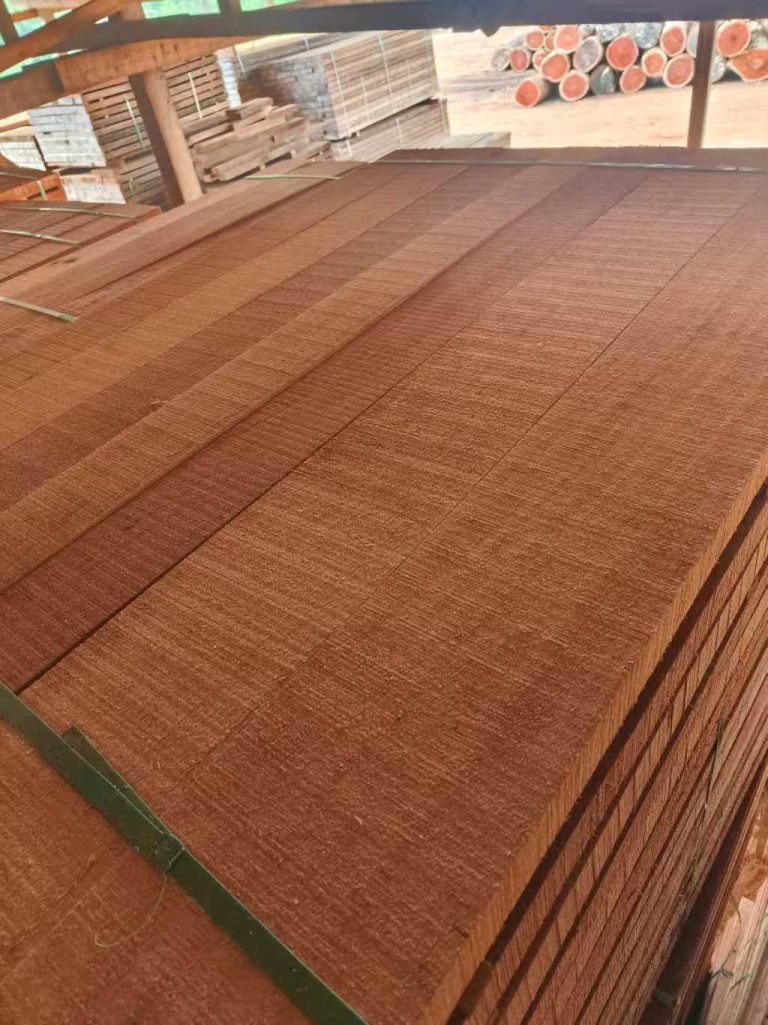
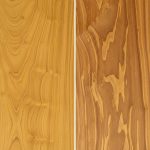
A distinctive feature of Padauk is its photo-reactivity. Freshly surfaced aged Padauk will appear a vivid, almost synthetic vermilion orange. Over time, UV exposure oxidizes the surface to a chocolate-brown or purplish-maroon hue.
For antique restorers, matching a new piece of Padauk to a vintage instrument requires understanding this timeline. You cannot color-match fresh wood to 50-year-old wood immediately. Using UV-inhibiting lacquer is essential if the goal is to retard this darkening, although many audiophiles prefer the aesthetic of the fully oxidized, dark brown patina which closely resembles premium Rosewood.
Luthier’s Guide: Pairing Aged Padauk
To maximize the potential of Aged Padauk, it must be paired with the correct soundboard (top wood). The goal is to balance Padauk’s high-frequency brilliance with warmth.
- Western Red Cedar: An excellent pairing. The warmth and immediate response of Cedar tame the brightness of Padauk, creating a fingerstyle guitar with rich overtones and deep lows.
- Sitka Spruce: Creates a powerhouse strummer. The stiffness of Spruce combined with the reflective nature of Padauk results in high headroom and projection.
- Engelmann Spruce: Offers a middle ground, adding complexity to the midrange for classical or sophisticated acoustic builds.
Frequently Asked Questions
While subjective, many blind listening tests suggest Aged Padauk rivals Brazilian Rosewood in terms of “glassiness” and sustain. Padauk tends to be slightly brighter, whereas Brazilian Rosewood has a signature reverb-like darkness. For the price, Aged Padauk is arguably the superior value engineering choice.