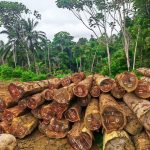
Dabema is a hardwood species originating from Central and West Africa, recognized by international buyers for its balanced density, stable drying performance, and warm natural coloration. In the global timber trade, Dabema is generally classified as a medium-density African hardwood, positioned between lighter species such as Okoume and heavier structural woods like Azobe. This makes it suitable for both decorative and semi-structural wood processing industries.
Appearance and Material Characteristics
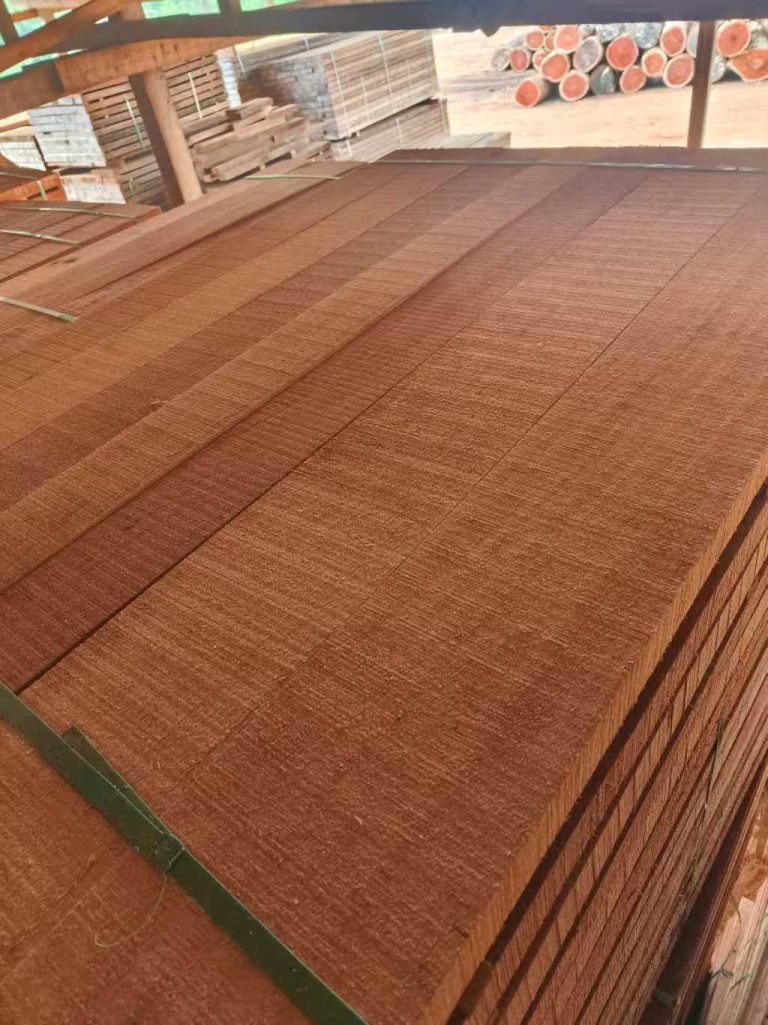
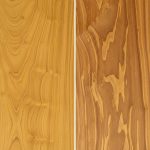
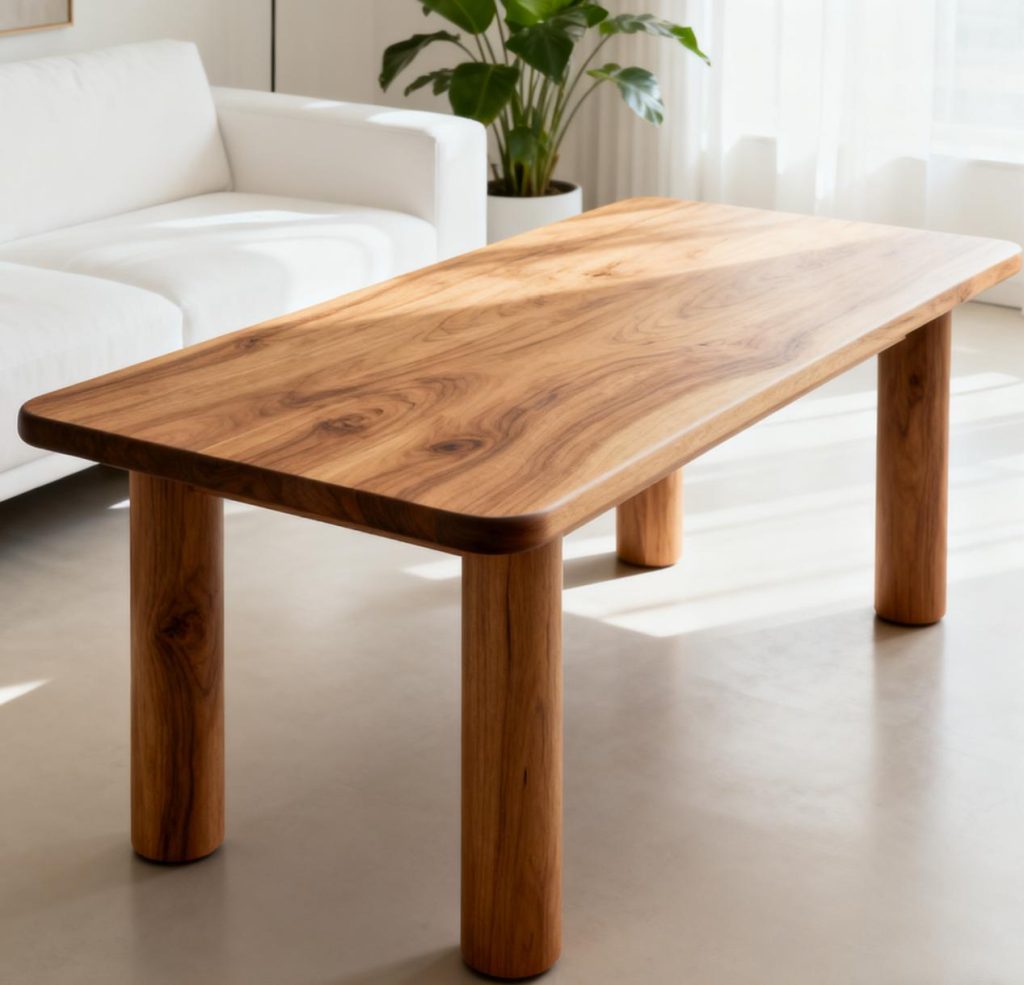
The heartwood of Dabema varies from light yellow-brown to reddish brown, and may present subtle ribbon-like patterns due to interlocked grain. When finished with clear varnish or natural oil, Dabema reveals a warm tone that aligns well with contemporary interior design preferences.
From a technical perspective, Dabema offers:
- Medium air-dry density (approx. 650–750 kg/m³)
- Moderate bending and mechanical strength
- Good machining and surface finishing
- Interlocked grain that enhances visual depth
These characteristics make Dabema a competitive option for manufacturers seeking a cost-effective alternative to certain European and North American hardwoods while maintaining aesthetic value.
Moisture Control and Drying Performance
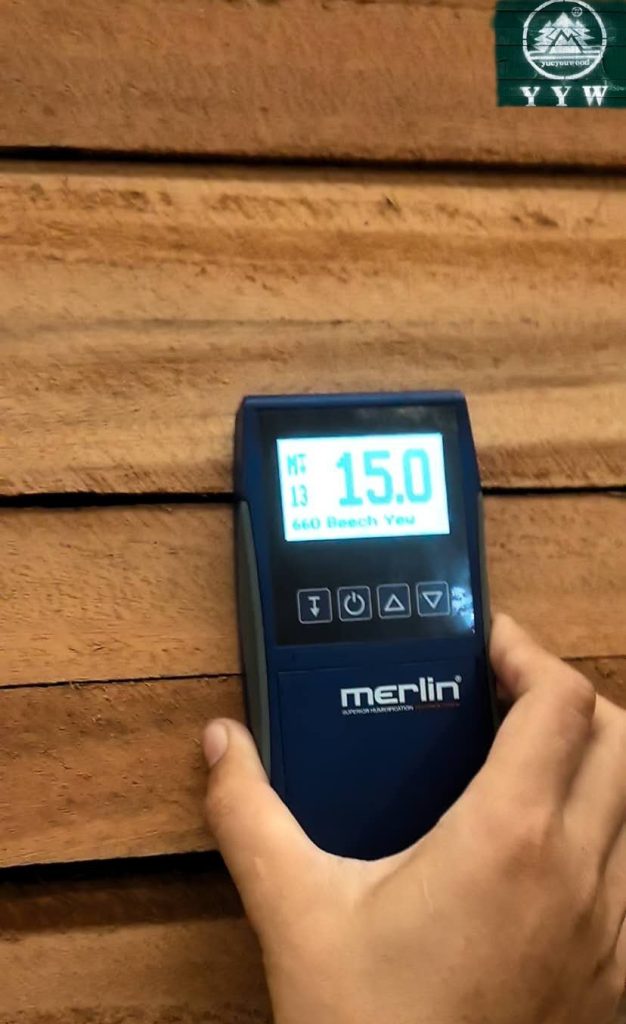
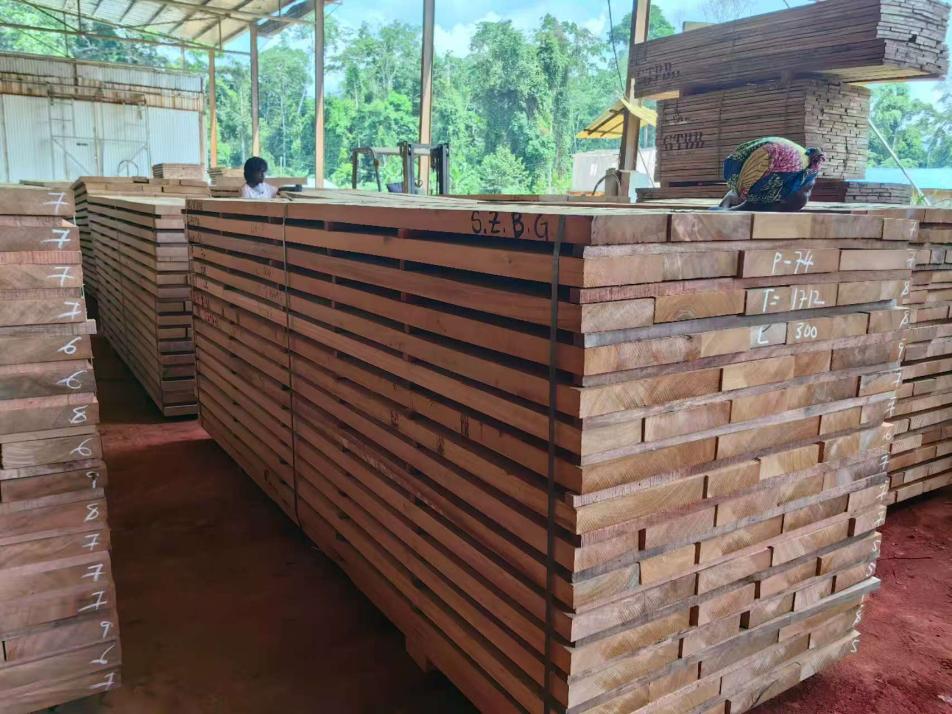
Moisture content is one of the most important parameters in international hardwood production and export. Dabema responds well to both air drying (AD) and kiln drying (KD), offering reliable stability and reduced risks of warping or surface stress.
The ability to achieve stable moisture levels is critical for downstream processing, especially for:
✔ Furniture joinery
✔ Flooring components
✔ Interior panels and mouldings
✔ Solid door and frame production
Stable moisture behavior helps improve final product accuracy and reduces defects such as cracking or distortion.
Industrial Applications
Due to its balanced material properties, Dabema is widely used in woodworking and interior finishing industries. Common applications include:
- Indoor furniture and cabinetry
- Solid doors and door frames
- Staircase components
- Flooring and parquet
- Interior joinery and decorative woodwork
- Veneer production and laminated panels
Many OEM export factories use Dabema as a value-oriented substitute for more expensive imported hardwoods, without compromising functionality or visual appeal.
Conclusion
Overall, Dabema combines material stability, machining friendliness, and pleasing natural aesthetics, making it a reliable hardwood choice for manufacturers, joinery workshops, and interior fit-out companies. As demand for stable, medium-density hardwoods continues to grow, Dabema remains an attractive sourcing option for global buyers.
Hong Kong Yueyou Wood continues to share knowledge and supply African hardwood species including Dabema, Okoume, Sapelli, Iroko, Movingui, Padouk, Zebrano, Beli, Azobe, and more.
Contact Us
For more information about African hardwood species or Dabema specifications, please contact us:
Email: Gemma@yueyouwood.com
WhatsApp/Tel: +86 18933092596
Website: www.yywtimber.com