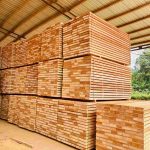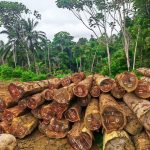
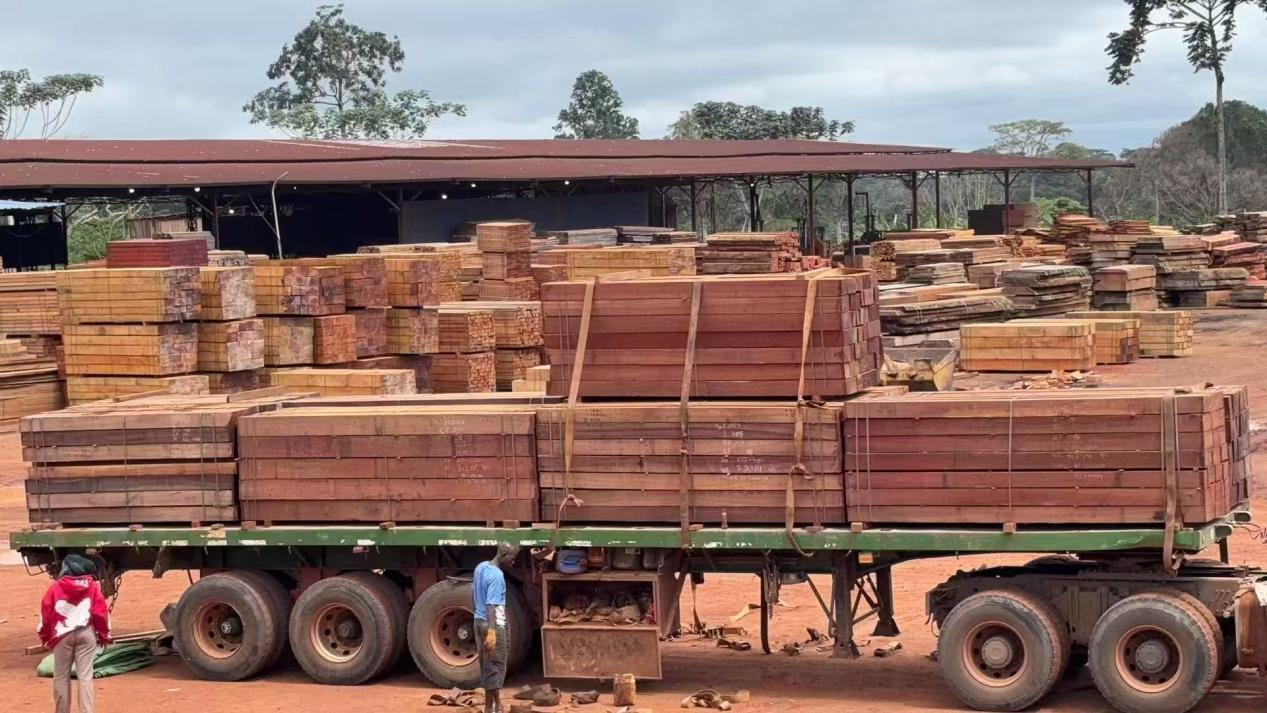
African red hardwoods are highly valued in the global timber market for their striking appearance, exceptional durability, and wide industrial applicability. Among them, Padouk Timber and Azobe Timber stand out as two representative species, each serving different functional and commercial purposes.
This article provides a professional comparison of Padouk and Azobe in terms of appearance, physical properties, drying performance, and applications, helping buyers and manufacturers choose the most suitable material for their projects.
Origin and Classification
Padouk Timber (scientific name: Pterocarpus soyauxii), also known as African Padauk, originates mainly from Central and West Africa. It is classified as a medium-to-high density decorative hardwood and is widely used in furniture, flooring, and interior applications.
Azobe Timber (scientific name: Lophira alata), also known as Ekki, is a very high-density African hardwood sourced primarily from West and Central Africa. In international trade, Azobe is positioned as a heavy-duty structural timber, renowned for its extreme strength and resistance to harsh environments.
Appearance and Material Characteristics
Padouk Timber
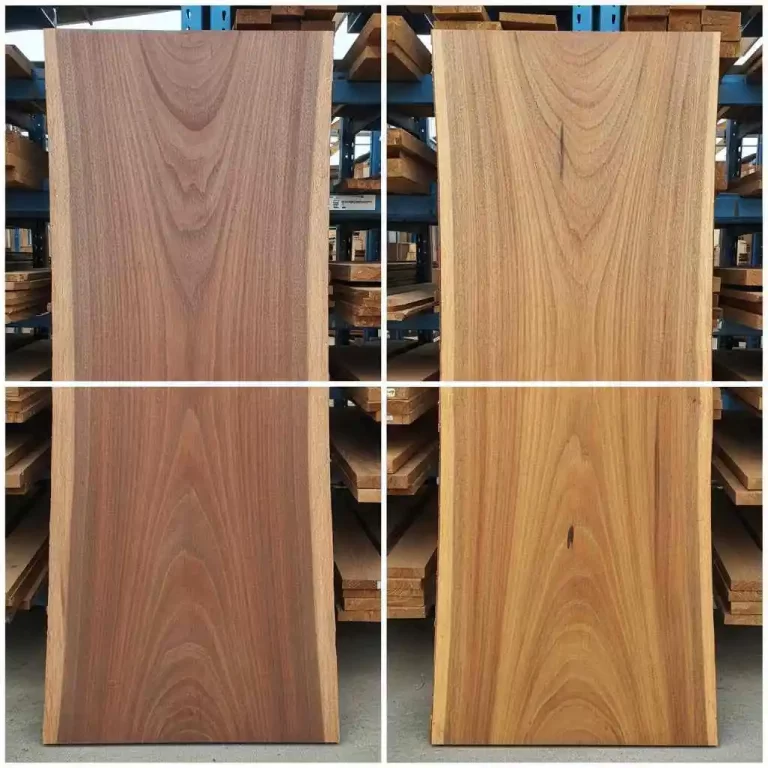
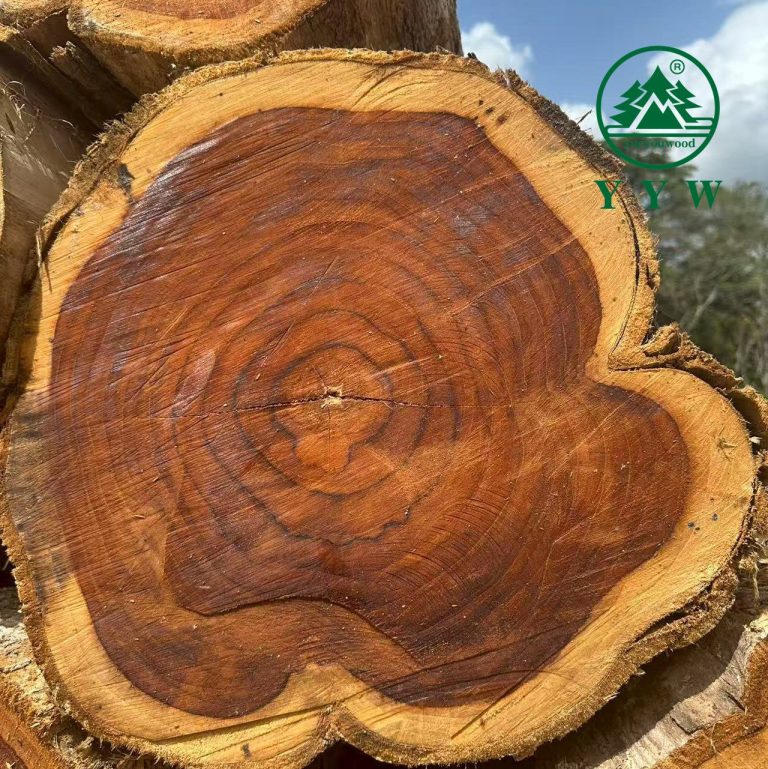
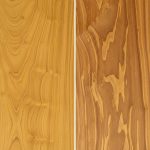
Padouk is best known for its vivid red to orange-red heartwood, which gradually darkens to a deeper reddish-brown over time. The grain is generally straight to interlocked, with a medium to coarse texture that offers strong decorative appeal.
Key technical characteristics of Padouk Timber include:
- Air-dry density: approx. 700–800 kg/m³
- Good dimensional stability after proper drying
- Excellent machining and polishing performance
- Strong natural color, often used without staining
Padouk’s visual impact makes it especially attractive for high-end interior and decorative wood products where aesthetics play a key role.
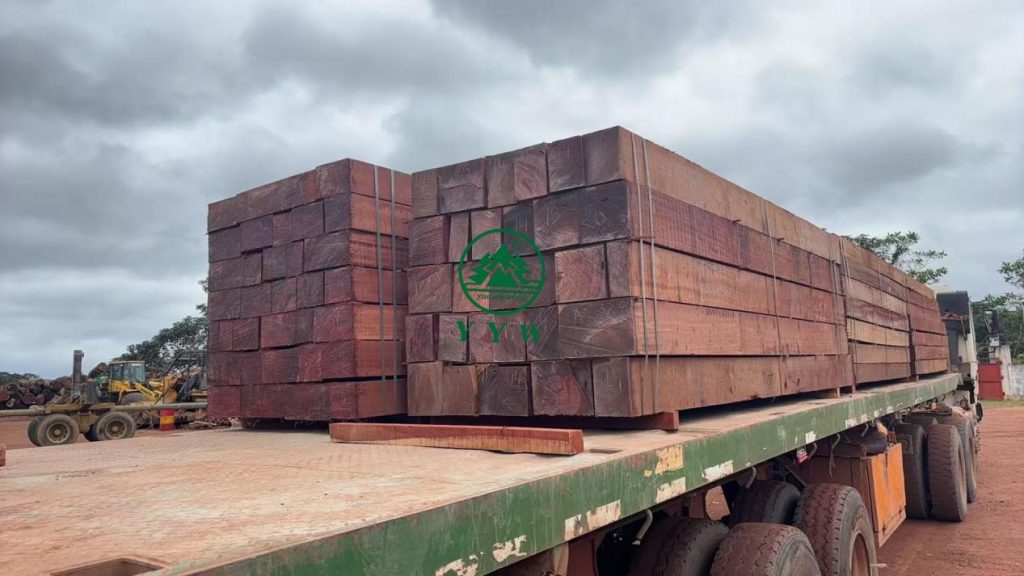
Azobe Timber
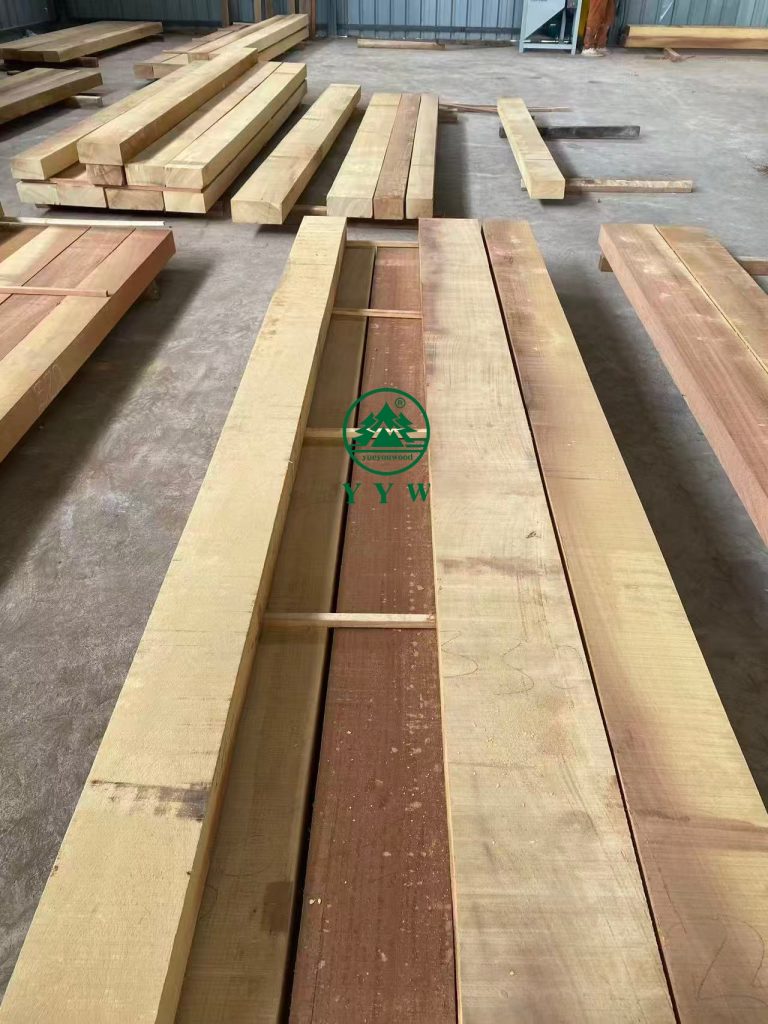
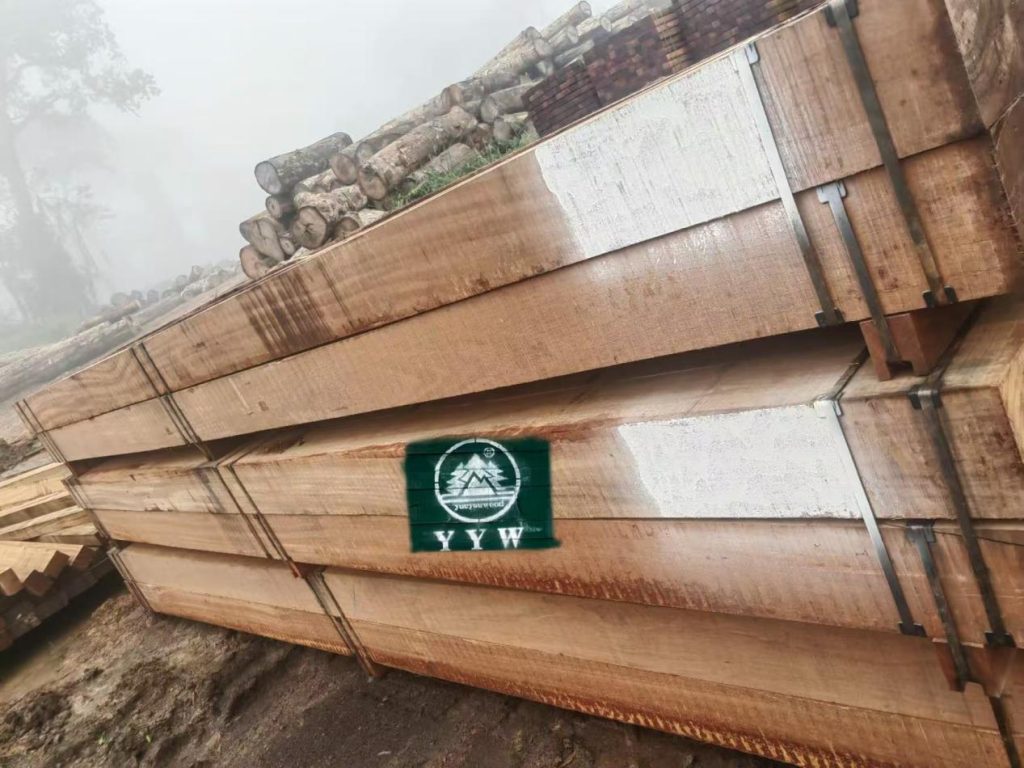
Azobe features a dark reddish-brown to purplish-brown heartwood, often much darker and more uniform than Padouk. The grain is typically interlocked, and the texture is coarse, reflecting its extremely dense structure.
From a technical perspective, Azobe offers:
- Very high air-dry density (approx. 1,000–1,100 kg/m³)
- Exceptional compression and bending strength
- Outstanding resistance to moisture, insects, and decay
- Extremely hard and heavy, requiring powerful machining tools
Azobe prioritizes performance and durability over decorative refinement, making it ideal for heavy-load applications.
Moisture Control and Drying Performance
Proper moisture control is essential for both species, though their drying behaviors differ significantly.
Padouk Timber responds well to both kiln drying (KD) and air drying (AD). With professional drying schedules, Padouk achieves stable moisture content with low risk of warping or cracking, which is critical for precision woodworking and furniture manufacturing.
Azobe Timber, due to its extremely high density and natural oil content, dries very slowly. Air drying is commonly preferred, and kiln drying requires specialized technical control. Once stabilized, however, Azobe offers exceptional long-term dimensional stability, even in outdoor or marine environments.
Industrial and Commercial Applications
Typical Applications of Padouk Timber
Thanks to its balance of beauty and performance, Padouk is widely used in:
- High-end furniture and cabinetry
- Interior flooring and parquet
- Stair components and handrails
- Decorative panels and solid doors
- Musical instruments and specialty wood products
Padouk is especially favored by manufacturers targeting premium decorative markets.
Typical Applications of Azobe Timber
Azobe is primarily selected for its unmatched strength and durability, commonly used in:
- Marine construction and harbor works
- Bridges, sleepers, and heavy-duty beams
- Outdoor decking and industrial flooring
- Water engineering and coastal protection projects
Its ability to withstand extreme mechanical stress and constant moisture makes Azobe a strategic material for infrastructure projects.
Padouk or Azobe: How to Choose?
The choice between Padouk and Azobe depends on project requirements:
Choose Padouk when visual appeal, smooth finishing, and interior use are priorities.
Choose Azobe when maximum strength, load-bearing capacity, and outdoor durability are critical.
Both species represent the high-quality standards of African hardwoods, serving different segments of the global timber market.
Conclusion
Padouk Timber and Azobe Timber each demonstrate the diversity and strength of African red hardwood resources. Padouk excels in decorative applications with its vibrant color and stable processing performance, while Azobe dominates heavy-duty and outdoor environments with its extraordinary strength and resistance.
Understanding these differences allows buyers and manufacturers to optimize material selection, cost efficiency, and long-term performance.
Hong Kong Yueyou Wood continues to supply and share professional knowledge on African hardwood species including Padouk, Azobe, Wenge, Okoume, Sapelli, Iroko, Movingui, Zebrano, Beli, and more.
Contact Us
For more information about Padouk Timber, Azobe Timber, or other African hardwood specifications, please contact us:
Email: Gemma@yueyouwood.com
WhatsApp / Tel: +86 18933092596
Website: www.yywtimber.com