Key Takeaways
- Risk Mitigation: FSC Certified Okoume is the primary defense against legal penalties under the EUTR and the incoming EUDR (EU Deforestation Regulation).
- Supply Integrity: Valid Chain of Custody (CoC) certification guarantees traceability from Gabonese forest concessions to European ports.
- Market Access: Eco-conscious construction and marine industries in Europe require documented sustainability for premium projects.
- Technical Superiority: Properly managed FSC concessions often yield higher quality logs due to systematic harvesting cycles and older growth retention.
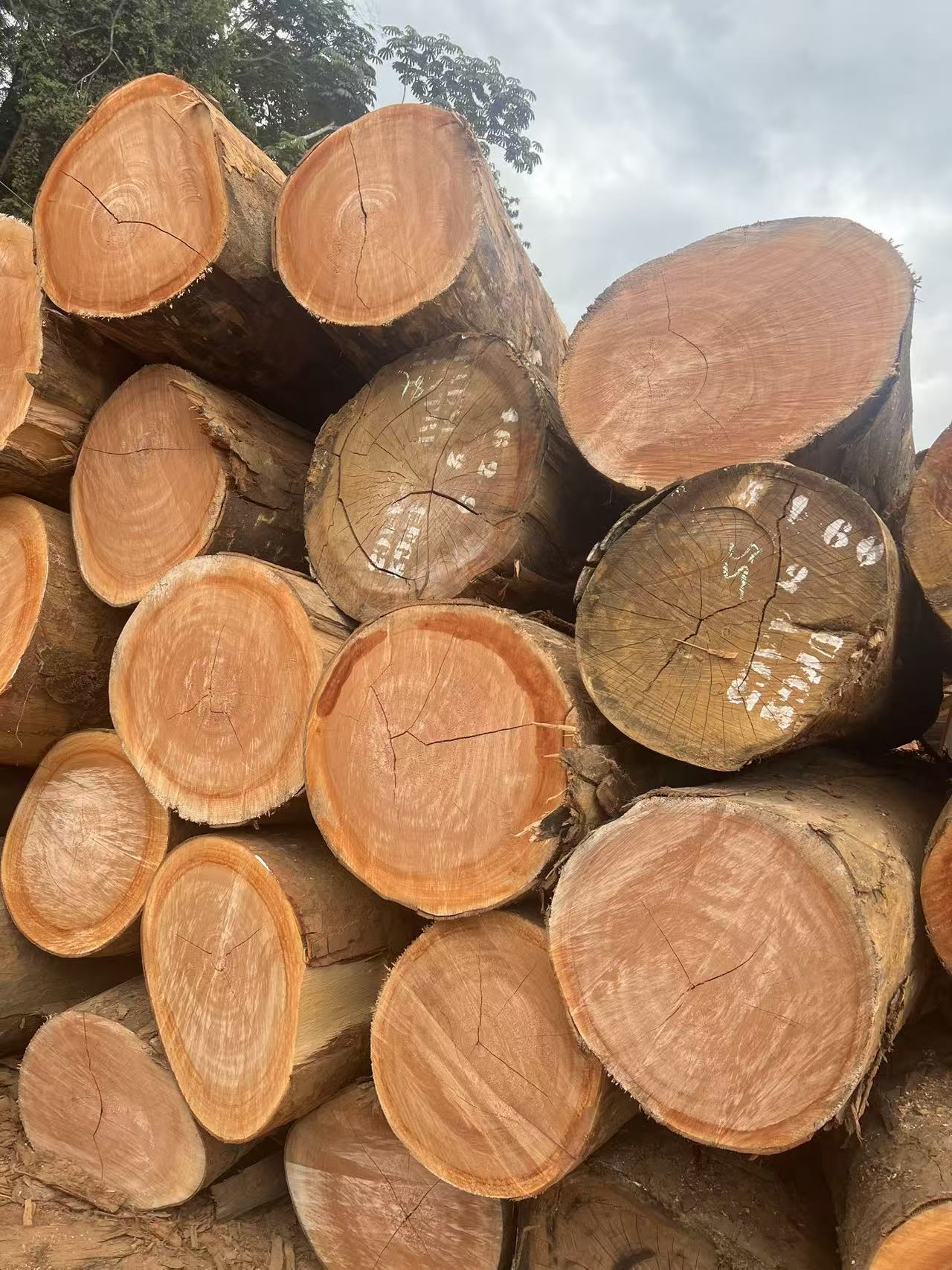
In the global timber trade, particularly within the corridor between West Africa and Europe, Okoume (Aucoumea klaineana) remains the benchmark species for plywood manufacturing, marine applications, and decorative veneers. However, the modern timber market is no longer driven solely by density ratios and grain aesthetics. Today, the currency of the trade is verification.
For European wholesalers and importers, sourcing FSC Certified Okoume is not merely an ethical preference—it is a strategic necessity. With the tightening of the European Union Timber Regulation (EUTR) and the imminent enforcement of the EU Deforestation Regulation (EUDR), the liability for non-compliance has shifted heavily onto the importer. At YYW Timber, we recognize that our partners require more than just wood; they require a fully auditable, risk-free supply chain.
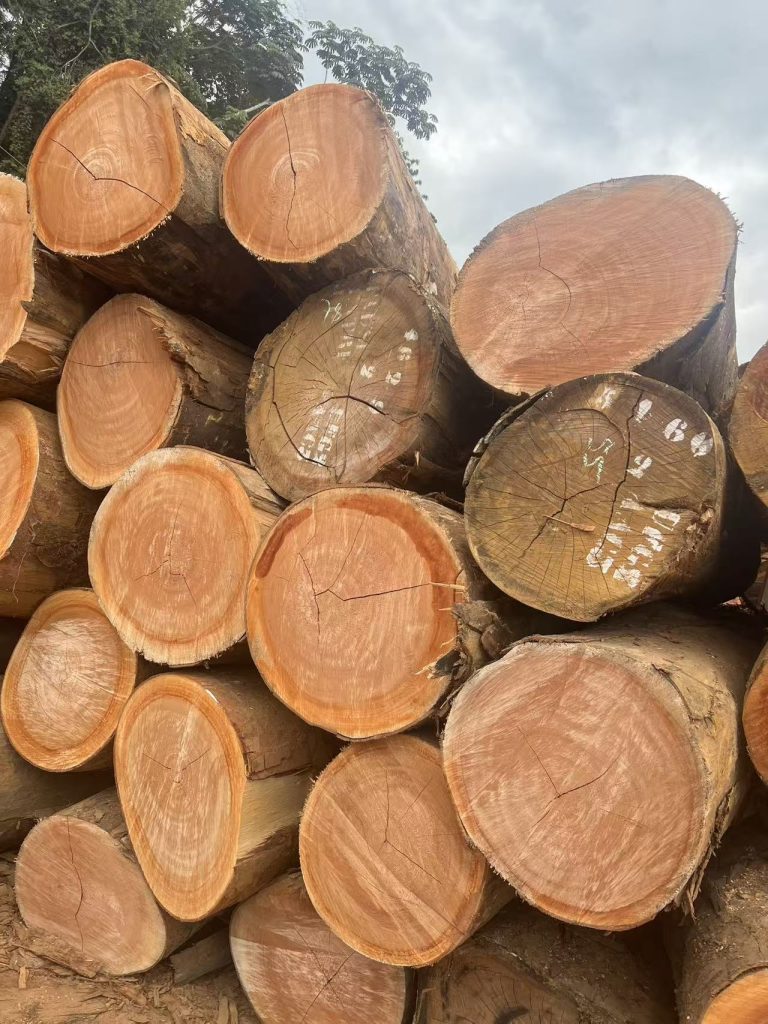
The Regulatory Landscape: EUTR and EUDR Compliance
The transition from the EUTR to the more stringent EUDR represents a paradigm shift in how African hardwoods must be documented. Wholesalers dealing in Okoume must understand the distinction to protect their operations.
From Due Diligence to Geolocation
Under EUTR, the focus was primarily on legality—ensuring the timber was harvested according to the laws of the country of origin (e.g., Gabon or Congo). However, the EU Deforestation Regulation (EUDR) mandates that operators must prove that the product is deforestation-free. This requires precise geolocation coordinates of the plot of land where the raw material was produced.
FSC Certification serves as a critical tool in this compliance framework. While FSC certification alone does not automatically replace EUDR due diligence, the Forest Stewardship Council has aligned its standards to provide the necessary data points, including geolocation and time-of-harvest data, effectively insulating importers from regulatory friction.
Understanding FSC Standards in the Okoume Trade
Not all “certified” wood carries the same weight. When sourcing Okoume from West Africa, it is vital to distinguish between the types of claims found on invoices and bills of lading.
- FSC 100%: The gold standard. All timber in the product comes from an FSC-certified forest. For high-end architectural joinery and marine plywood, this is the preferred specification.
- FSC Mix: The product contains a mixture of FSC-certified wood, recycled material, and/or “FSC Controlled Wood.” This is common in mass-produced plywood sheets where volume is critical.
- FSC Controlled Wood: Wood that is not fully certified but has been screened to exclude unacceptable sources, such as illegally harvested wood or wood from forests where high conservation values are threatened.
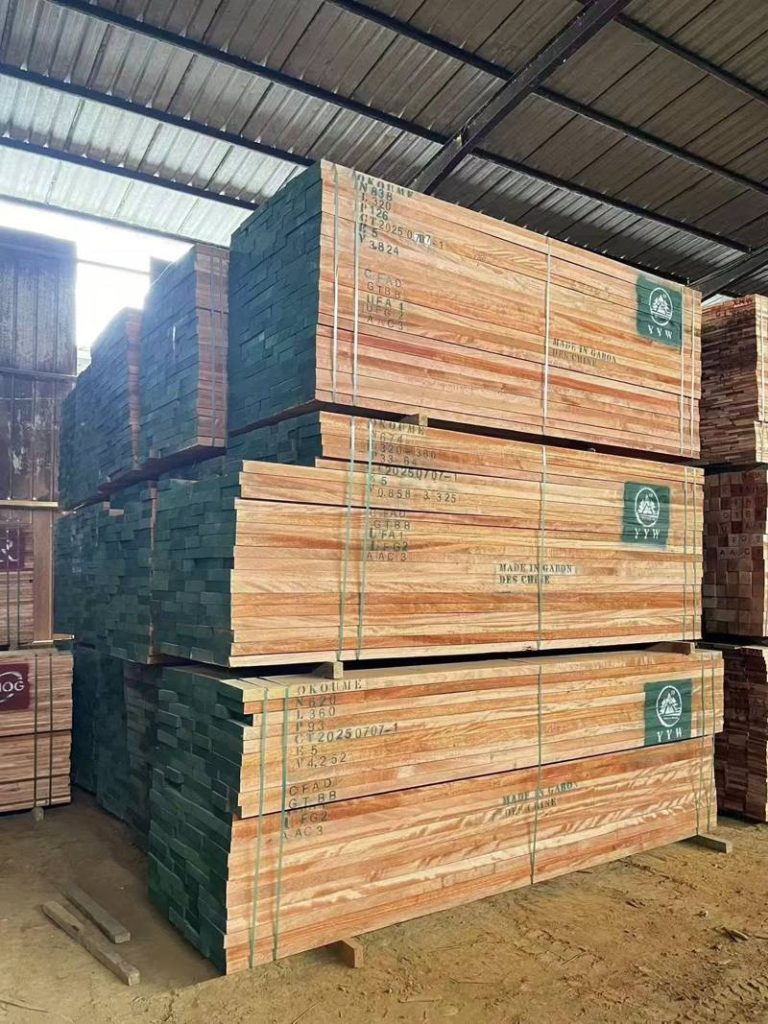
At YYW Timber, we emphasize FSC 100% for our premium Okoume exports to ensure our European partners face zero ambiguity at customs.
Technical Superiority of Managed Okoume Forests
There is a prevailing myth that sustainable forestry compromises volume or quality. In reality, FSC forest management plans (FMPs) in Gabon enhance the technical consistency of the timber.
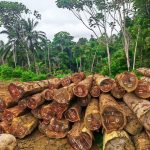
Aucoumea klaineana thrives in light-demanding environments. Managed concessions practice selective logging which opens the canopy systematically, allowing younger Okoume trees to regenerate robustly. Furthermore, the harvest cycle (often 25-30 years) ensures that felled trees have reached optimal maturity.
Physical Properties and Grading Implications
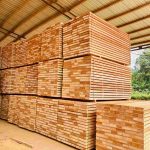
FSC Certified Okoume sourced through YYW Timber meets rigorous grading standards (typically following SATA or ATIBT rules):
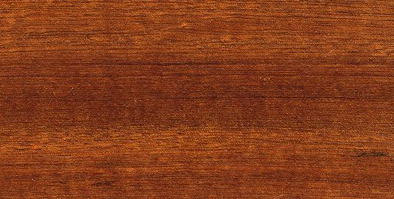
- Density: Average 430 kg/m³ at 12% moisture content.
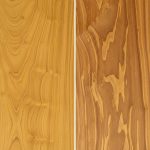
- Grain: Straight to slightly interlocked, providing the famous “peeling” capability that makes Okoume the world’s best species for rotary veneer.
- Stability: High dimensional stability, essential for external applications when properly treated.
Supply Chain Transparency: The Chain of Custody (CoC)
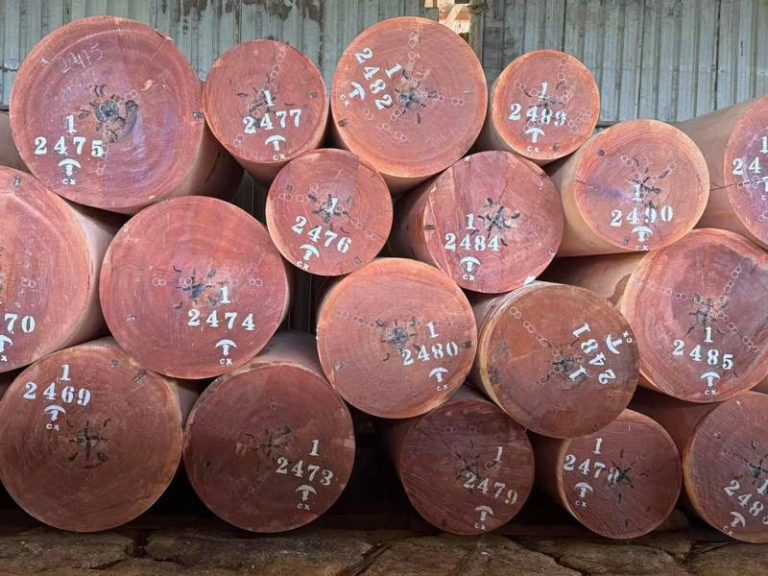
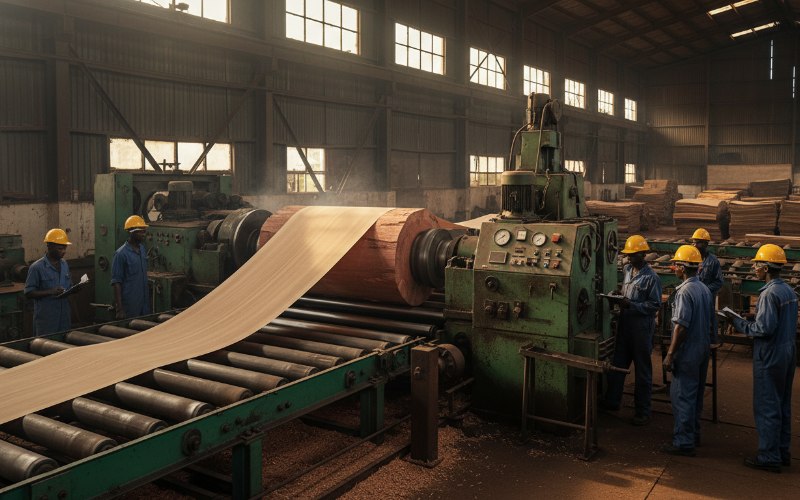
The Chain of Custody is the path taken by products from the forest, or in the case of recycled materials, from the reclamation site to the consumer. For Okoume, this chain is complex, often involving transport from deep inland concessions to ports like Owendo.
| Feature | Non-Certified Supply Chain | FSC Certified Supply Chain (YYW Timber) |
|---|---|---|
| Traceability | Documents often limited to transport permits; gaps in forest origin. | Full CoC codes tracked from stump to container; digital barcode integration. |
| Legal Risk (EU) | High. Vulnerable to EUTR confiscation and fines. | Low. Documentation satisfies Due Diligence System (DDS) requirements. |
| Quality Consistency | Variable. May include immature trees or mixed species. | Standardized. Harvested at maturity according to silvicultural plans. |
| Market Price | Volatile; often lower spot price but higher risk cost. | Stable premium; reflects long-term contract reliability. |
The Role of Gabon in Sustainable Forestry
Gabon is the epicenter of the Okoume trade. The Gabonese government has taken aggressive steps to position the country as a leader in green forestry. In 2010, a ban on the export of raw logs was implemented to encourage local processing and value addition. Today, Special Economic Zones (SEZ) like Nkok are hubs for sustainable timber processing.
YYW Timber operates in alignment with these national directives. By processing Sawn Timber and Veneer locally within compliant facilities, we ensure that:
- Value is retained in Africa: Supporting local economies and skilled labor.
- Carbon Footprint is Reduced: We export finished or semi-finished goods (kiln-dried lumber, veneers) rather than heavy, moisture-laden raw logs, optimizing shipping efficiency.
- Verification is Simplified: Processing mills within the SEZ are subject to rigorous government and third-party monitoring.
For more detailed knowledge about Okoume, read the Complete Guide to Okoume Wood
Why Wholesalers Choose YYW Timber
For the European importer, the “cheapest” wood is often the most expensive in the long run once legal fees, delayed shipments, and rejected customs entries are factored in. YYW Timber offers a partnership based on predictability.
We provide full documentation dossiers with every shipment, including:
- FSC Claims clearly stated on Invoices and Delivery Notes.
- Valid Chain of Custody (CoC) Certificate numbers.
- CITES documentation (if applicable for mixed species shipments, though Okoume is currently CITES Appendix III in some contexts, standard trade relies heavily on national legality).
- Phytosanitary Certificates.
Frequently Asked Questions
Okoume (Aucoumea klaineana) is listed as Vulnerable on the IUCN Red List due to historical over-exploitation. This is exactly why sourcing FSC Certified Okoume is critical. Certification ensures that harvest rates do not exceed regrowth rates, protecting the species for future generations.