Key Takeaways for Compliance Officers
- Strict Adherence to the 2001 Forestry Code: All YYW Timber sourcing aligns with the Code Forestier, ensuring sustainable rotation and legal concession rights.
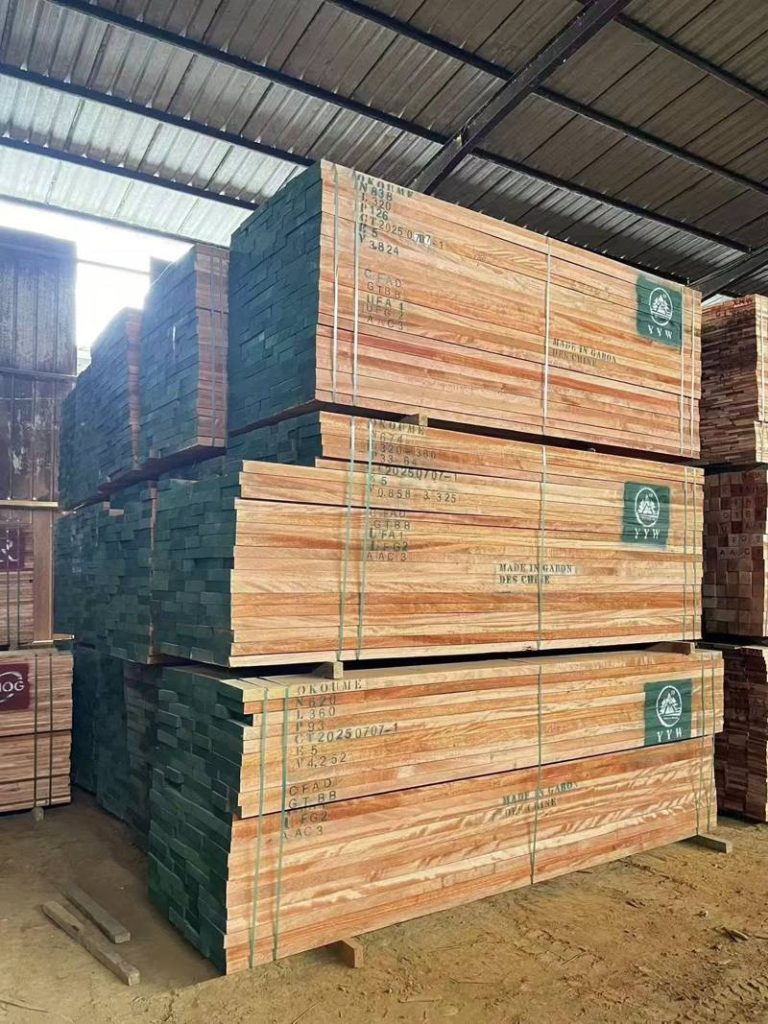
- The 2010 Log Export Ban: We exclusively export processed wood (Sawn Timber, Veneer, Log Cants) in compliance with Gabon’s industrialization mandate to maximize local value addition.
- EUTR & Lacey Act Compliance: Our Due Diligence System (DDS) provides full traceability from the forest stump to the shipping container, mitigating risk for EU and US importers.
- CITES Documentation: For species like Bubinga (Guibourtia), we manage all CITES Appendix II permits to guarantee legal trade without border seizures.
For global importers of African hardwood, the legal landscape is no longer just a regulatory hurdle—it is the foundation of business continuity. Gabon, home to some of the world’s most coveted hardwoods like Okoumé, Padauk, and Bubinga, enforces one of the strictest forestry governance frameworks in the Congo Basin. Navigating Gabon forestry laws requires more than just superficial paperwork; it demands a deep integration into the supply chain.
At YYW Timber, we recognize that our clients—ranging from compliance officers in the European Union to wholesale distributors in the United States—require absolute certainty. This guide details technical compliance frameworks, the specific documentation required for legal export, and how our internal auditing processes ensure zero-risk procurement.
The Regulatory Framework of Gabonese Forestry
Gabon’s approach to forestry is defined by a shift from extraction to sustainable management and local industrialization. Understanding the core statutes is essential for any importer verifying the legality of their supply.
The 2001 Forestry Code (Law 16/01)
The cornerstone of timber legality in Gabon is Law 16/01. Unlike outdated systems that allowed unchecked logging, this code introduced the concept of the Sustainable Management Concession (CFAD). Under this law, timber can only be harvested from concessions that have a government-approved management plan. This plan dictates:
- Rotation Cycles: Typically 25 to 30 years, ensuring forests regenerate before re-entry.
- Minimum Diameter Exploitation (DME): Specific regulations on the minimum size of a tree that can be felled to ensure juvenile trees remain standing.
- Inventory Assessments: Mandatory pre-harvest inventories to map biodiversity hotspots.
The Industrialization Mandate (2010 Log Ban)
In a landmark move to boost the local economy, Gabon banned the export of raw logs in 2010. This regulation fundamentally changed the trade. Importers can no longer buy raw logs; they must purchase processed products such as sawn timber, veneer, or plywood.
Impact on Importers: This ensures that any “raw log” offered on the international market claiming to be of Gabonese origin is, by definition, illegal (unless under very specific exceptional scientific quotas). YYW Timber operates strictly within the processing sector, often utilizing the Nkok Special Economic Zone (SEZ) for high-grade processing that meets FAS (First and Seconds) grading standards.
International Compliance: EUTR, Lacey Act, and CITES
Domestic compliance is the first step; international compliance is the goal. For our partners in the EU and USA, the risk of importing illegal timber includes massive fines, confiscation of stock, and reputational ruin. Here is how YYW Timber bridges the gap between Gabonese law and international statutes.
Aligning with the EUTR (EU Timber Regulation)
The EUTR requires operators to exercise due diligence. This involves three key elements: information access, risk assessment, and risk mitigation. Gabon has been actively engaged in the FLEGT-VPA (Forest Law Enforcement, Governance and Trade – Voluntary Partnership Agreement) process with the EU. While full FLEGT licensing is an ongoing journey, the alignment of Gabon’s traceability systems with FLEGT principles provides robust security for EUTR compliance.
Managing CITES Listed Species
Certain high-value species, specifically Bubinga (Guibourtia demeusei, G. pellegriniana, G. tessmannii) and Kevazingo, are listed under CITES Appendix II. This listing means trade is controlled to prevent overexploitation, not banned.
YYW Timber’s CITES Protocol:
- Verification: We verify that the quota for the specific species has not been exceeded for the harvest year.
- Permitting: We secure the CITES Export Permit from Gabonese authorities before the shipment leaves the port of Owendo.
- Import Coordination: We assist buyers in obtaining their CITES Import Permit, ensuring a seamless customs clearance process.
YYW Timber’s Technical Due Diligence System
Legality is proven through documentation. At YYW Timber, we maintain a comprehensive audit trail for every container. Below is the technical breakdown of the documents we curate to ensure the “chain of custody” remains unbroken.
| Document Name | French Terminology | Function & Verification Point |
|---|---|---|
| Forestry Concession Agreement | Contrat d’Aménagement et d’Exploitation | Proves the source forest is legally designated for logging by the government. |
| Annual Cutting Permit | Assiette Annuelle de Coupe (AAC) | Authorizes harvesting in a specific zone for the current year. Prevents out-of-boundary logging. |
| Road Waybill | Bordereau de Route | Tracks logs from the forest stump to the processing mill. Must match log markings. |
| Factory Entry/Exit Register | Registre d’Entrée/Sortie Usine | Verifies the transformation ratio (yield) to ensure no illegal logs were mixed during processing. |
| Certificate of Origin | Certificat d’Origine | Official document issued by the Chamber of Commerce or Water & Forests Ministry validating the source. |
| Phytosanitary Certificate | Certificat Phytosanitaire | Ensures wood is free from pests and meets the biosecurity standards of the importing country. |
Traceability Technology and TRACER
Modern compliance relies on technology. Gabon employs systems like TRACER (National Agency for National Parks) and private traceability services to monitor log movements. YYW Timber integrates these systems into our workflow.
How Traceability Works in Practice:
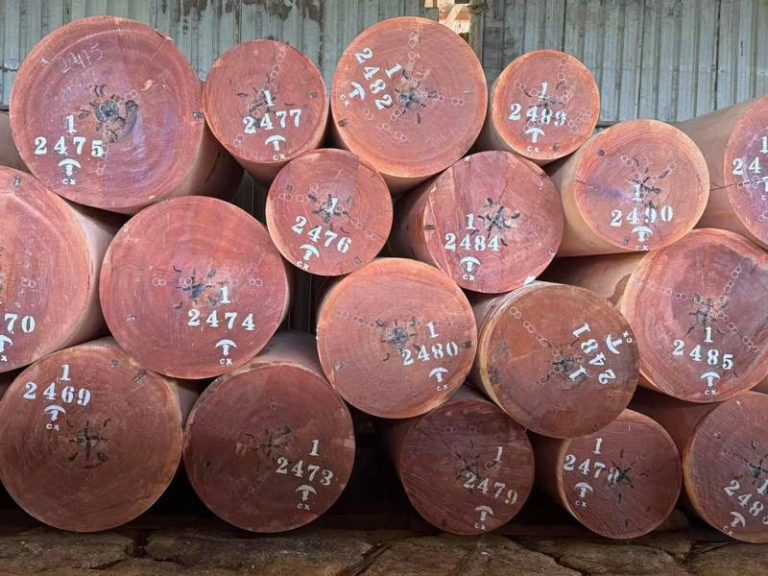
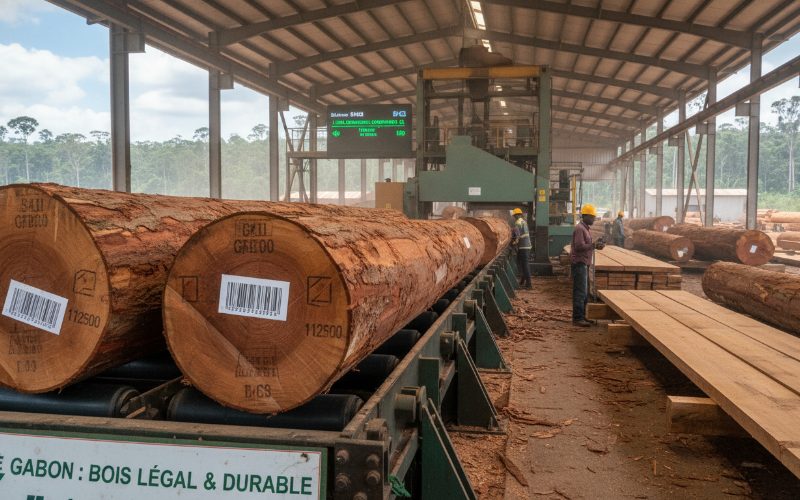
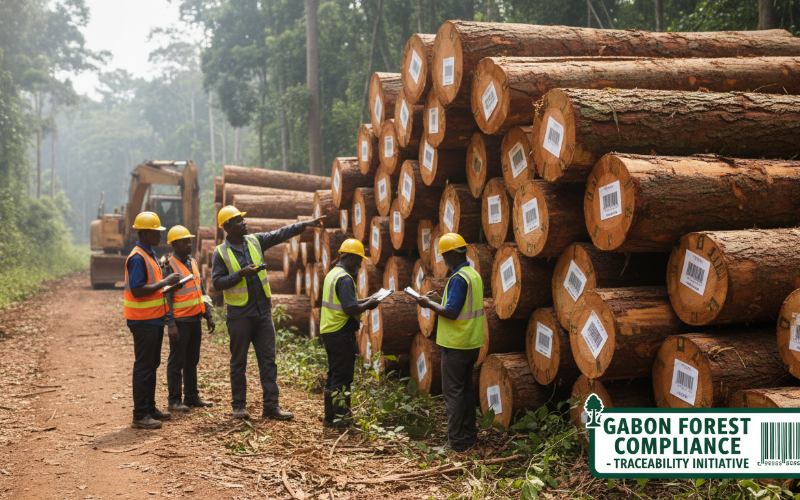
Every log harvested in our partner concessions is tagged with a unique barcode immediately upon felling. This barcode is scanned at the log yard, upon loading onto trucks, at the entry to the sawmill, and finally, the resulting sawn timber packs are linked back to this parent ID. This allows an auditor to pick a piece of FAS Grade Padauk from a container in Antwerp and trace it back to the specific stump in the Gabonese forest.
Sustainable Forest Management (SFM) Explained
Compliance is not just about avoiding fines; it is about ensuring the longevity of the trade. Sustainable Forest Management (SFM) is the methodology used to maintain forest ecology while allowing for economic activity.
Reduced Impact Logging (RIL)
We prioritize suppliers who utilize Reduced Impact Logging techniques. This includes:
- Directional Felling: Cutting trees so they fall in a direction that minimizes damage to surrounding canopy and secondary growth.
- Planned Skid Trails: Mapping extraction routes to prevent soil compaction and erosion, preserving the forest floor for future regeneration.
- Preservation of Seed Trees: Leaving the healthiest, strongest trees of a species standing to ensure natural reseeding of the area.
Comparing Certification Standards
For buyers deciding between different levels of certification, understanding the nuances is critical. While FSC (Forest Stewardship Council) is the gold standard, other verification schemes play a vital role in the transition period.
- FSC 100%: The timber comes entirely from FSC-certified forests. This offers the highest assurance but carries a premium price and lower availability due to the stringent requirements on concession holders.
- FSC Controlled Wood: Ensures that the wood is not illegal, harvested in violation of traditional rights, or from forests where high conservation values are threatened. This acts as a robust baseline for volume orders.
- OLB / TLV (Timber Legality Verification): These are third-party audits focusing strictly on the legality of operations (taxes paid, rights respected, traceability). While they do not cover all social aspects of FSC, they guarantee legal compliance for EUTR purposes.
At YYW Timber, we are transparent about the certification status of every load. Whether you require full Chain of Custody (CoC) certification or Verified Legal Timber, we provide the corresponding proof.
Frequently Asked Questions
Conclusion: Your Partner in Secure Timber Trade
Navigating Gabon forestry laws does not have to be a gamble. With the right partner, the complexity of the 2001 Forestry Code and international regulations becomes a structured, verifiable process. YYW Timber stands as a bridge between the rich, renewable resources of the Gabonese forest and the global market, ensuring that every board of Padauk, Iroko, or Tali is not only high quality but ethically and legally sound.