Key Takeaways for Okoume Importers
- Standard Alignment: While Okoume (Aucoumea klaineana) is an African species, international trade often utilizes NHLA-based terminology (FAS, Selects, #1 Common) to standardize quality expectations for global buyers.
- Yield Efficiency: FAS grade Okoume delivers minimum 83.33% clear cuttings, essential for marine-grade plywood faces and high-end joinery.
- Cost Optimization: #1 Common grade offers a strategic entry point for plywood core manufacturing, balancing structural integrity with raw material costs.
- Legal Compliance: All Okoume exports must adhere to strict forestry laws in Gabon and Congo, including VPA/FLEGT standards, as raw log exports are largely banned to promote local processing.
For global plywood manufacturers and furniture wholesalers, Okoume (Aucoumea klaineana), often referred to as Gaboon, remains the quintessential utility hardwood. Its pinkish-brown hue, impressive strength-to-weight ratio, and exceptional rotary peeling properties make it the “King of Plywood.” However, sourcing this African timber requires a sophisticated understanding of grading systems. While ATIBT rules traditionally govern African wood, the global marketplace increasingly relies on North American NHLA (National Hardwood Lumber Association) concepts—FAS, Selects, and #1 Common—to facilitate trade.
At YYW Timber, we bridge the gap between African forestry management and international quality requirements. This guide decodes the technical specifications of Okoume grades, helping you optimize your supply chain for yield, legality, and profit.
The Importance of Grading in Okoume Trade
Grading is not merely about aesthetics; it is a mathematical prediction of usable wood (yield) from a board. For an importer bringing in container loads of Okoume sawn timber, misinterpreting a grade can result in a yield variance of 15% to 20%, directly impacting the bottom line.
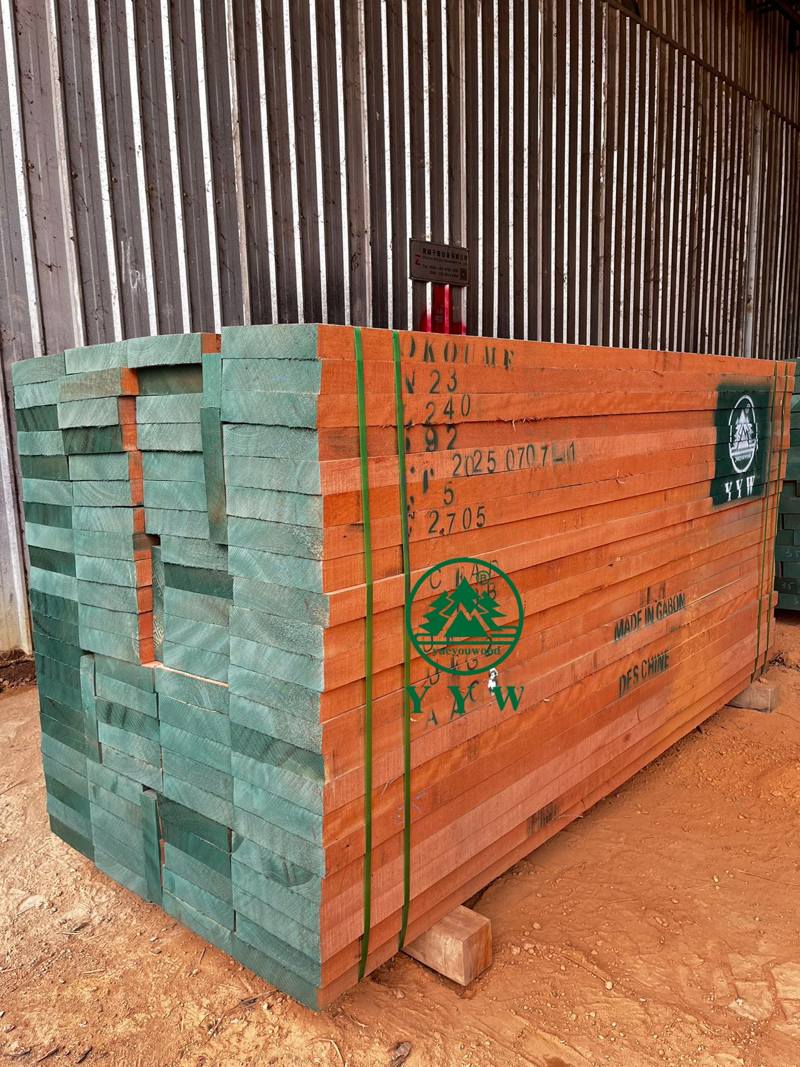
Okoume is unique because it is primarily harvested in Gabon and the Republic of Congo. Following the log export bans in these regions to encourage local industrialization, importers now deal almost exclusively with processed Sawn Timber and Veneer. This shift places a higher burden on the grading accuracy of the sawn product. Understanding the distinctions between FAS and Common grades ensures that a plywood manufacturer receives the clear face cuttings required for exterior veneers or the structural soundness needed for cores.
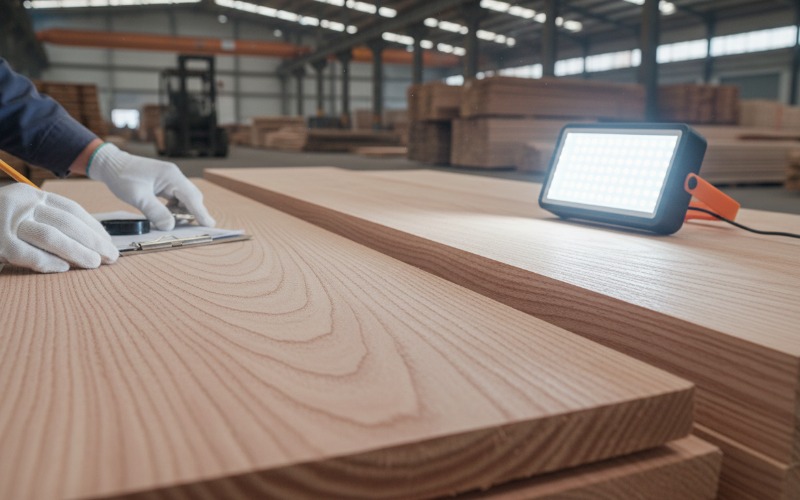
FAS Grade Okoume Specifications
FAS (First and Seconds) represents the premium tier of hardwood lumber. In the context of Okoume trade, this grade is targeted at manufacturers producing high-visibility products, such as marine plywood faces, guitar bodies, and luxury interior moldings.
Technical Definition of FAS
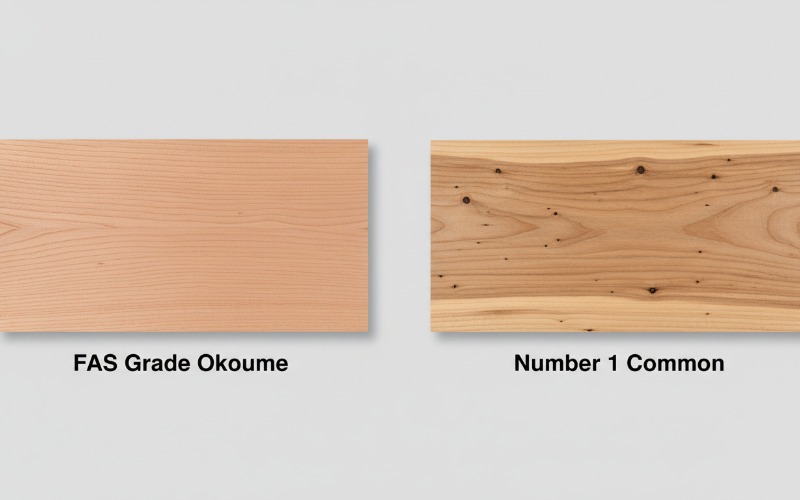
The FAS grade requires a board to yield a minimum of 83.33% (10/12ths) clear wood in clear face cuttings. These cuttings must be substantial in size, usually a minimum of 4 inches wide by 5 feet long, or 3 inches wide by 7 feet long.
Primary Characteristics:
- Width & Length: Boards are typically wider (6 inches plus) and longer (8 feet plus) to accommodate long clear cuttings.
- Defects: Very limited. Knots, wane, and split are minimal. Sapwood is restricted depending on the specific buyer contract, though Okoume sapwood is often indistinguishable from heartwood after kiln drying.
- Application: This grade is non-negotiable for clients requiring long, clear moldings or full-sheet veneers where visual consistency is paramount.
Okoume Selects and F1F Grades
Often, importers can achieve significant cost savings without sacrificing face quality by utilizing the Selects grade (sometimes traded as F1F – FAS One Face). This grade is virtually identical to FAS on the best face of the board, while the reverse side may contain defects permitted in the #1 Common grade.
Why Choose Selects?
For applications where only one side is visible—such as wall paneling, cabinetry fronts, or specific plywood laminations—Selects offer the aesthetic of FAS at a reduced price point. In the Okoume market, Selects are often bundled with FAS in a “FAS/1F” separation.
Decoding Number 1 Common Grade
Number 1 Common (#1 Com) is frequently termed the “Cabinet Grade” in the US, but for Okoume importers, it is the “Industrial Workhorse.” It provides a clear cutting yield of roughly 66.66% (8/12ths).
The Economic Argument for Number 1 Common
While FAS focuses on long, clear boards, #1 Common allows for smaller clear cuttings. Minimum cutting sizes drop to roughly 4 inches by 2 feet or 3 inches by 3 feet.
- Plywood Application: Plywood manufacturers use #1 Common Okoume for core layers. The defects present (sound knots, slight discoloration) do not compromise the structural integrity required for the inner plies of a board.
- Furniture Wholesalers: This grade is ideal for manufacturing furniture parts where shorter lengths are acceptable, such as drawer sides, chair rails, or internal framing.
- Cost Benefit: The price differential between FAS and #1 Common can be substantial, often 25-30% lower, making it critical for high-volume manufacturing where long clear lengths are not mandatory.
Detailed Technical Comparison Table
To assist your purchasing team, the following table outlines the technical distinctions between the primary Okoume grades available for export.
| Feature | FAS (First & Seconds) | Selects (F1F) | #1 Common |
|---|---|---|---|
| Minimum Yield (Clear Face) | 83.33% (10/12ths) | 83.33% (Best Face) | 66.66% (8/12ths) |
| Minimum Board Size | 6″ wide x 8′ long | 4″ wide x 6′ long | 3″ wide x 4′ long |
| Minimum Cutting Size | 4″ x 5′ or 3″ x 7′ | 4″ x 5′ or 3″ x 7′ | 4″ x 2′ or 3″ x 3′ |
| Primary Usage | Marine Ply Faces, High-end Joinery | Cabinetry, One-face Paneling | Plywood Cores, Furniture Frames |
| Allowed Defects | Very Restricted (no pith, rot) | Standard knots on back face | Sound knots, wormholes (limited) |
Defect Analysis in Okoume Timber
When grading Okoume sawn timber, specific defects are scrutinized more closely due to the wood’s end-use in peeling and marine applications. Importers must be vigilant regarding the following characteristics:
Silica Content and Blunting
Okoume contains moderate silica. While not a visible “grade” defect, high silica content can blunt saw blades and peeling knives. Higher grades (FAS) are often sourced from mature trees where silica distribution is more uniform, whereas lower grades may exhibit pockets that cause processing delays.
Pin Knots and Wormholes
In #1 Common grades, small pin knots are permissible provided they are “sound” (tightly intergrown with the surrounding wood). However, for FAS grades intended for marine plywood faces, even sound knots are strictly limited as they can interrupt the waterproof integrity of the finished sheet.
Brittleheart (Spongy Heart)
Found near the pith of the tree, brittleheart is a serious structural defect. Reliable exporters will box out the heart during sawing. FAS and Select grades strictly exclude brittleheart. In lower commons, some trace may be found, but it renders the wood unsuitable for load-bearing applications.
Legal Compliance and Sustainability
The global trade of African hardwood is heavily regulated to prevent illegal logging. Okoume is listed on the IUCN Red List as Vulnerable, meaning sourcing requires diligent documentation.
Chain of Custody Requirements
Importers in the EU (EUTR) and USA (Lacey Act) must ensure their Okoume supplies are legally harvested. Key certifications and documents include:
- FSC (Forest Stewardship Council): The gold standard for sustainable sourcing. FSC-certified Okoume commands a premium but guarantees market access to eco-conscious buyers.
- CITES Compliance: While Okoume is not currently CITES Appendix II listed (unlike Bubinga), monitoring its status is vital.
- VPA/FLEGT: The Voluntary Partnership Agreement ensures timber from countries like Gabon is legally harvested before it even leaves the port.
Sourcing Best Practices for Wholesalers
To maximize profitability when importing Okoume, follow these expert sourcing protocols:
1. Specify Kiln Drying (KD) Levels
Okoume should be Kiln Dried (KD) to a moisture content of 12-14% for general export. Air Dried (AD) timber carries a higher risk of fungal stain (blue stain) during transit, which downgrades the timber from FAS to Common instantly upon arrival.
2. Verify Net vs. Gross Tally
Ensure your contracts specify whether you are paying for the “Green” measurement or the “Net” (after drying) measurement. Shrinkage in Okoume is moderate, but paying for water weight on a Green Tally can inflate costs by 8%.
3. Use Third-Party Inspection
Always employ independent grading agencies (such as ATIBT-accredited inspectors) at the port of loading (e.g., Owendo, Gabon). This prevents disputes regarding grade interpretation upon arrival.