Key Takeaways for Timber Importers
- Document Authenticity: Always cross-reference CITES and FLEGT licenses with official ministry databases before transferring funds.
- Banking Mismatches: Never send payments to personal accounts or third-party beneficiaries located in countries unrelated to the timber’s origin.
- Technical Consistency: Suppliers unable to define specific grading rules (ATIBT vs. NHLA) or moisture content metrics are likely brokers or fraudsters.
- Proof of Life: Demand real-time video verification of stock featuring specific markers (e.g., a daily newspaper or unique code) to prove possession.
The global trade of African hardwoods represents a significant investment. For purchasing agents and new importers, the allure of high-value species like Bubinga (Guibourtia), Padauk (Pterocarpus soyauxii), and Iroko (Milicia excelsa) is often tempered by the risks of the international marketplace. While the majority of the trade is legitimate and drives economic growth in nations like Cameroon, Gabon, and Congo, the industry is not immune to bad actors.
Vetting African timber suppliers requires more than a credit check; it demands a deep understanding of logistics, forestry law, and technical wood specifications. At YYW Timber, we prioritize transparency and legality. This guide provides an expert framework for identifying red flags, ensuring that your capital secures high-quality, legally harvested timber rather than disappearing into a phantom operation.
Analyzing Regulatory Documentation for Authenticity
The first line of defense in vetting African timber suppliers is a rigorous audit of their compliance documentation. Legitimate exporters will have a transparent paper trail connecting the forest concession to the port of loading.
Validating CITES Permits for Protected Species
Certain African hardwood species, particularly Bubinga (Rosewood) and certain species of Mahogany, are listed under CITES (Convention on International Trade in Endangered Species of Wild Fauna and Flora) Appendices. A supplier offering these woods without explicitly mentioning CITES permits is a major red flag.
The Red Flag: The supplier claims they can bypass CITES requirements or that the wood is “pre-convention” without verifiable proof.
The Protocol: Request a copy of the CITES export permit. Verify the permit number with the CITES management authority in the export country (e.g., MINFOF in Cameroon). Ensure the scientific name matches the timber exactly. Legitimate traders like YYW Timber manage this bureaucratic process transparently.
Checking Forest Concession Rights and Chain of Custody
Does the supplier own the sawmill? Do they hold the forest concession? Or are they a broker? While brokers can be legitimate, the risk increases with every step removed from the source.
The Red Flag: The supplier cannot produce a Certificate of Origin or a valid Annual Cutting Permit (AAC).
The Protocol: Ask for the “Chain of Custody” (CoC) documents. In the context of VPA/FLEGT (Voluntary Partnership Agreement / Forest Law Enforcement, Governance and Trade), legal timber must be traceable. A supplier should be able to identify the specific concession where the Tali or Azobe was harvested.
Identifying Financial Transaction Warning Signs
Financial fraud is often the most painful trap for new importers. Scammers are sophisticated, often using compromised email accounts or intricate corporate shells to divert funds.
Corporate Banking Discrepancies
In B2B timber trade, payments should flow from your corporate account to the supplier’s corporate account in the country of operation.
The Red Flag: The supplier requests payment to a personal bank account, a Western Union transfer, or a bank account located in a third country unrelated to the trade (e.g., a supplier in Cameroon asking for payment to a bank in Eastern Europe or unrelated parts of Asia).
The Protocol: Verify that the beneficiary name on the bank account matches the company name on the Proforma Invoice and the Business Registration documents perfectly. If they do not match, halt the transaction immediately.
Assessing Physical Inventory and Processing Capability
Digital fraud allows individuals with no inventory to pose as major exporters. They steal images from legitimate websites and present them as their own stock.
Real-Time Stock Verification Tactics
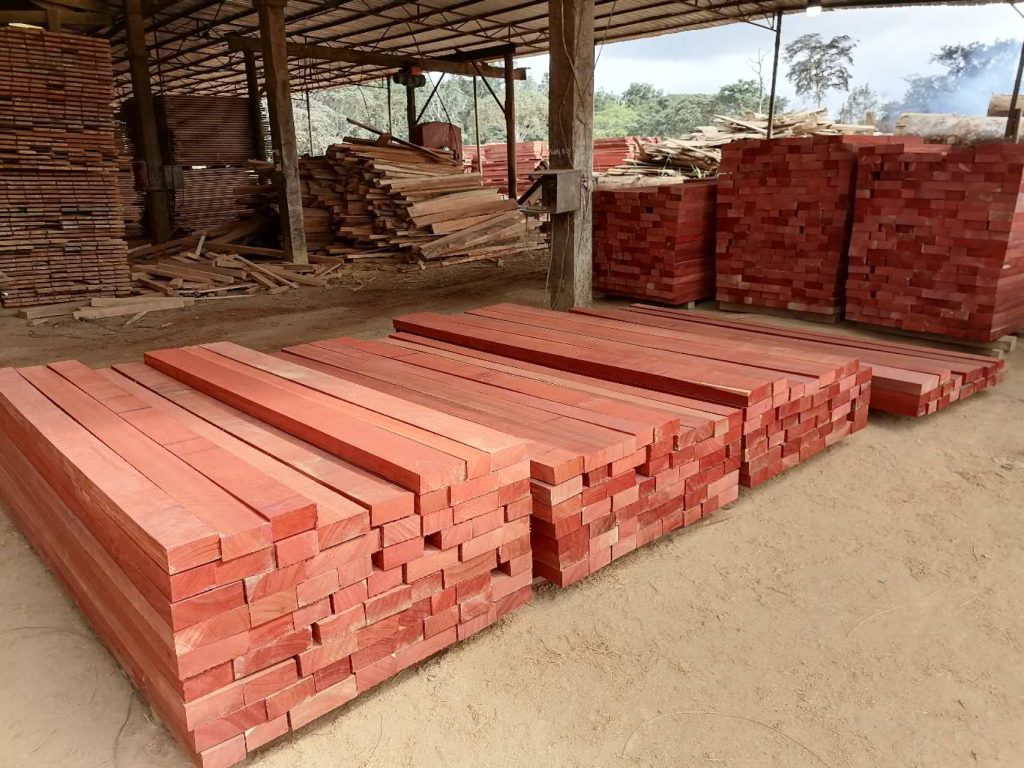
Static images are insufficient proof of possession. A supplier claiming to have 500 cubic meters of KD (Kiln Dried) Sapele must be able to prove it exists now.
The Protocol: Request a “Proof of Life” video. Ask the supplier to walk through the log yard or sawmill while holding a piece of paper with today’s date and your company name written on it. Ask to see specific machinery in operation, such as the bandsaws or the kiln control panels.
Evaluating Technical Expertise and Grading Standards
Legitimate timber professionals speak a specific technical language. Scammers often use generic terms or make promises that defy the physical properties of the wood.
Moisture Content and Grading Promises
The Red Flag: A supplier promising “Zero Defects” or “100% FAS” (First and Seconds) on species where clear cuttings are naturally limited. For example, promising Tali (Erythrophleum ivorense) completely free of interlocked grain or minor checks is scientifically improbable for large orders.
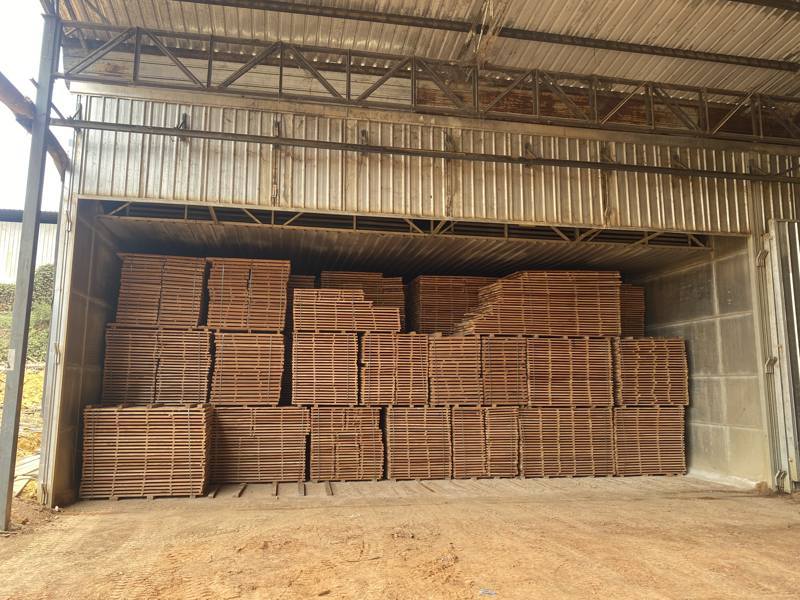
The Protocol: Discuss specific grading rules. Do they use ATIBT rules (common in Francophone Africa) or NHLA rules? Ask about their Kiln Drying schedules. If they cannot explain how they dry high-density wood like Ekop-Beli to 12% MC without checking, they likely lack the technical capacity to deliver quality product.
Comparing Scam Offers vs Market Realities
The adage “if it sounds too good to be true, it is” applies heavily to the timber trade. Below is a comparative analysis of realistic market indicators versus common scam offers. Scammers use low prices to incite urgency and bypass due diligence.
| Evaluation Criteria | Legitimate Supplier (e.g., YYW Timber) | Potential Fraudster / Scam |
|---|---|---|
| Price per CBM | aligns with global indexes (ITTO TIRM) | 20-40% below market average |
| Payment Terms | L/C (Letter of Credit) or Deposit + Balance against BL Copy | 100% Advance Payment or Western Union |
| Sample Availability | Available (Courier costs usually paid by buyer) | “Free samples” promised but never sent, or huge fees for shipping |
| Lead Time | Realistic (e.g., 3-6 weeks for sawing/drying) | “Immediate Dispatch” for custom sizes |
| Communication | Professional email domain (@yywtimber.com) | Free email providers (Gmail, Yahoo, Hotmail) |
Auditing the Digital Footprint
A legitimate business leaves a digital footprint that corroborates its claims. This goes beyond a shiny website, which can be built in an hour.
Satellite and Registry Verification
The Protocol: Ask for the physical address of the sawmill or stockyard. Use Google Earth to inspect the location. Do you see logs? Do you see heavy machinery and trucks? Or is it a residential building or an empty lot? Furthermore, check shipping records. Services like Panjiva or ImportGenius can verify if the company has actually exported goods in the past. A “major exporter” with zero bill of lading history is a red flag.
Frequently Asked Questions
How can I verify a supplier’s FSC certification?
Never rely on a PDF certificate sent by email, as these are easily forged. Visit the official FSC Public Search database (info.fsc.org) and enter the license code provided by the supplier. Ensure the license status is “Valid” and covers the specific product types you are purchasing.
Is it safe to pay a deposit for African timber imports?
Paying a deposit (usually 30%) is standard industry practice to secure raw materials and cover sawing costs. However, this should only be done after thorough vetting. For large initial orders with new suppliers, an Irrevocable Letter of Credit (L/C) is the safest mechanism for both parties.
What is the difference between Sawn Timber and Log Cants?
Sawn timber is processed to specific dimensions (thickness, width, length), usually for end-use or further manufacturing. Log Cants are logs that have been squared off on two or four sides to remove bark and sapwood, often to facilitate shipping or comply with export bans on whole round logs. Cants generally require further re-sawing upon arrival.
Partnering with Trustworthy Exporters
Vetting African timber suppliers is a critical process that safeguards your business against fraud and legal liability. By scrutinizing documentation, validating financial channels, and demanding proof of physical inventory, you can navigate the market with confidence. At YYW Timber, we understand these challenges and provide our clients with full transparency, from forest to container. Secure your supply chain by choosing partners who value integrity as much as timber quality.