Introduction
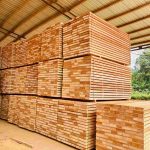
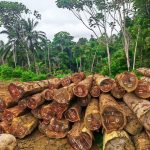
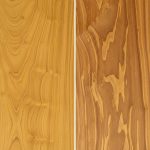
Teak dominates the global market as the gold standard for weather resistance. However, African Padauk (Pterocarpus soyauxii) challenges this status with superior hardness and striking aesthetics. This guide analyzes both species to help wholesalers and manufacturers maximize project ROI. Buyers must balance extreme durability against specific budget requirements and aesthetic goals.
Overview Of Padauk Wood
African Padauk (Pterocarpus soyauxii) serves as a premier heavy-duty hardwood for international markets. It bridges the gap between luxury aesthetics and industrial-grade durability. Importers value this species for its unique pigmentation and exceptional dimensional stability. This overview provides the technical intelligence required for informed bulk purchasing decisions.
Types of Padauk Wood
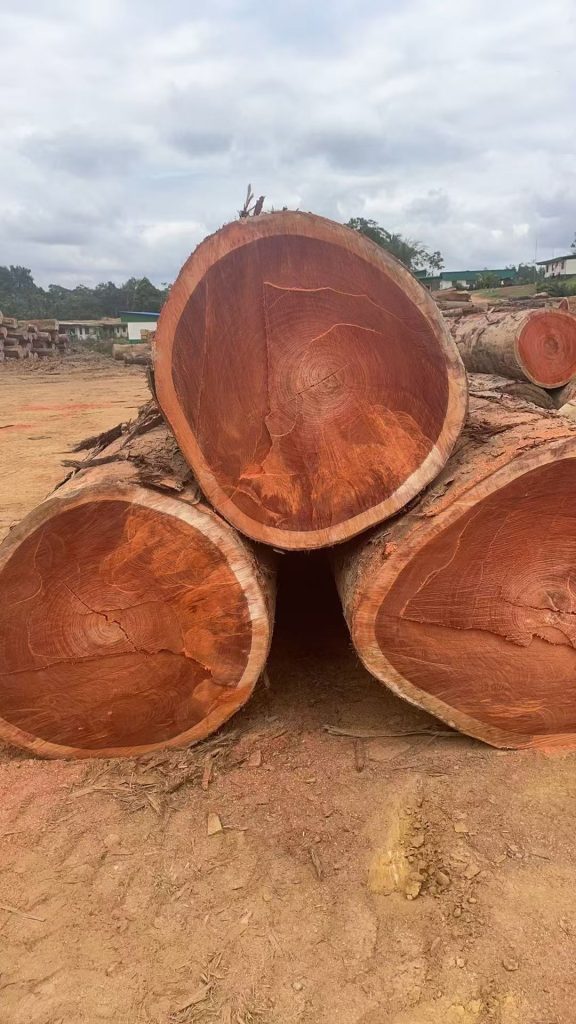
While several species share the “Padauk” trade name, their mechanical properties vary significantly by region. Understanding these distinctions is crucial for aligning timber specifications with project requirements.
Comparison by Origin
| Trade Name | Origin | Scientific Name | Key Characteristics | Typical Applications |
| African Padauk | Central/West Africa | Pterocarpus soyauxii | Vibrant red-orange; high stability. | Flooring, Joinery, Tool Handles |
| Burma Padauk | Myanmar (Burma) | Pterocarpus macrocarpus | Denser and harder than African variety. | High-end Furniture, Veneer |
| Andaman Padauk | Andaman Islands | Pterocarpus dalbergioides | Rich crimson color; rarer supply. | Decorative Arts, Fine Inlays |
| Pashu Padauk | Southeast Asia | Pterocarpus indicus | Often referred to as Amboyna (burl). | Luxury Auto Interiors, Instruments |
Classification by Color Evolution
| Color Phase | Visual Description | Duration/Context | Market Value |
| Freshly Sawn | Vivid “Neon” Orange to Crimson. | Immediate post-milling. | Highest for custom visual branding. |
| Oxidized/Mature | Deep Purplish-Brown to Burgundy. | Exposure to UV and Oxygen. | Standard for antique-style furniture. |
| Weathered | Silvery Grey (if untreated). | Long-term outdoor exposure. | Common in exterior decking/cladding. |
Padauk Wood Characteristics and Appearance
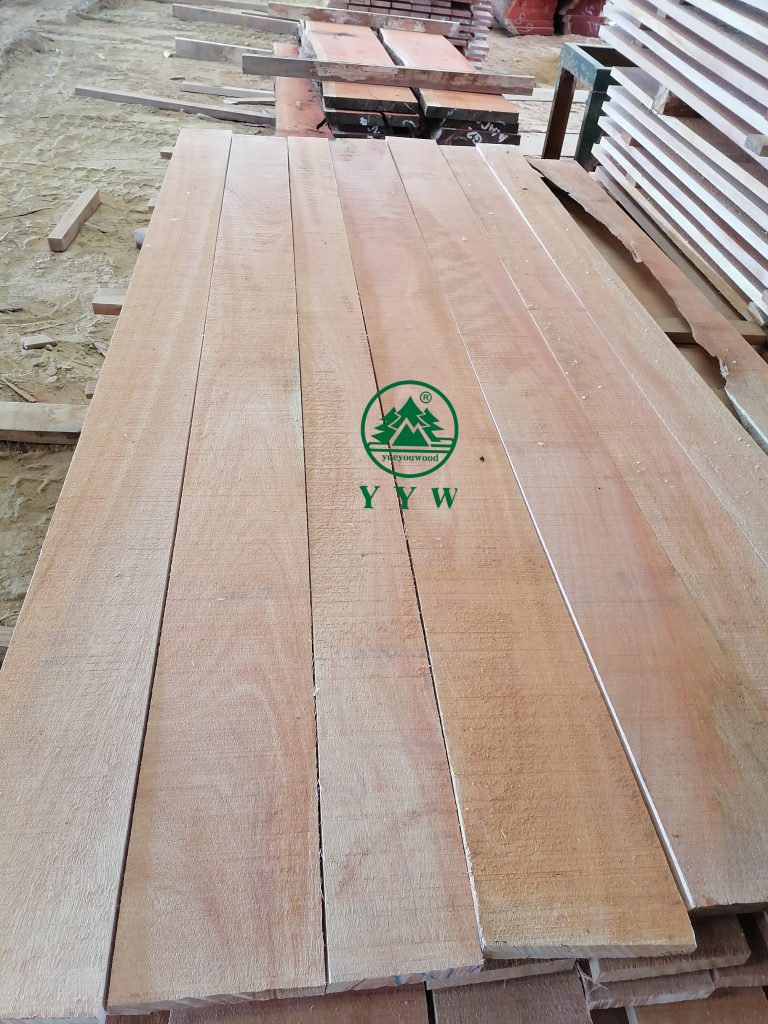
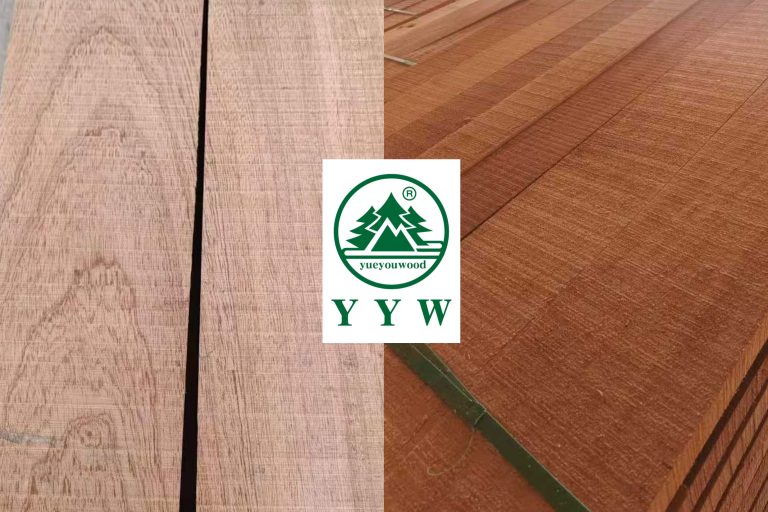
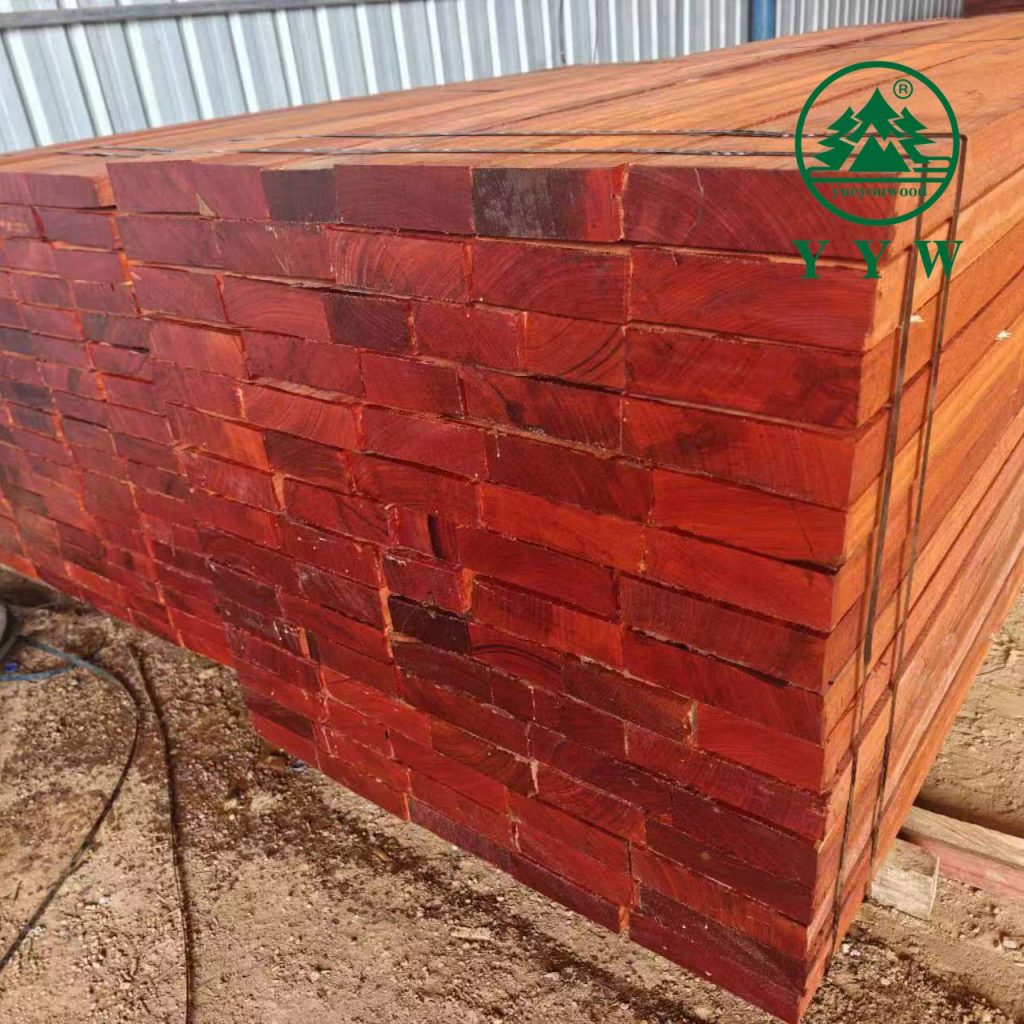
Padauk wood features a distinctive, coarse texture that provides a premium tactile feel. The grain is typically straight but frequently displays an interlocked pattern. This interlocking adds structural integrity but requires expert machining techniques. The wood possesses a natural luster that enhances high-end interior finishes. UV-inhibiting finishes can effectively preserve its iconic reddish-orange heartwood color.
Padauk Wood Durability and Strength
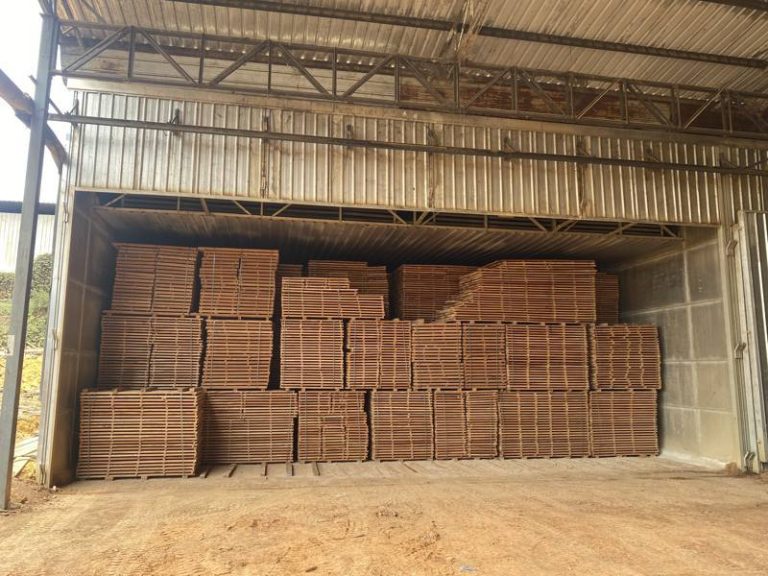
This species ranks as an elite performer in durability tests. It boasts a Janka Hardness of 1,720 lbf, surpassing many domestic oaks. Padauk contains natural extractives that repel termites and wood-boring insects. It shows remarkable resistance to rot and fungal decay in humid environments. The wood remains dimensionally stable with very low shrinkage rates after proper kiln drying.
Padauk Wood Common Uses
International buyers primarily source Padauk lumber for high-traffic commercial flooring. Its acoustic resonance makes it the standard choice for professional marimba keys. Architects specify Padauk for luxury millwork and heavy-duty stair treads. In the tool industry, its impact resistance is ideal for chisel and hammer handles. It also serves as a high-margin alternative to Rosewood for fine furniture.
Overview Of Teak Wood
Teak (Tectona grandis) remains the unrivaled “King of Hardwoods” in the global timber trade. Its legendary status stems from a unique biological makeup that combines high silica content with natural oleoresins. For B2B buyers, Teak represents the safest investment for high-exposure environments. Whether sourced from natural old-growth forests or sustainably managed plantations, its performance metrics set the benchmark for the entire industry.
Types of Teak Wood
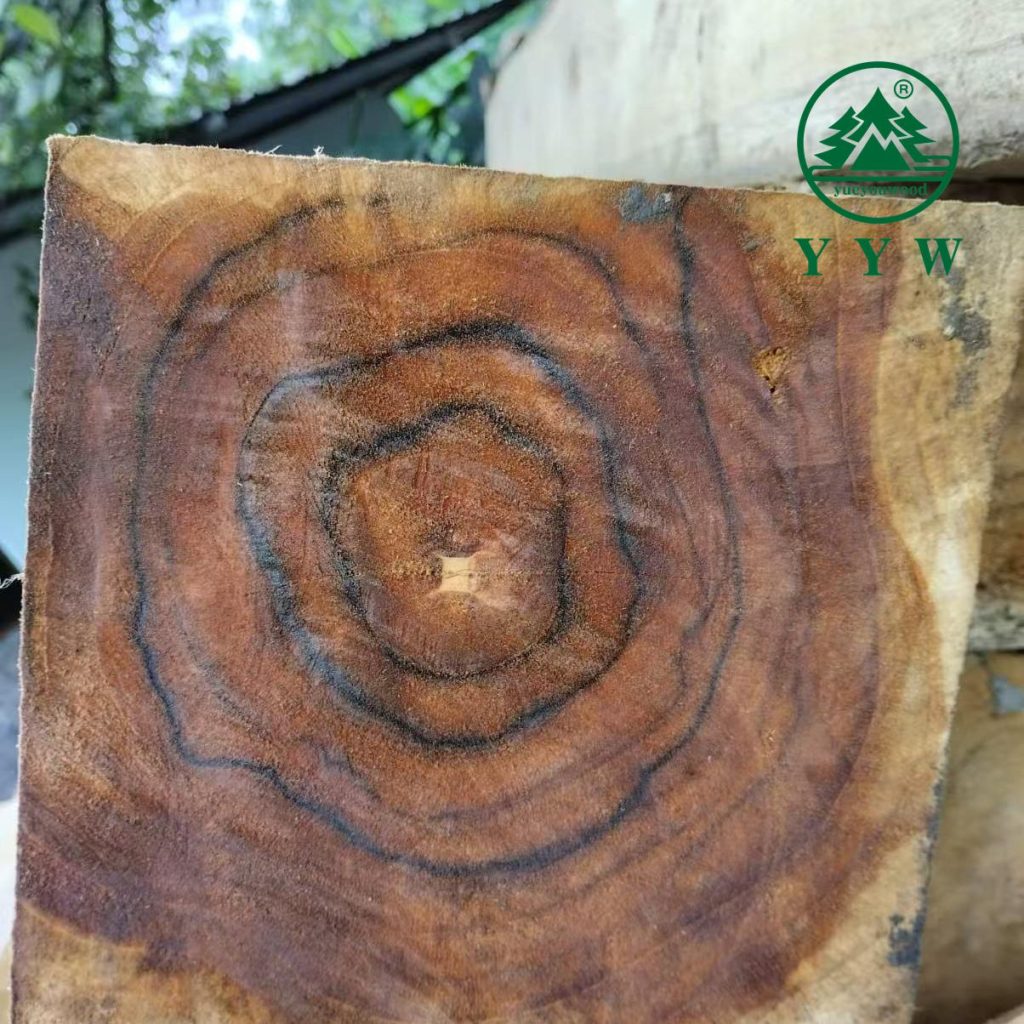
In the international market, we categorize Teak wood primarily by its growth origin and quality grade. These factors directly dictate the timber’s oil concentration and structural integrity.
Classification by Grade
| Grade | Quality Level | Key Characteristics | Typical Applications |
| Grade A | Premium Heartwood | Rich in oils; no knots; uniform golden color. | Superyacht Decking, Luxury Furniture |
| Grade B | Mature Sapwood Mix | Moderate oil content; minor color variations. | Outdoor Patio Sets, Garden Flooring |
| Grade C | Immature/Sapwood | Low oil levels; prone to warping; lighter color. | Low-cost Retail Products, Indoor Trim |
| FEQ Grade | First European Quality | Straight grain; structural perfection; kiln-dried. | Architectural Projects, Marine Engineering |
Comparison by Origin
| Trade Name | Origin | Scientific Name | Key Characteristics | Market Position |
| Burmese Teak | Myanmar | Tectona grandis | Old-growth; highest oil and silica levels. | Ultra-luxury / Marine Standard |
| African Teak | Ivory Coast, Togo | Tectona grandis | Plantation-grown; lighter color; sustainable. | High-volume Manufacturing |
| Latin Teak | Panama, Brazil | Tectona grandis | Faster growth rings; consistent supply. | Commercial Decking & Siding |
| Indonesian Teak | Java (Perum Perhutani) | Tectona grandis | Well-managed; excellent texture and grain. | Premium Furniture Export |
Teak Wood Characteristics and Appearance
Teak is instantly recognizable by its distinct golden-brown heartwood, which often features dark chocolate streaks. The wood possesses a unique, leather-like scent due to its high essential oil content. Upon touch, the surface feels noticeably waxy or oily, a trait that prevents the wood from becoming brittle. While its grain is typically straight, some logs yield a wavy or “mottled” figure that commands a premium in the veneer market.
Teak Wood Durability and Strength
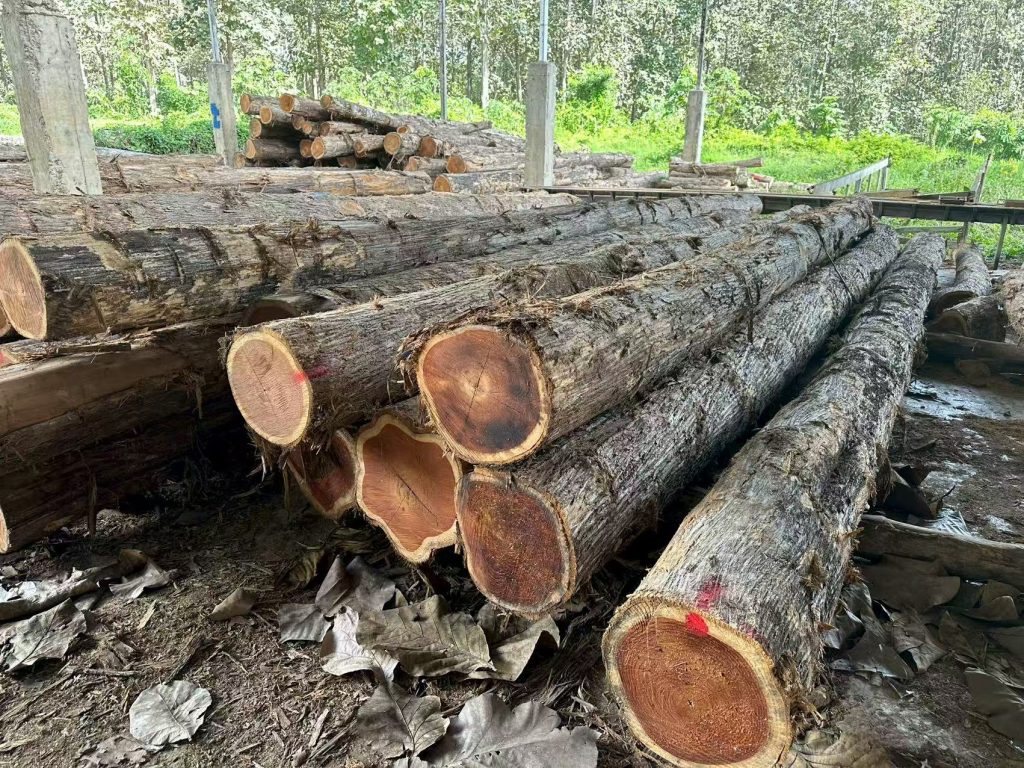
The durability of Teak is legendary, specifically regarding its extreme weather resistance. It contains a high volume of natural rubber and silica, acting as an internal water repellent. These resins prevent the timber from rotting, even when submerged in saltwater for decades. With a Janka Hardness of 1,070 lbf, it offers a perfect balance—hard enough to resist impact, yet stable enough to avoid excessive expansion or contraction.
Teak Wood Common Uses
The marine industry remains the largest consumer of FEQ-grade Teak for yacht decking and railings. Its slip-resistant surface and cool temperature under sun exposure make it ideal for poolside flooring. In high-end architecture, Teak is the preferred material for exterior cladding, luxury window frames, and heavy-duty doors. Furthermore, its resistance to chemicals allows for specialized use in laboratory benchtop manufacturing and vat linings.
Comparison Of Padauk Wood Vs Teak Wood
When sourcing timber for large-scale architectural or manufacturing projects, the choice between African Padauk and Teak often determines the project’s long-term viability. While Teak is the historical benchmark for marine applications, African Padauk has emerged as a high-performance alternative for heavy-duty structural and decorative use. Below is a granular technical comparison to guide B2B procurement strategies.
Botanical & Origin Background
Teak (Tectona grandis) is indigenous to Southeast Asia but is now widely cultivated in tropical plantations across Africa and Latin America. In contrast, African Padauk (Pterocarpus soyauxii) thrives in the primary rainforests of Central and West Africa (Gabon, Cameroon, and Congo). For importers, Padauk offers a more robust supply chain for FAS Grade Sawn Timber from natural growth forests, whereas high-quality Burmese Teak faces increasing export restrictions.
Appearance & Color Evolution
Both species offer distinct visual narratives that change with exposure to UV light and oxygen:
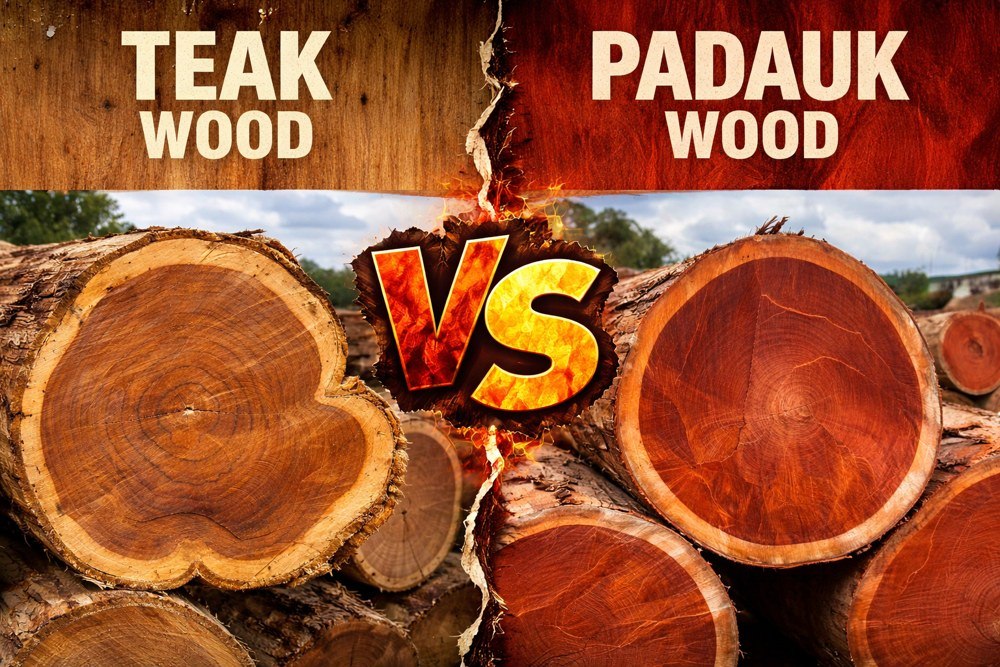
- Heartwood Color: Padauk initially displays a striking, high-saturation orange-red. Teak offers a conservative, golden-to-medium brown palette with darker streaks.
- Grain Pattern: Padauk is known for its interlocked grain, providing a complex, shimmering figure. Teak features a predominantly straight, uniform grain, which is easier for matching patterns in mass production.
- Aging Process: Teak naturally fades to a prestigious silver-grey if left untreated outdoors. Padauk oxidizes into a deep, rich burgundy or “warm chocolate” tone, often mistaken for high-end Rosewood.
Durability & Weather Resistance
Teak’s reputation is built on its unparalleled oil and silica content. These natural resins act as a biological barrier against saltwater and extreme humidity. While Padauk also possesses exceptional rot resistance (Class 1 durability), it lacks the high oil concentration of Teak. Therefore, Teak remains the superior choice for constant marine immersion, while Padauk is excellent for high-end exterior cladding where structural hardness is prioritized.
Stability & Movement (Shrinkage Metrics)
Dimensional stability is a critical KPI for flooring and window manufacturers. Teak is legendary for its low shrinkage coefficients, meaning it rarely warps even in fluctuating climates. African Padauk, while very stable compared to domestic hardwoods like Oak, requires a precise Kiln Drying (KD) process to match Teak’s performance. Once properly seasoned to 8%-12% moisture content, Padauk exhibits minimal movement in interior applications.
Hardness & Strength: Technical Comparison Table
For B2B buyers focused on wear resistance, the physical strength data is the most compelling factor:
| Technical Property | African Padauk (P. soyauxii) | Burmese Teak (T. grandis) | Impact for Buyer |
| Janka Hardness | 1,720 lbf (7,650 N) | 1,070 lbf (4,740 N) | Padauk is 60% harder; better for flooring. |
| Modulus of Rupture | 16,840 lbf/in² | 14,080 lbf/in² | Padauk supports higher structural loads. |
| Elastic Modulus | 1,700,000 lbf/in² | 1,550,000 lbf/in² | Padauk is stiffer and less prone to bending. |
| Crushing Strength | 8,130 lbf/in² | 7,940 lbf/in² | Both offer excellent end-grain compression. |
| Density (at 12% MC) | 47 lbs/ft³ (745 kg/m³) | 41 lbs/ft³ (655 kg/m³) | Padauk is heavier; factor in shipping costs. |
Workability & Machining Specifications
- Cutting & Sawing: Teak’s high silica content (up to 1.4%) acts as an abrasive, dulling carbide-tipped tools rapidly. Padauk is easier on blades but requires sharp edges to prevent “tear-out” on interlocked grain sections.
- Gluing & Finishing: Teak’s surface oils can interfere with adhesives; a solvent wipe (acetone) is mandatory before bonding. Padauk glues exceptionally well and accepts high-gloss polishes, achieving a “mirror finish” that Teak rarely matches.
- Sanding: Padauk dust is fine and vibrant; proper industrial extraction is required to prevent staining of adjacent lighter woods.
Maintenance & Aging
Long-term maintenance costs (OPEX) differ significantly. Teak requires periodic oiling to maintain its golden hue. Padauk requires UV-protected lacquers to stall the “browning” process. For B2B clients in the hospitality sector, Padauk offers a “lower-maintenance” interior luxury, while Teak demands more attention in exterior settings to avoid the weathered grey look.
Applications Comparison: Where to Invest?
- The Case for Teak: Specify for Yacht Decking, poolside furniture, and luxury coastal villas. Its natural resilience to salt spray is unmatched.
- The Case for Padauk: Specify for High-Traffic Commercial Flooring, architectural millwork, and musical instrument components. It provides a superior “Hardness-to-Price” ratio for interior projects.
Sustainability & Certification (FSC/PAFC)
Global B2B importers must comply with EUTR and Lacey Act regulations. Most African Padauk from managed concessions in the Congo Basin comes with FSC or PEFC certification. Teak sourcing is more complex; while plantation teak is widely certified, natural-growth Burmese Teak often faces rigorous “Due Diligence” audits.
Price & Market Position
From a B2B procurement perspective, African Padauk is a value-engineered luxury. It often costs 30% to 50% less than Grade-A Burmese Teak while offering superior hardness and a more exotic color profile. This price gap allows wholesalers to offer premium hardwood solutions to developers at a more competitive square-meter rate.
View more comparisons of Padouk vs Azobe and Iroko vs Teak
Which to Choose?
- Choose Teak if the environment involves constant water contact and if the brand identity relies on “Classic Luxury.”
- Choose African Padauk if the project demands extreme durability (High Janka score), a vibrant modern aesthetic, and a better ROI on raw material costs.
Conclusion & Sourcing Advice
Deciding between Padauk and Teak is not about which wood is “better,” but which species fits the mechanical and budgetary constraints of your specific project. As a leading exporter, we ensure that every log and plank meets international FAS grading standards.
Ready to upgrade your inventory? Contact YYW Timber for Bulk Quotations of FAS Grade African Padauk or Teak Logs and Sawn Timber. We provide comprehensive technical data sheets and phytosanitary certificates for all international shipments. Optimize your timber sourcing with our direct-from-forest logistics today.