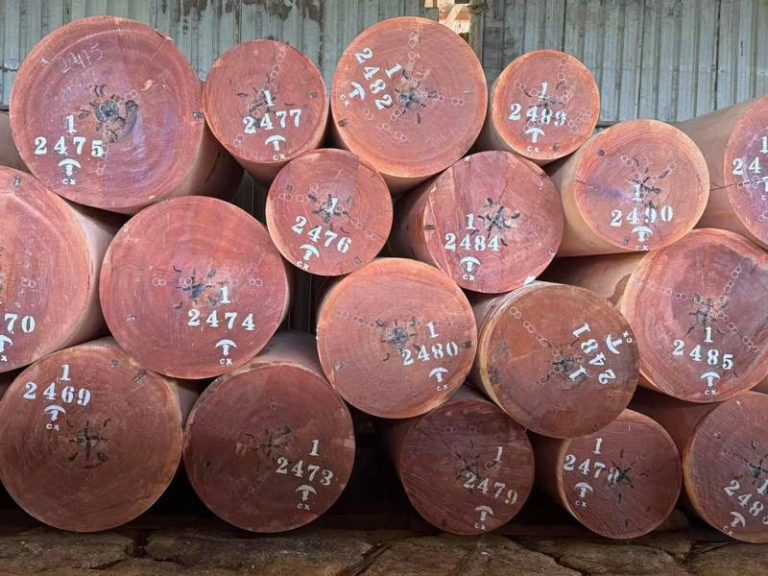
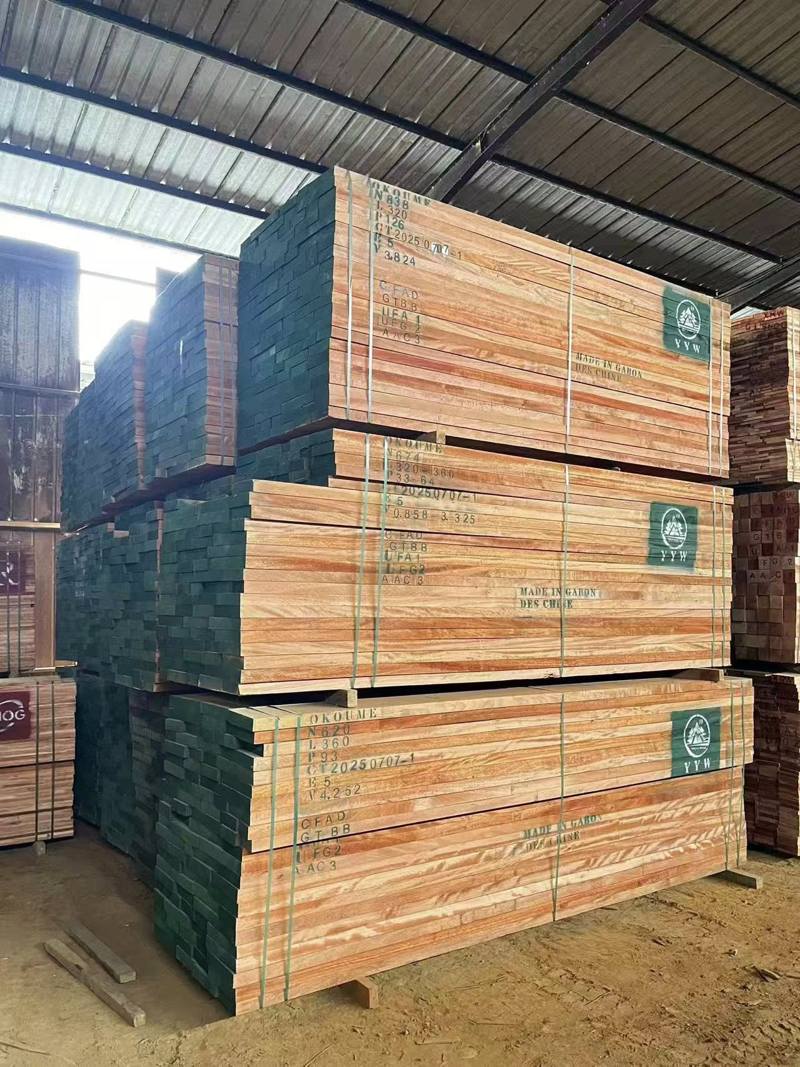
For international timber buyers and logistics managers sourcing from West Africa, Okoume (Aucoumea klaineana) represents a premium investment. Prized for its peeling qualities and uniformity, it is a staple in the plywood and veneer industries. However, Okoume carries a significant logistical risk: its high susceptibility to blue stain (sapstain).
In the humid tropical climate of Gabon, Cameroon, and Congo, the window between felling and fungal infection is incredibly narrow. A shipment of FAS Grade Okoume sawn timber can be devalued by up to 50% if blue stain manifests during the 30-to-60-day transit to Europe or Asia. At YYW Timber, we prioritize the technical integrity of our wood. This guide details the strict logistical protocols required to prevent blue stain in Okoume shipments.
Key Takeaways for Timber Logistics
- Biological Risk: Okoume is highly prone to fungal attack due to high sugar content and low density.
- Critical Timeline: Anti-sapstain chemical treatment must occur within 24 to 48 hours of sawing.
- Moisture Control: Kiln Drying (KD) to below 18% is the only guaranteed preventative measure for long-haul shipping.
- Container Hygiene: Desiccants and dry dunnage are mandatory to prevent “container rain.”
- Documentation: Phytosanitary certificates must explicitly state the treatment chemicals used.
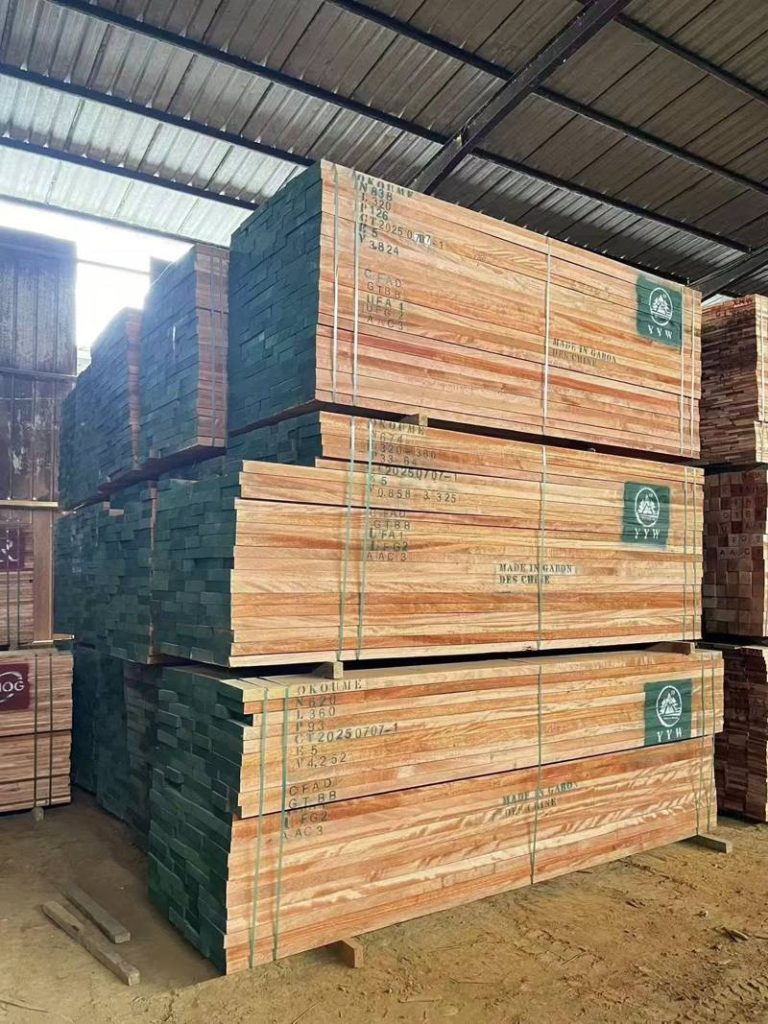
Understanding the Blue Stain Threat in Okoume
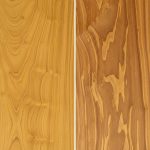
To prevent the problem, logistics managers must first understand the biology. Blue stain is caused by microscopic fungi, primarily of the genera Ophiostoma and Ceratocystis. Unlike wood-decaying fungi (rot), blue stain does not compromise the structural strength of the timber significantly. However, it deeply discolors the sapwood, turning the characteristic pinkish-red of Okoume into a dull, streaked grey or blue.
For aesthetic applications—such as face veneers, cabinetry, and visible joinery—stained wood is often rejected or downgraded to packing material. The fungi thrive on the starches and sugars found in the sap, which are abundant in Okoume. They require four conditions to grow:
- Food Source: Sapwood sugars.
- Oxygen: Available in surface pores.
- Temperature: Ideally between 20°C and 30°C (typical West African ambient temperature).
- Moisture: Moisture Content (MC) above 20%.
The Logistics Challenge: You cannot control the food source or oxygen. You cannot control the ambient temperature during transit across the equator. Therefore, the only variable under a logistics manager’s control is Moisture and Chemical inhibition.
Phase 1: Forest to Sawmill Protocols
Prevention begins the moment the chainsaw cuts the tree. In the hot, humid forests of Gabon, fungal spores are airborne and omnipresent. Once an Okoume tree is felled, its natural defense systems cease.
Extraction Speed
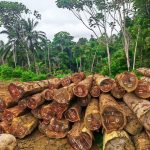
Logs left in the forest for more than a week are at high risk. Pinholes (Ambrosia beetles) often introduce the blue stain fungus deep into the log. Best practice dictates that Okoume logs should be extracted to the landing and transported to the sawmill within 3 to 5 days of felling.
Anti-Sapstain Dipping
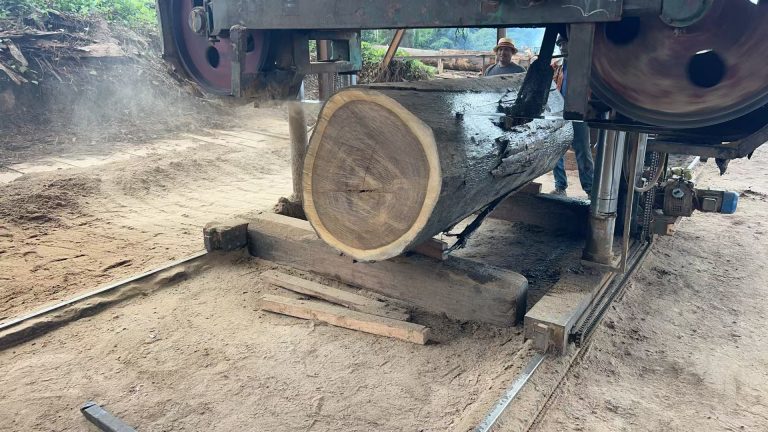
Immediately after the log is processed into sawn timber (planks, flitches, or boules), the fresh wood surfaces are exposed. This is the critical “Golden Hour.” Timber must be subjected to a prophylactic treatment, usually via a dip tank or pressure spray tunnel.
Effective Chemical Agents:
Modern forestry relies on biodegradable fungicides. Common effective active ingredients include:
- Propiconazole / Tebuconazole: Highly effective azoles that inhibit fungal growth.
- Borates (Borax/Boric Acid): Often used in combination for broader spectrum protection.
- IPBC (Iodopropynyl Butylcarbamate): A potent fungicide often added to formulations.
Note on Compliance: Pentachlorophenol (PCP) and Sodium Pentachlorophenate (NaPCP) are strictly banned in international trade. YYW Timber strictly adheres to FSC and international safety standards, utilizing only approved fungicides.
Phase 2: Drying Regimens for Export
Chemical dipping provides temporary surface protection (typically 2-4 weeks), which is insufficient for global sea freight. The ultimate solution to blue stain is reducing the Moisture Content (MC) below the fiber saturation point, specifically below 20%. Fungi cannot metabolize dry wood.
Air Drying (AD) vs Kiln Drying (KD)
Air Drying (AD):
While cheaper, AD is risky for Okoume in West Africa. The ambient relative humidity in places like Douala or Owendo often hovers around 80-90%. “Shipping Dry” (AD to ~25%) reduces weight but does not guarantee immunity from blue stain. If a buyer opts for AD Okoume, it must be chemically treated aggressively and shipped immediately, ideally in ventilated containers.
Kiln Drying (KD):
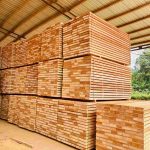
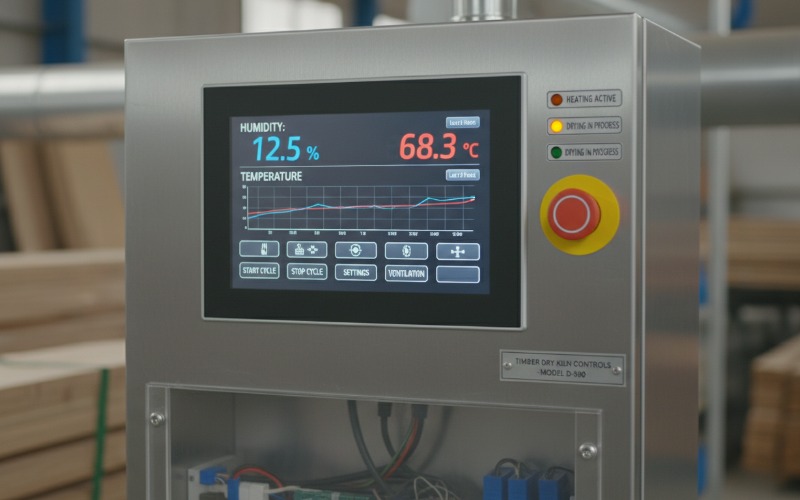
This is the industry standard for high-value Okoume. Timber is placed in temperature-controlled chambers. The goal is to reach a uniform MC of 12-14% (for furniture) or 16-18% (for general joinery/shipping safety). KD kills existing fungal spores and removes the moisture required for new growth.
Proper Stickering
Whether AD or KD, the “stickering” process is vital. Stickers (small wooden spacers) must be placed between every layer of timber to allow airflow.
Crucial Detail: The stickers themselves must be dry and free of stain. Using wet or infected stickers will transfer the fungus directly onto the clean Okoume faces (sticker stain).
Phase 3: Containerization and Logistics
Even KD timber can be ruined if loaded into a poor container. This phenomenon is known as “Container Rain.” As a container travels from the tropics (30°C) to cooler climates in Northern Europe or Asia (10°C), moisture in the air condenses on the cold steel roof and drips onto the wood.
Desiccants and Absorbents
Standard practice for shipping Okoume involves heavy-duty desiccants. Silica gel or calcium chloride poles should be hung in the container corrugations. For a 40ft container of timber, we recommend a minimum of 6-8kg of high-absorption desiccants.
The Importance of Dry Dunnage
Logistics managers often overlook dunnage (the pallets or blocks used to secure the load). If the dunnage is green or wet, it will release liters of water vapor during transit. Ensure all dunnage is KD and ISPM 15 compliant.
Container Floor Moisture Check
Before loading, the wooden floor of the container must be checked. It should not exceed 18% MC. Wet container floors are a primary cause of bottom-layer blue stain.
Comparing Shipping Risks: AD vs KD
| Feature | Air Dried (AD) Shipping | Kiln Dried (KD) Shipping |
|---|---|---|
| Target Moisture | 20% – 25% (Shipping Dry) | 12% – 18% (Kiln Dry) |
| Blue Stain Risk | High (Requires heavy chemical treatment) | Low (If packaging remains intact) |
| Cost | Lower (No energy costs) | Higher (Drying fees apply) |
| Transit Stability | Prone to “sweating” in container | Stable |
| Best For | Low-grade construction timber, pallets | Furniture, Veneer, Molding, FAS Grade |
| Required Dunnage | ISPM 15 Compliant | ISPM 15 Compliant |
Compliance and Legal Documentation
Navigating the legal landscape of African timber trade is as important as the physical handling. Mis-declared timber can be seized at customs.
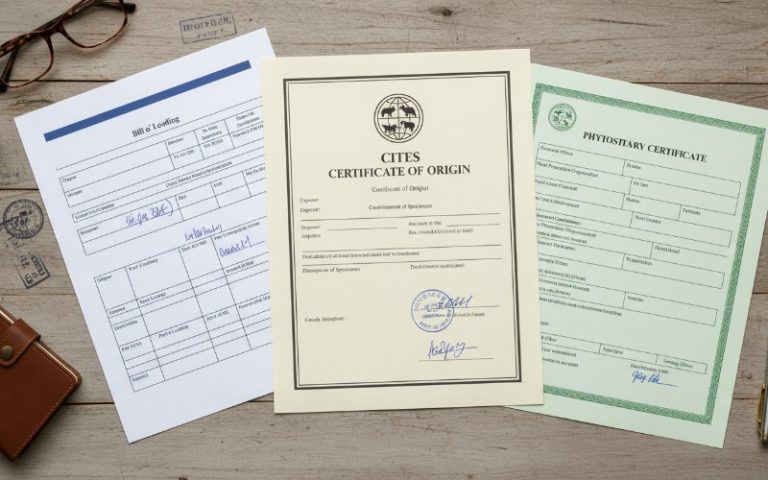
Phytosanitary Certificates
Every shipment of Okoume from West Africa requires a Phytosanitary Certificate issuing from the country of origin (e.g., Gabon, Cameroon). This document must verify:
- Inspection prior to loading.
- Absence of live pests (bark beetles).
- Details of chemical treatments (Concentration, Duration, Active Ingredient).
Furthermore, adherence to FLEGT (Forest Law Enforcement, Governance and Trade) licensing in applicable countries or EUTR/CITES regulations ensures that the wood is legally harvested. While Okoume is not currently CITES listed, proving legal chain of custody reduces customs delays where timber might sit on docks, exposed to elements.
YYW Timber: Best Practices in Action
At YYW Timber, we recognize that our clients require more than just wood; they require reliability. Our protocols for shipping Okoume include:
- Precision Kiln Drying: We control gradients carefully to prevent case-hardening while ensuring the core MC reaches safe levels.
- Premium Packaging: All KD bundles are wrapped in plastic sheeting on five sides (leaving the bottom open for breathing) to protect against condensation drips while preventing moisture trapping.
- Logistics Oversight: We personally inspect containers for water tightness and floor dryness before loading.