Understanding “Zebrawood” in the International Timber Trade
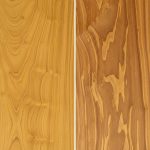
In the global timber market, the term “zebrawood” is widely used as a commercial name to describe hardwood species with naturally striped grain patterns.
It is important to note that this term does not refer to a single botanical species. Instead, it groups together different African timbers that share a visually distinctive appearance.
Among these, Zebrano (also known as Zingana) and Ekop-Beli (Beli) are two commonly referenced species.
Although they may appear similar at first glance, they differ in grain expression, physical behavior, and preferred applications.
Zebrano (Zingana)
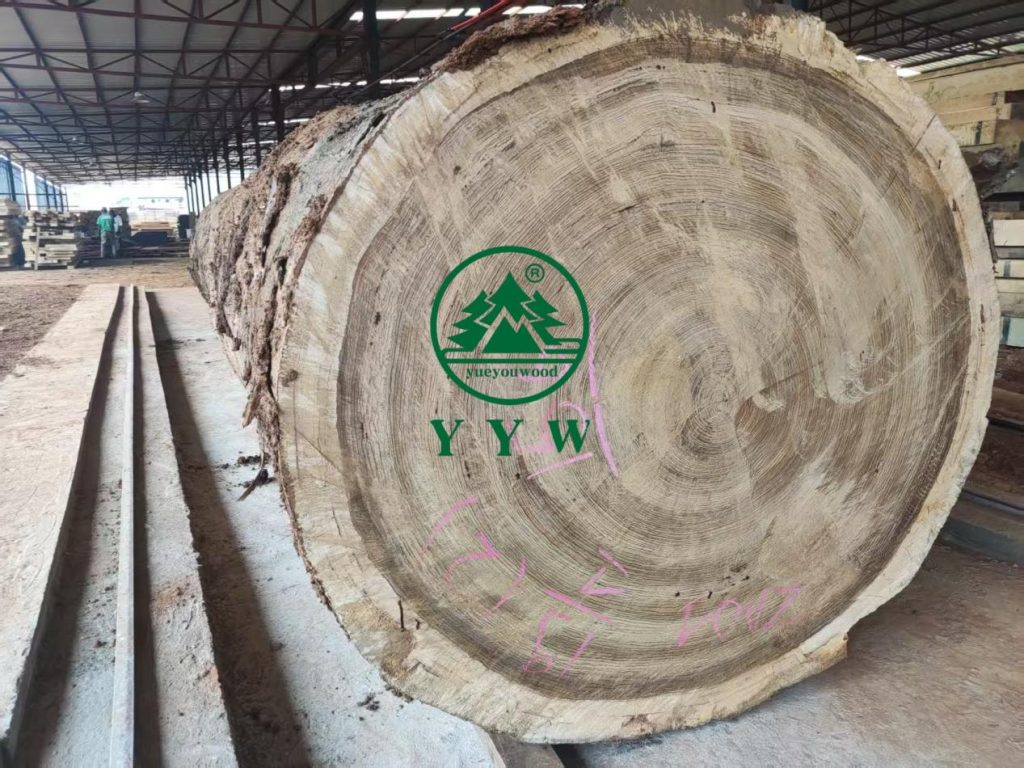
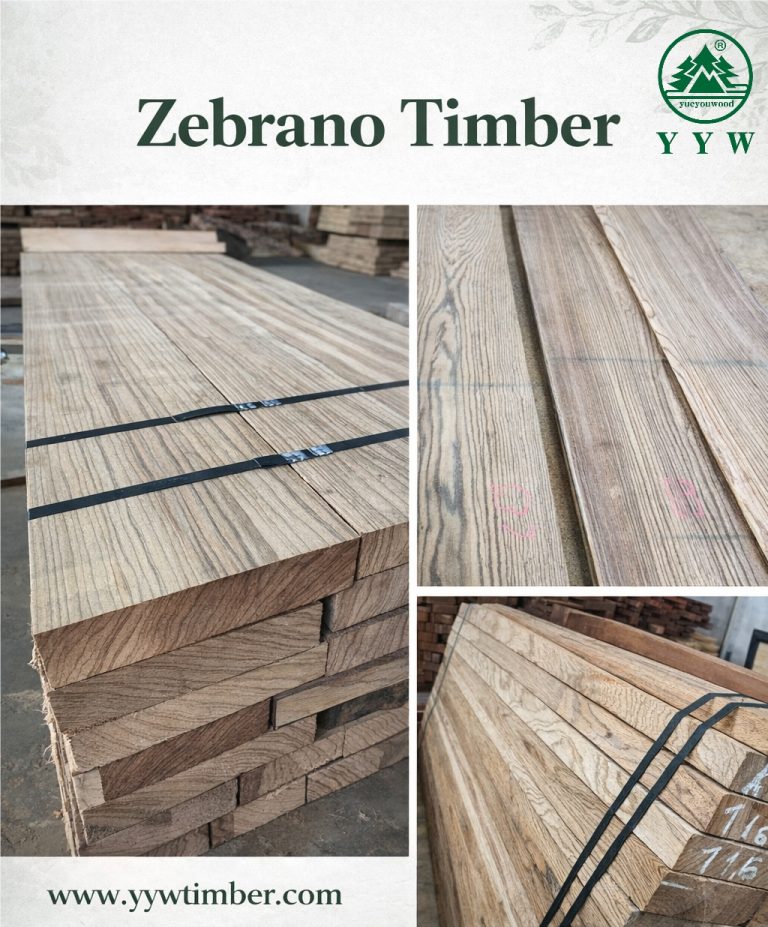
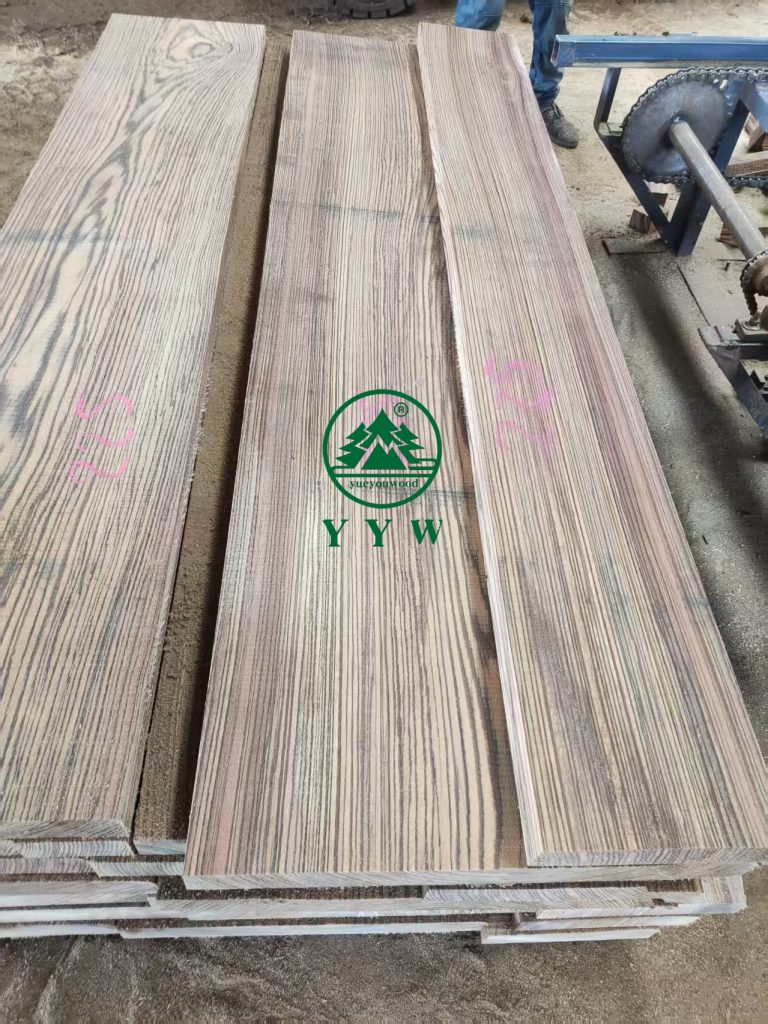
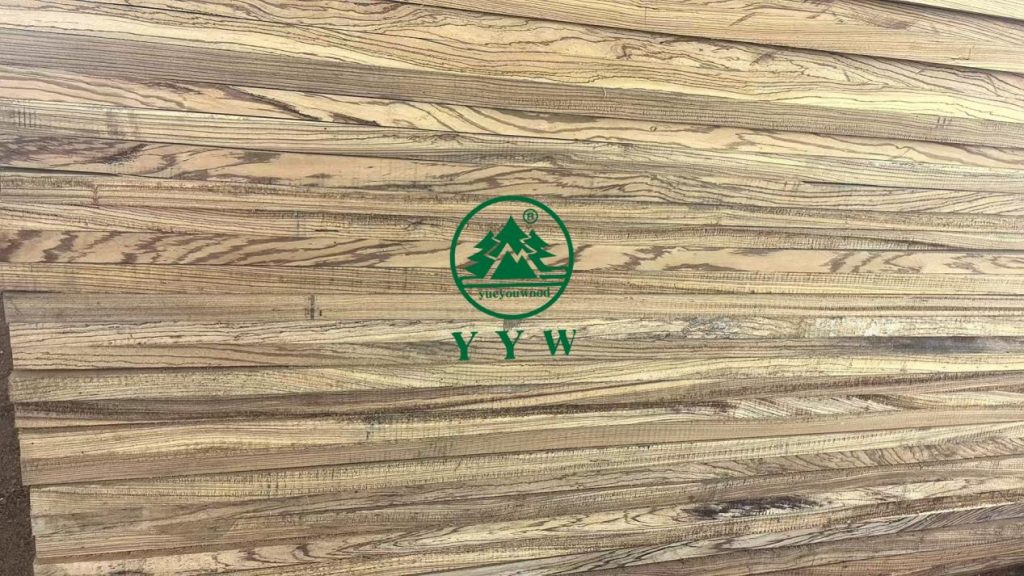
Zebrano, botanically known as Microberlinia brazzavillensis, is internationally recognized for its strong, high-contrast striping.
Dark brown to black veins run across a pale yellow or cream-colored background, creating a bold and decorative appearance.
The dramatic grain pattern makes Zebrano immediately identifiable and highly valued in design-oriented projects.
Material Properties
Zebrano is a medium-density African hardwood with good strength and rigidity.
Its grain is typically interlocked, which contributes to both its visual depth and mechanical stability, although it requires controlled machining to achieve a clean finish.
Common Applications
Zebrano is most often used in:
- Decorative furniture and veneers
- Interior wall panels and feature elements
- High-end joinery and architectural details
- Luxury interiors where visual impact is a priority
Zebrano is generally selected as a statement wood, rather than for structural or heavy-duty use.
Ekop-Beli (Beli)
Visual Characteristics
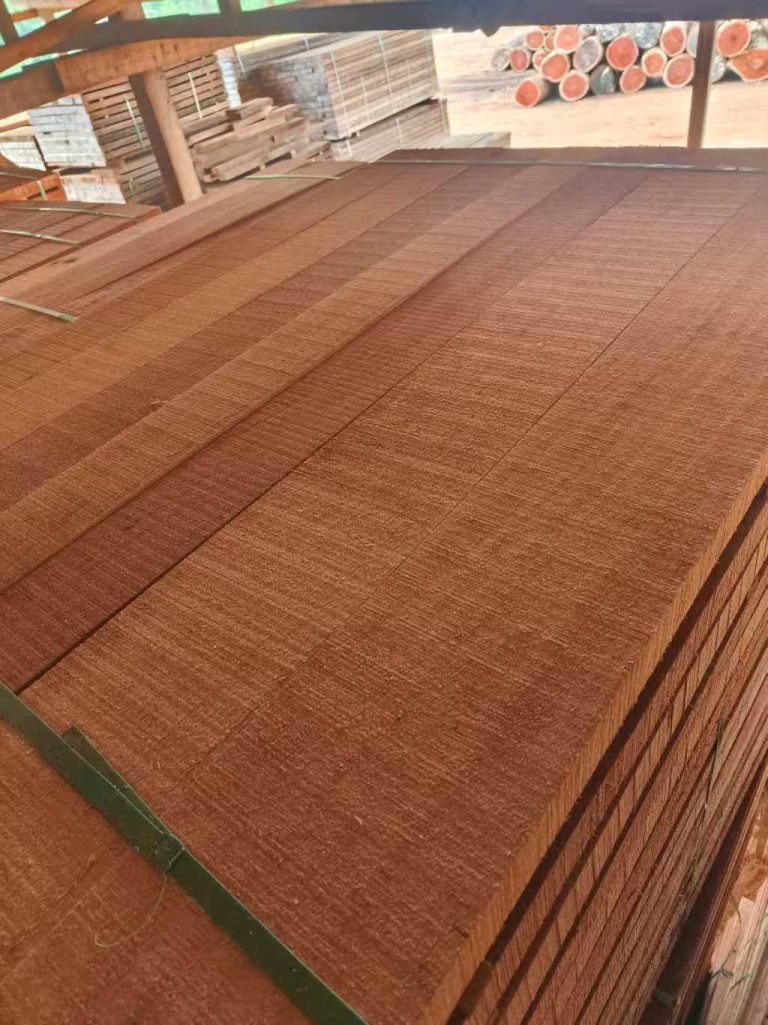
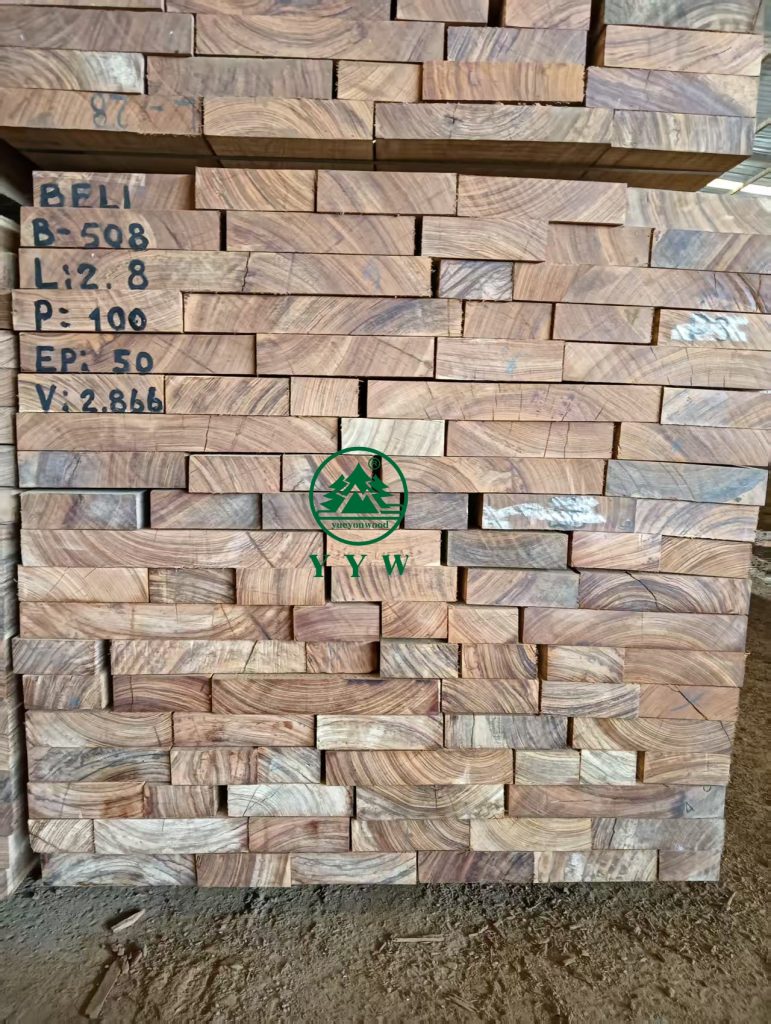
Ekop-Beli, commonly referred to as Beli, also displays a striped grain pattern, but with a more uniform and refined visual expression.
The contrast between light and dark areas is usually softer than that of Zebrano, resulting in a calmer and more balanced appearance.
This consistency makes Ekop-Beli suitable for projects that require harmony across multiple boards.
Material Properties
Ekop-Beli is generally regarded as stable and workable, with predictable performance during cutting, planing, and finishing.
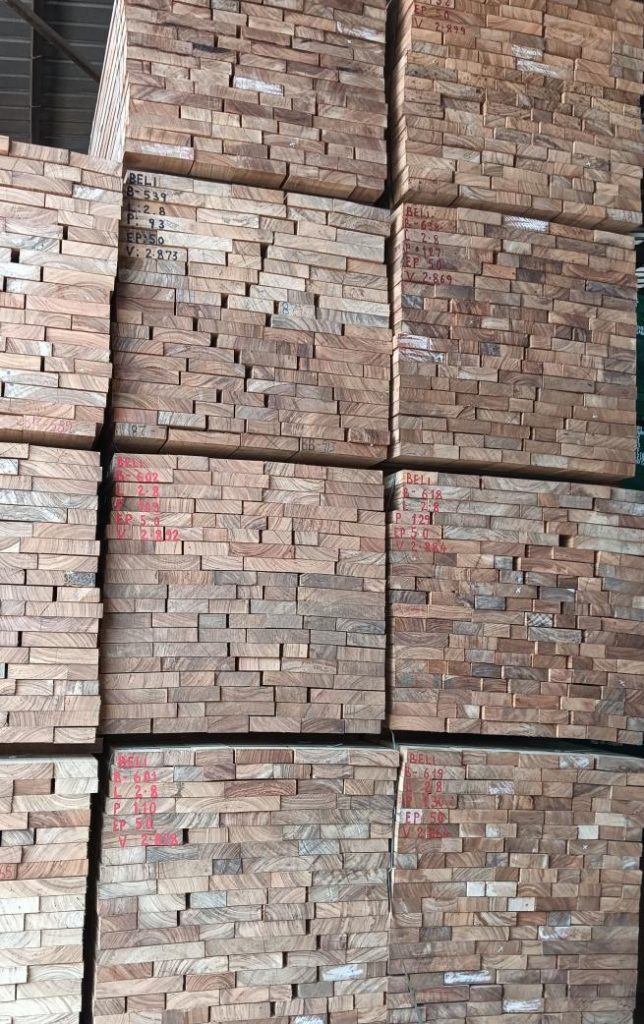
Its structure allows smoother processing and consistent results, especially in larger-scale production environments.
Common Applications
Ekop-Beli is widely used for:
- Furniture components and frames
- Interior joinery and cabinetry
- Veneer production
Projects requiring uniform appearance and efficient processing
Key Differences in Practical Selection
While both Zebrano and Ekop-Beli may be grouped under the commercial name “zebrawood,” their practical use differs significantly:
- Zebrano (Zingana) is preferred when visual impact and decorative grain are the primary considerations.
- Ekop-Beli (Beli) is chosen when consistency, workability, and production efficiency are more important.
Selecting the appropriate species should always be based on design intent, processing requirements, and end-use conditions, rather than appearance alone.
African Hardwood Knowledge from Yueyou Wood
Hong Kong Yueyou Wood is actively involved in African timber sourcing and market knowledge sharing.
By providing clear and accurate information on species such as Zebrano, Ekop-Beli, Okoume, Iroko, Sapele, Padouk, Movingui, Azobe and other species, we aim to support international buyers, manufacturers, and designers in making informed material choices.
Contact Us
For more information about African hardwood species or Zebrano / Beli specifications, please contact us:
Email: Gemma@yueyouwood.com
WhatsApp/Tel: +86 18933092596
Website: www.yywtimber.com