Choosing between Acacia and Teak flooring depends on your project’s aesthetic, durability needs, and budget. Teak offers unmatched longevity and natural oils for moisture resistance, while Acacia delivers affordability with striking grain patterns.
Key Takeaways
- Teak is highly durable and naturally resistant to moisture and pests.
- Acacia offers unique grain patterns and is cost-effective.
- Maintenance requirements are lower for Teak due to its natural oils.
- Acacia is harder than many softwoods but less stable than Teak over time.
- Choosing between the two depends on budget, desired appearance, and lifespan requirements.
Understanding Hardwood Properties for Flooring
Both Acacia and Teak are hardwood species widely used in flooring due to their strength and visual appeal. Understanding their physical properties helps architects and interior designers make informed decisions.
| Property | Acacia Wood | Teak Wood |
|---|---|---|
| Janka Hardness | 1,700 lbf | 1,070 lbf |
| Durability | Moderate | High |
| Moisture Resistance | Moderate | Excellent |
| Color Range | Golden to Dark Brown | Golden Brown |
| Cost per Sq Ft | $$ | $$$ |
| Maintenance | Regular Sealing | Minimal |
| Environmental Certifications | FSC, CITES | FSC, CITES, FLEGT |
Durability and Hardness Comparison
Acacia’s high Janka rating makes it harder than Teak, offering excellent scratch resistance. However, Teak’s natural oils protect it from moisture, decay, and termite attacks, giving it superior longevity, especially in humid climates.
Appearance and Design Aesthetics
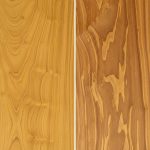
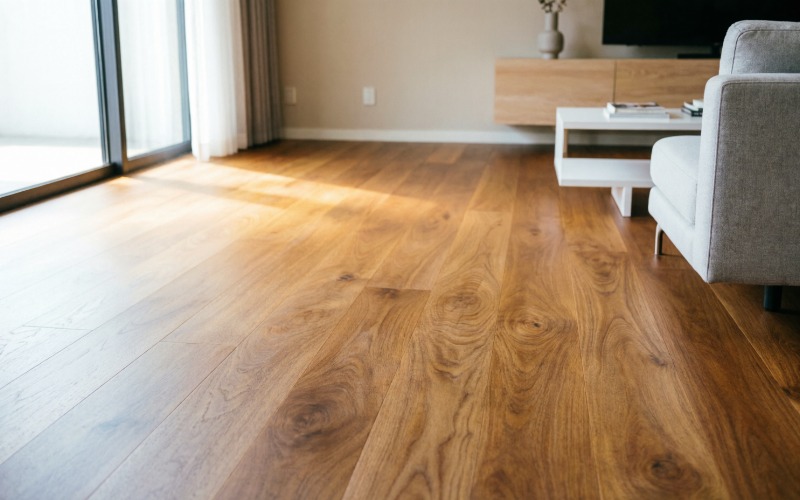
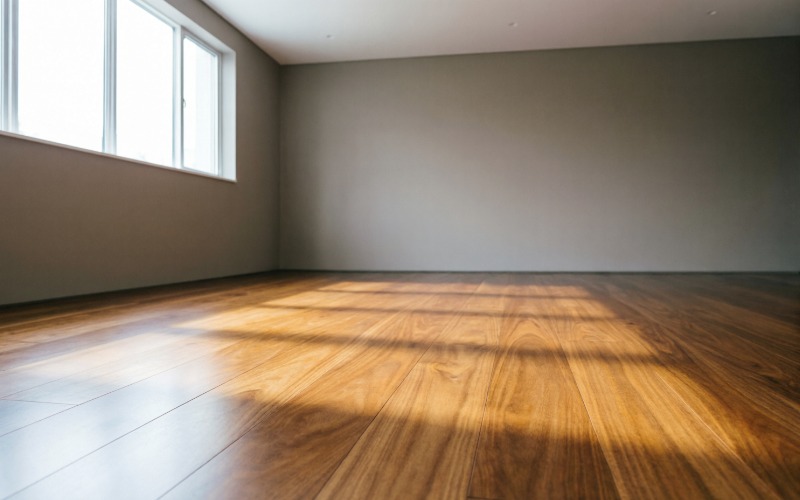
Acacia features dramatic color variation and distinctive grain patterns, suitable for contemporary and rustic interiors. Teak offers consistent golden-brown hues and a fine, straight grain ideal for classic and high-end luxury designs.
Cost and Value Over Time
Acacia is more affordable upfront, making it attractive for budget-conscious projects. Teak commands a premium price, but its low maintenance and extended lifespan often result in a lower total cost of ownership over decades.
Moisture Resistance and Maintenance
Teak’s natural oils eliminate the need for frequent sealing, resisting water and humidity. Acacia requires periodic sealing to prevent cupping and warping, especially in kitchens or bathrooms.
Environmental Compliance and Certification
Both species are often sourced with FSC and CITES certifications. Teak may also carry FLEGT permits, ensuring legal and sustainable harvesting, critical for commercial projects and high-profile architectural contracts.
Installation and Technical Considerations
Acacia floors may expand or contract more than Teak due to its lower dimensional stability. For high-traffic areas, Teak is preferred for floating or glued installations, whereas Acacia may require acclimation and precise moisture control.
Choosing the Right Wood for Your Project
Selection depends on key factors:
- Budget: Acacia for cost efficiency; Teak for long-term investment.
- Lifestyle: High-moisture areas benefit from Teak’s natural resistance.
- Design Intent: Bold, varied grains favor Acacia; uniform luxury favors Teak.
- Longevity: Teak outlasts Acacia with minimal upkeep.
Maintenance Best Practices for Hardwood Flooring
For Acacia:
- Seal with high-quality polyurethane every 2-3 years.
- Maintain 40–60% indoor humidity to prevent expansion.
- Use furniture pads to reduce scratches.
For Teak:
- Minimal maintenance required due to natural oils.
- Light sanding or oiling every 5–7 years enhances sheen.
- Routine sweeping to remove grit.