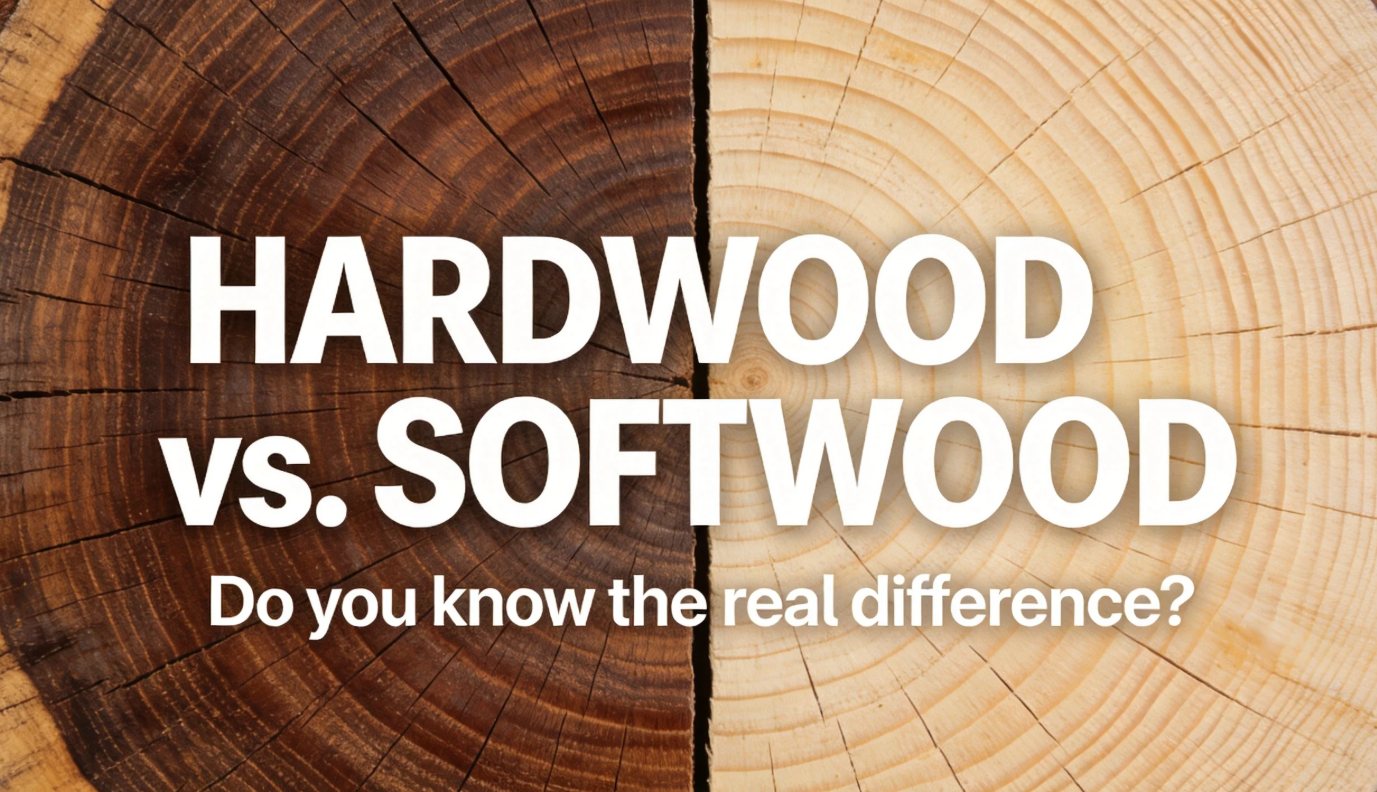
When people talk about timber, two terms often come up: hardwood and softwood. Many buyers assume that hardwood must always be harder, stronger and more durable than softwood. However, this is not always true.
The difference between hardwood and softwood does not primarily depend on how hard the wood feels. Instead, it comes from the type of tree that produces the timber.
Understanding this distinction helps timber buyers, manufacturers and woodworking professionals make better decisions when selecting materials for different applications.
1. What Is Hardwood?
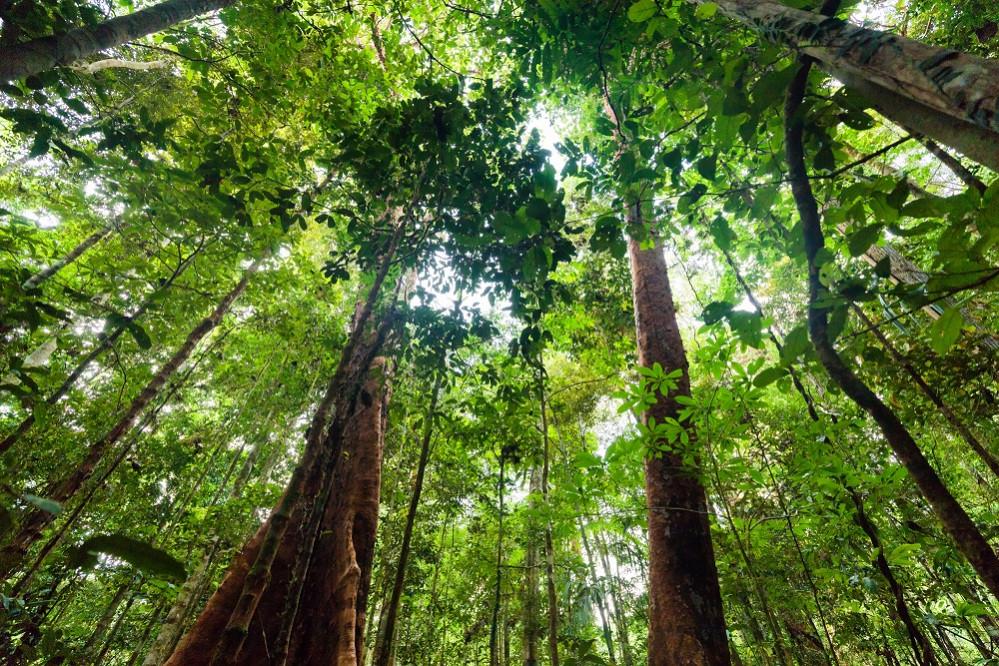
Hardwood comes from angiosperm trees, which are flowering plants. Most hardwood species produce broad leaves, although some retain their leaves throughout the year while others shed them seasonally.
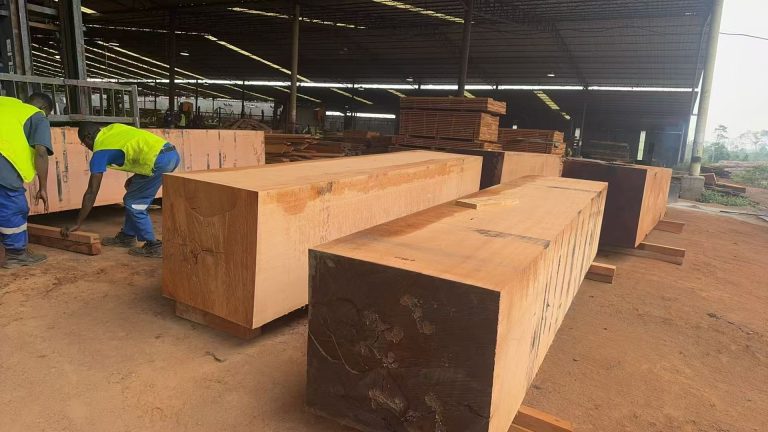
Many well-known tropical timber species belong to this group. African hardwoods such as Okoume, Iroko, Sapelli, Padouk and Azobe are all examples of hardwood.
Hardwood generally has a more complex internal structure. Its wood contains vessels, commonly known as pores, which transport water and nutrients through the tree. These vessels contribute to the different grain patterns and textures that we see in various hardwood species.
Depending on the species, hardwood can offer a wide range of characteristics, including:
- Different levels of density and natural hardness
- Distinctive grain patterns and colours
- Various levels of natural durability
- Different machining, drying and finishing properties
This diversity makes hardwood suitable for many applications, from furniture and interior joinery to flooring, construction and heavy-duty engineering projects.
2. What Is Softwood?
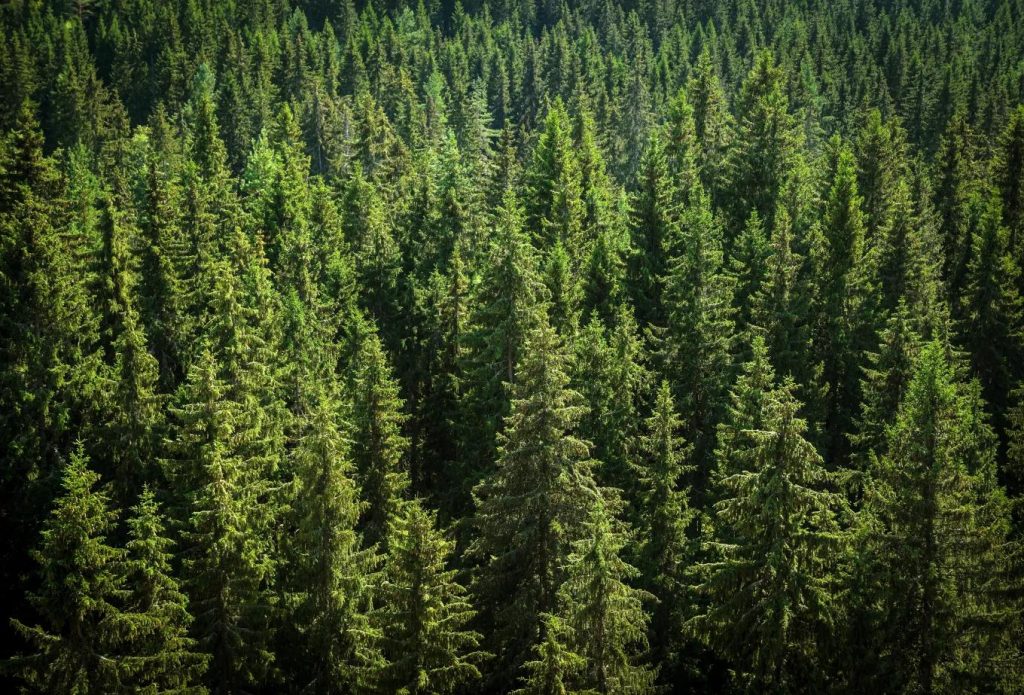
Softwood comes from gymnosperm trees, most commonly conifers. These trees usually produce seeds in cones and often have needle-like or scale-like leaves.
Pine, spruce, fir and cedar are familiar examples of softwood species.
Unlike most hardwoods, softwoods generally do not contain the same type of vessels. Instead, they mainly use elongated cells called tracheids to transport water and provide structural support.
Softwood often has a simpler cellular structure and can be easier to process, depending on the species and intended application.
Common uses of softwood include:
- Construction framing
- Roof structures
- Packaging and pallets
- Pulp and paper production
- Interior fittings and furniture
- General woodworking
However, softwood does not automatically mean weak or low-quality timber. Many softwood species offer excellent strength-to-weight ratios and perform well in demanding construction applications.
3. Hardwood vs. Softwood: Key Differences
Although both groups provide valuable materials for the timber industry, they differ in several important ways.
| Comparison | Hardwood | Softwood |
|---|---|---|
| Botanical origin | Angiosperms (flowering plants) | Gymnosperms (mostly conifers) |
| Common tree types | Broad-leaved trees | Pine, spruce, fir and other conifers |
| Internal structure | Usually contains vessels and fibres | Mainly consists of tracheids |
| Density | Ranges from very low to very high | Ranges from very low to high |
| Grain and texture | Often highly varied | Often more uniform, depending on species |
| Common applications | Furniture, flooring, joinery and construction | Framing, packaging, construction and paper |
| Processing | Varies considerably by species | Varies considerably by species |
One important point: these are general characteristics, not absolute rules. Individual species can differ significantly in density, strength, durability and workability.
4. Why Hardwood Is Not Always Harder Than Softwood
This is one of the most common misunderstandings in the timber industry.
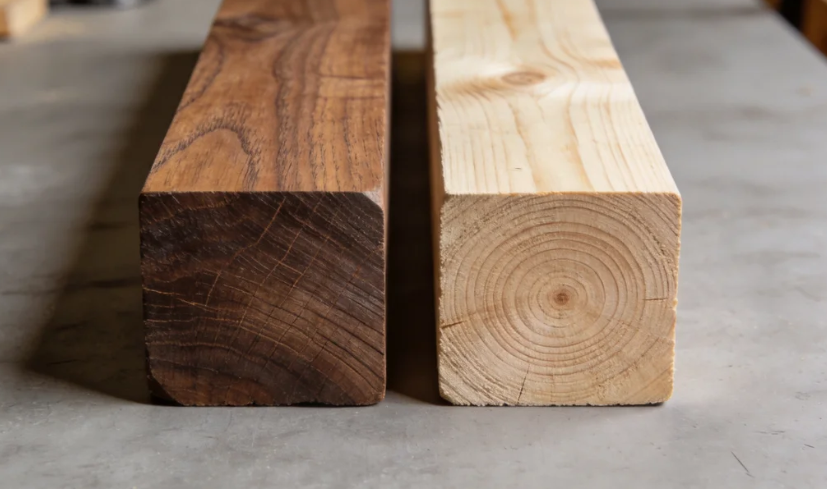
The terms hardwood and softwood describe botanical classifications, not a direct measurement of physical hardness.
For example, Balsa is technically a hardwood, even though it is extremely lightweight and soft. On the other hand, some softwood species, such as Douglas fir, can offer impressive strength and structural performance.
Several factors influence the actual hardness of timber:
Wood Density
Density is one of the important factors affecting how hard a piece of timber feels. Generally, denser wood tends to offer greater resistance to indentation, although density alone does not determine every mechanical property.
Cellular Structure
Different species have different cell arrangements, wall thicknesses and proportions of supporting tissues. These differences influence the timber’s physical and mechanical properties.
Moisture Content
Moisture content also affects wood properties. Timber generally becomes harder and stronger as it dries below the fibre saturation point, although drying conditions and defects can influence its final performance.
Species and Growing Conditions
Even within the same species, density and other properties can vary according to growing conditions, age and the part of the tree from which the timber comes.
Therefore, buyers should evaluate the actual properties of each species rather than relying only on the terms hardwood or softwood.
5. How Should Timber Buyers Choose Between Hardwood and Softwood?
The right choice depends on the intended application, required performance, processing methods and purchasing budget.
For example:
- Furniture manufacturing: Buyers may prefer hardwood for its appearance, variety of colours and range of mechanical properties. However, suitable softwood can also serve many furniture applications.
- Construction: Both hardwood and softwood can work well. The correct choice depends on structural requirements, loading conditions and applicable building standards.
- Flooring: Buyers often consider hardness, wear resistance, dimensional stability and surface appearance.
- Packaging and pallets: Softwood often provides a cost-effective solution, while selected hardwood species suit applications requiring greater strength or durability.
- Outdoor applications: Natural durability, preservative treatment, moisture exposure and service conditions matter more than the hardwood or softwood classification alone.
Before purchasing timber, buyers should consider density, strength, moisture content, natural durability, dimensions and the intended working environment.
6. Understanding Timber Beyond Its Name
In international timber trading, knowing whether a species belongs to the hardwood or softwood group is only the starting point.
Professional buyers look beyond the classification. They also examine the species’ technical characteristics, quality grade, dimensions, moisture content and suitability for their production requirements.
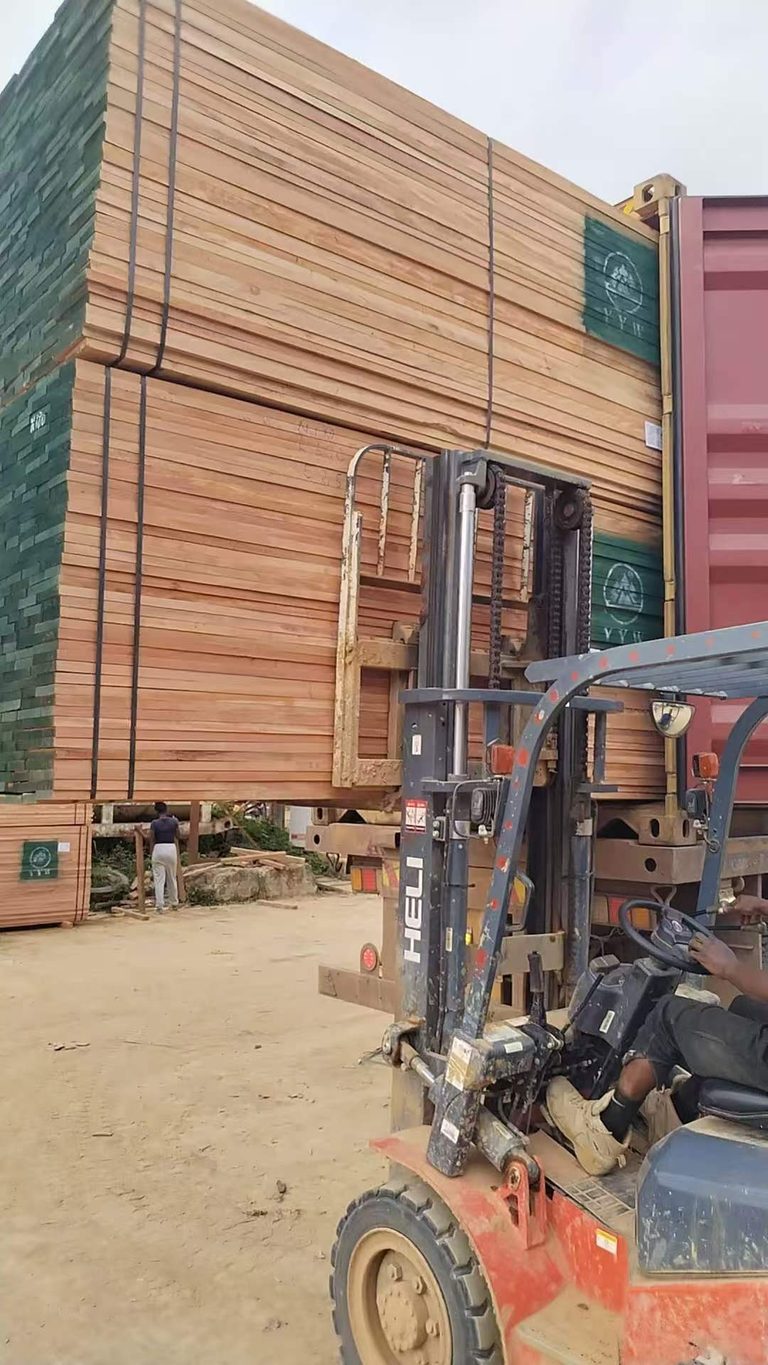
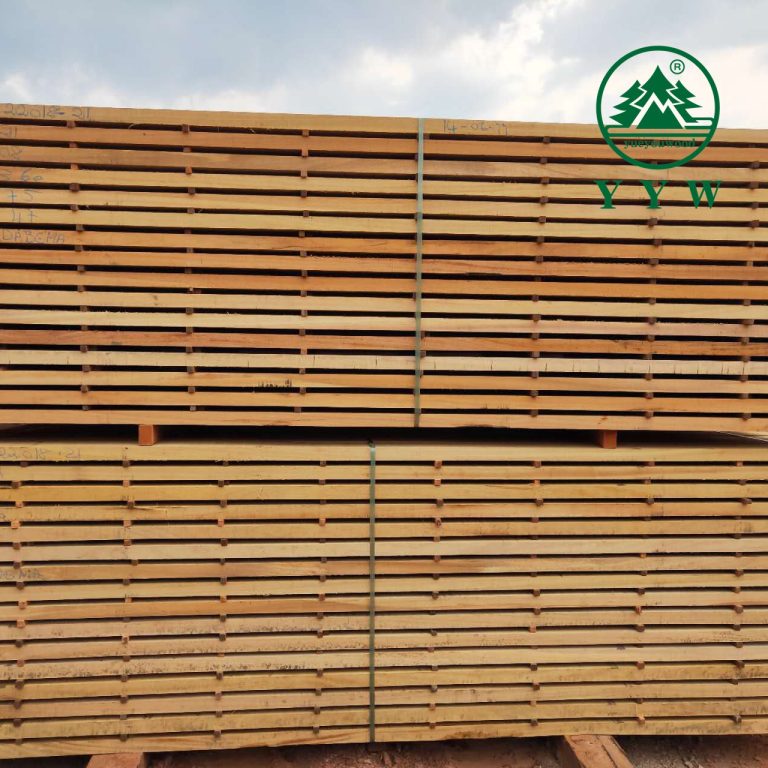
At YYW Timber, we focus on African hardwood sawn timber and understand that every species has its own characteristics and applications.
From lightweight species for general woodworking to dense hardwoods for demanding structural applications, selecting the right timber requires a clear understanding of both the material and its intended use.
Looking for African hardwood sawn timber?
Contact YYW Timber to discuss your timber requirements, specifications and sourcing needs. We welcome enquiries from importers, distributors, wholesalers and manufacturers worldwide.