Summary (BLUF):
Zebra Wood (Microberlinia brazzavillensis) is an elite West African tropical hardwood globally renowned for its distinct, high-contrast dark brown and golden-yellow zebra-like striping. Exhibiting superior hardness (Janka 1,570 lbf) and exceptional density, it is the premier choice for luxury architectural millwork, high-end furniture, musical instruments, and premium automotive or yacht veneers, making it an incredibly high-value, worthwhile investment for commercial B2B importers.
What Is Zebra Wood?
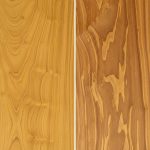
Zebra Wood, taxonomically cataloged as Microberlinia brazzavillensis, represents one of the most visually dramatic and structurally complex exotic hardwoods entering the international B2B timber trade. Universally recognized in commercial sectors under the trade names Zebrano, Zingana, or Allen Ele, this species belongs to the Fabaceae family. The absolute defining characteristic of Zebra Wood is its striking, high-contrast, bi-colored aesthetic profile. The wood features a light golden-yellow or straw-colored background canvas that is naturally punctuated by regular, alternating dark brown, dark gray, or near-black vertical streaks.
From a botanical and architectural perspective, this pattern is not merely superficial; it is a manifestation of the tree’s unique growth rings and alternating cellular density. The trees themselves are medium to large elements of the West African rainforest canopy, typically achieving mature heights ranging from 100 to 130 feet (30 to 40 meters), with straight, cylindrical trunks measuring between 3 to 5 feet (0.9 to 1.5 meters) in diameter. The sapwood is distinctly demarcated from the heartwood, appearing as a wide, pale white or cream band that is typically excluded during the primary milling process to maximize the recovery of high-value, striped heartwood. For industrial buyers, developers, and premium manufacturers, Zebra Wood is not treated as a utility lumber but rather as an architectural statement material that bridges the gap between raw natural art and structural performance. Its presence in a specification list instantly elevates the market positioning of any luxury commercial product.
If you’re just getting started, learn what Zebra Wood is, including its botanical classification, common names, natural habitat, and why it is valued as one of Africa’s most distinctive hardwood species.
Where Does Zebra Wood Come From?
The biological distribution of genuine Zebra Wood (Microberlinia brazzavillensis) is strictly confined to the equatorial, dense tropical rainforest ecosystems of West-Central Africa. The primary sustainable commercial logging concessions are located within the geographic borders of Cameroon, Gabon, and the Republic of the Congo. These specific geographic maritime and river basin microclimates provide the deep, nutrient-dense, well-drained acidic soils and constant high humidity necessary for the slow maturation of the species, which directly influences the density and sharpness of its signature striping.
[West-Central African Rainforest Concessions]
       │
       ├──> Cameroon (Douala Port Hub) ───> Global B2B Export
       ├──> Gabon (Libreville Port)    ───> European / Asian Markets
       └──> Congo (Coastal Logistics)  ───> North American Custom Orders
In Cameroon, the species is heavily concentrated in the Southern and Coastal provinces, where forestry management is overseen by strict governmental quotas. In Gabon, it thrives in the interior rainforest zones. Understanding the exact provenance of your Zebra Wood is commercially vital for B2B buyers due to subtle variations in soil minerals; for instance, timber sourced from specific Cameroon concessions is widely noted for displaying a deeper, more rich golden hue, whereas Gabonese Zebrano often exhibits tighter, highly linear black striping that is exceptionally favored by European veneer slicing mills.
Our company coordinates logistics directly with verified concessions within these regions. The harvested round logs are securely transported via terrestrial logging corridors to major deep-water maritime trade hubs, principally the Port of Douala (Cameroon) and the Port of Owendo/Libreville (Gabon). By maintaining an uncompromised presence at the source, we ensure a seamless chain of custody, ensuring that our global distribution network receives authentic, legally harvested Microberlinia rather than lookalike substitute species like Dicorynia guianensis (Angelique) or Belinga, which lack the true mechanical and visual prestige of authentic African Zebrano.
Curious about its origin? Discover where Zebra Wood comes from, including its natural distribution across Central and West Africa and the forests where it grows.
Zebrano Wood Physical Properties
From a mechanical and engineering standpoint, Zebra Wood is classified as a heavy, dense, and high-performance tropical hardwood capable of withstanding significant structural loads. Industrial timber specifications dictate an average dried density of approximately 47 lbs/ft³ (750 kg/m³) at a standardized 12% moisture content, with specific gravity hovering around 0.61 to 0.75. This places it in a elite density class similar to or exceeding traditional North American and European hardwoods like White Oak or Hard Maple.
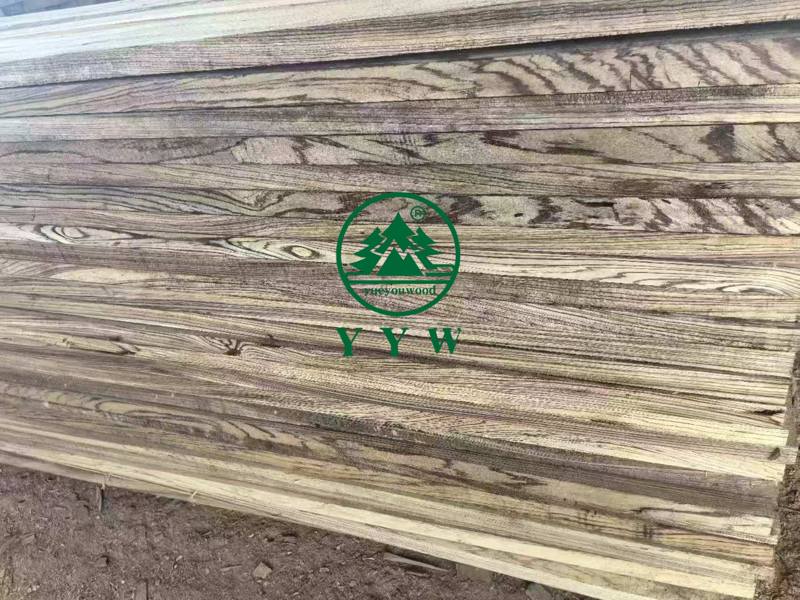
The structural capabilities of Zebra Wood are detailed below:
- Janka Hardness: Evaluated at approximately 1,570 lbf (6,980 N). This mechanical metric indicates exceptional resistance to surface indentation, impact, and wear, ensuring long-term durability in high-traffic flooring and commercial installations. Understanding Zebra Wood hardness helps determine whether it is suitable for flooring, furniture, or heavy-duty applications.
- Modulus of Rupture (MOR): Measured at 17,800 lbf/in² (122.7 MPa). This signifies immense bending strength, allowing the wood to resist failure under heavy perpendicular weight loads.
- Modulus of Elasticity (MOE): Rated at 2,370,000 lbf/in² (16.34 GPa). This extraordinarily high stiffness rating proves that Zebra Wood experienced minimal deflection or flexing when subjected to structural tension.
- Crushing Strength: Quantified at 9,310 lbf/in² (64.2 MPa), indicating a massive capacity to endure parallel compressive forces, which is essential for heavy furniture legs and architectural load-bearing pillars.
- Volumetric Shrinkage: Tends to be relatively high, with Radial shrinkage at approx 5.4%, Tangential at 8.9%, and Volumetric at 14.0%. This highlights the absolute necessity of precision kiln-drying protocols to stabilize the wood before cross-border shipping.
- Natural Durability: Classified as durable to moderately durable regarding resistance to fungal decay and wood-boring insects, though its true industrial value is localized to climate-controlled interior applications where its structural integrity can be maintained indefinitely.
For detailed technical specifications, refer to our Zebra Wood density chart, which compares density values with other popular hardwood species.
If durability is your primary concern, learn whether Zebra Wood is durable enough for demanding residential and commercial applications. Although naturally durable, it’s also worth understanding Zebra Wood water resistance before using it in humid environments.
Zebra Wood Characteristics
The anatomical and sensory characteristics of Zebra Wood are complex, requiring an expert eye to evaluate during bulk grading operations. The texture of the timber is inherently coarse, open, and uneven, featuring medium-to-large open pores. This coarseness is a direct result of the dramatic structural variance between the soft, earlywood pale bands and the highly condensed, fibrous dark latewood bands. The grain pattern is predominantly interlocked or wavy, a botanical trait where the wood fibers alternate their direction of growth over successive years. This interlocked nature creates a captivating optical phenomenon known as chatoyancy—a three-dimensional, ribbon-like shimmer when light reflects off a polished surface.
The dramatic appearance of this timber comes from its unique Zebra Wood grain patterns, which vary depending on the cutting method and growth conditions.
Like many tropical hardwoods, Zebra Wood color variations can occur due to age, exposure to light, and finishing methods.
The visual demarcation between the heartwood and sapwood is stark and absolute. The sapwood is a non-commercial, pale cream or chalky white zone that typically spans 2 to 4 inches beneath the bark, lacking the necessary oils, density, and stripes of the interior wood. The heartwood contains the high-value deposits of natural resins and extractives that give the wood its distinct zebra coloration.
Natural variations within the heartwood are expected: some logs display a highly structured, parallel geometric alignment of stripes (often called “pencil stripes”), while others feature a wild, chaotic, wavy, or marbled figure. For large-scale manufacturing consistency, understanding these structural variations is paramount. When our timber specialists inspect raw logs at the African mills, we categorize the wood based on stripe regularity to guarantee that architectural veneer packages or solid lumber batches maintain visual uniformity across expansive multi-room installations.
To distinguish this species from similar striped hardwoods, refer to our Zebra Wood identification guide, which explains its grain, color, texture, and other identifying features.
If you’re sourcing timber internationally, it’s important to know how to identify genuine Zebra Wood and avoid substitutes or misidentified species.
Zebra Wood Sizes and Specifications
To satisfy the diverse requirements of international manufacturing operations, industrial furniture plants, and architectural design houses, Zebra Wood must be processed into highly standardized, internationally recognized sizes and cutting specifications. We supply Zebra Wood across four primary structural formats, each subject to rigorous quality control:
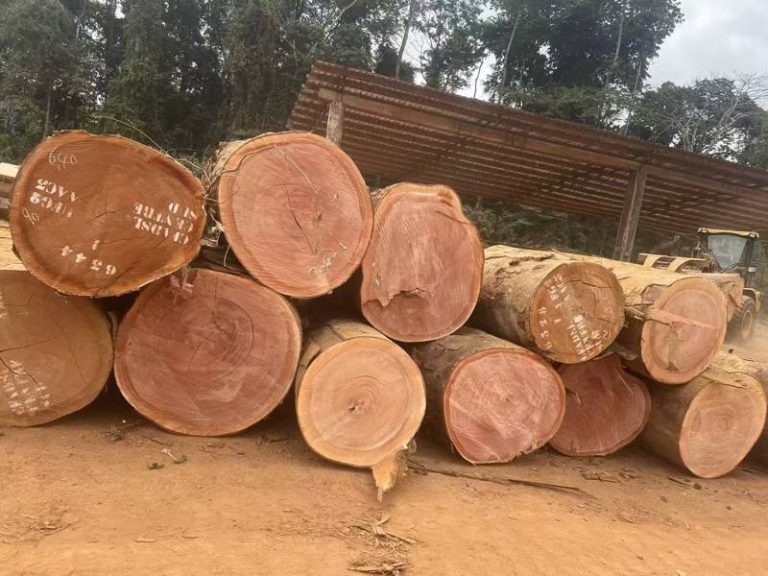
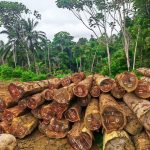
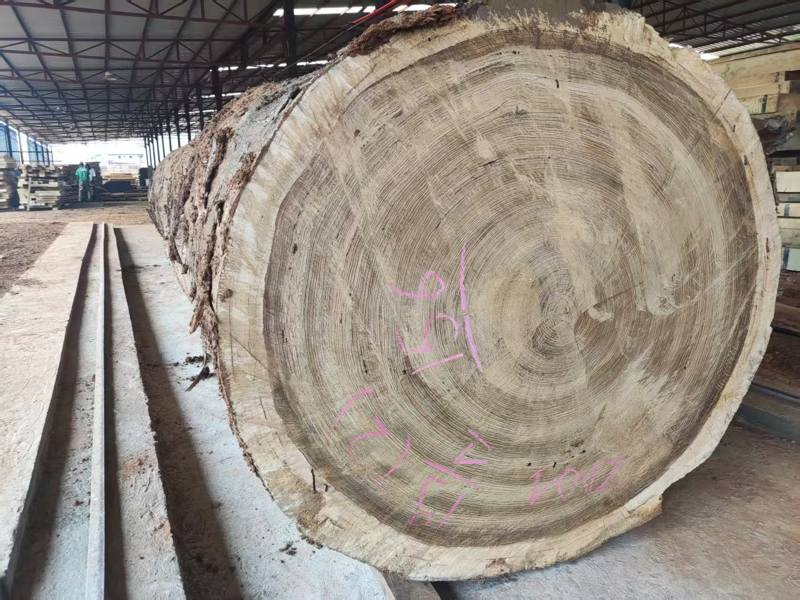
- Round Logs: Exclusively exported as fresh-cut, straight, and debarked cylinders. Standard diameters range from 60 cm to 110 cm+ (24″ to 43″+), with standard log lengths spanning from 4.0 meters to 6.0 meters. These dimensions are explicitly selected to maximize the volumetric recovery rate of premium quarter-sawn boards during secondary milling.
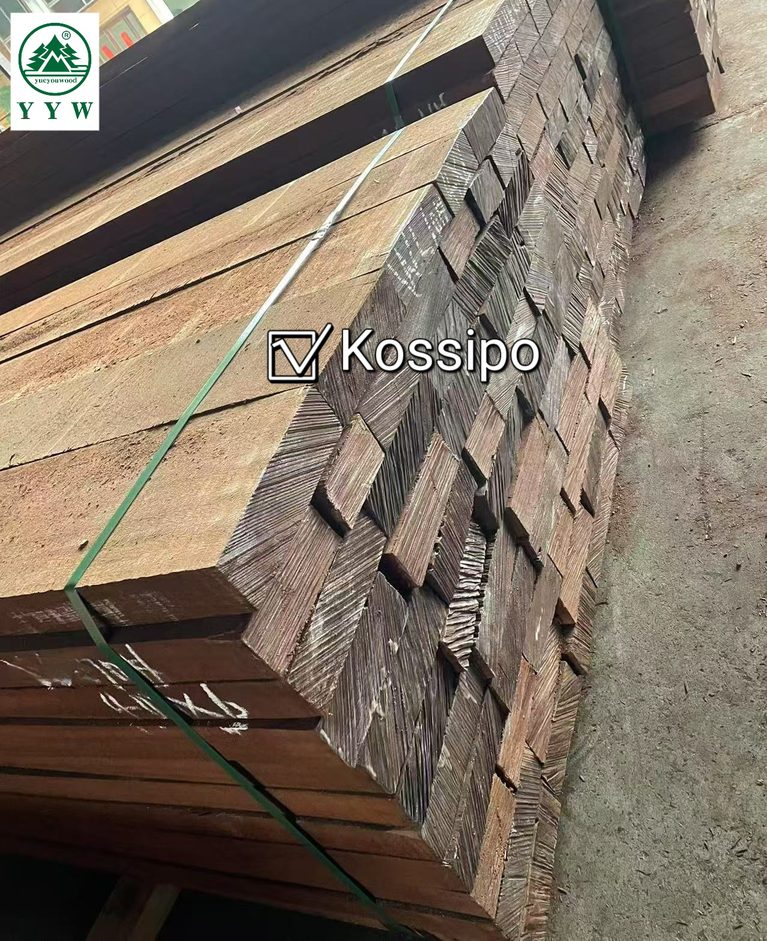
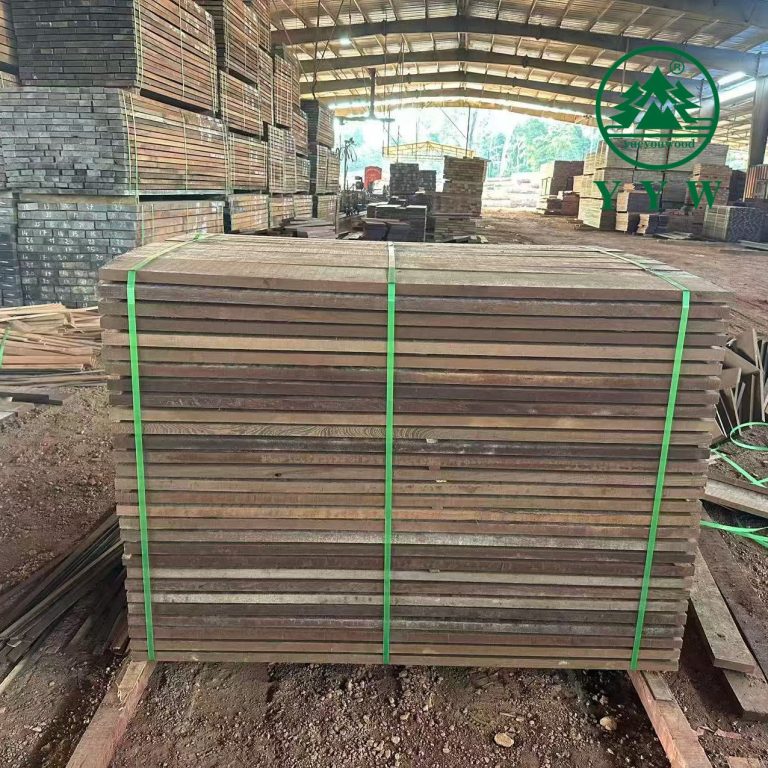
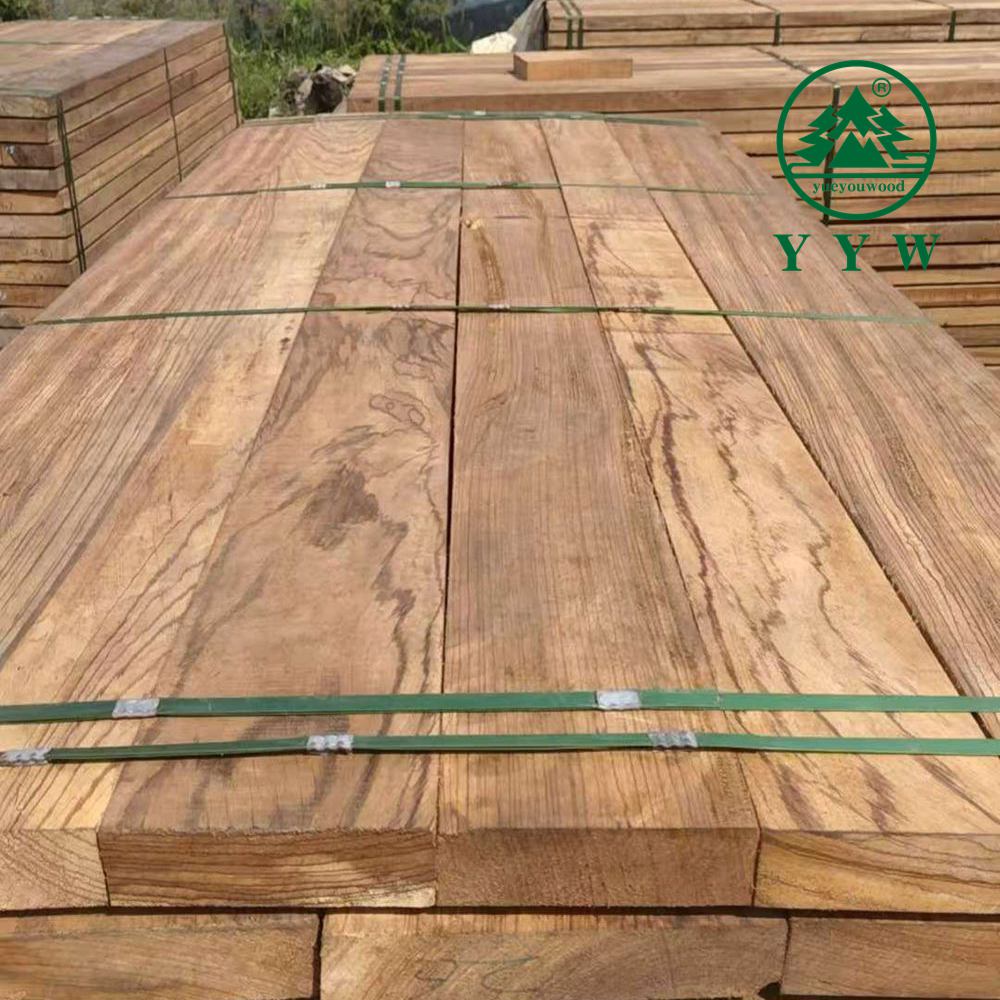
- Sawn Lumber (Square Edged): Milled precisely to international thicknesses, primarily offered in 4/4 (1 inch), 5/4 (1.25 inches), 6/4 (1.5 inches), and 8/4 (2 inches) dimensions. Widths are standardly sorted from 100mm to 250mm+ (4″ to 10″+), and lengths range from 2.0 meters to 3.5 meters. All lumber is supplied as either Air-Dried (AD) or professionally Kiln-Dried (KD).
- Live-Edge Slabs: Book-matched, sequential slabs designed for high-end statement conference tables or residential countertops. These feature thicknesses of 50mm to 80mm (2″ to 3.1″), with massive widths reaching up to 100cm+ to highlight the full organic profile of the tree trunk.
- Veneer Flitches: Sliced precisely via flat-cut or quarter-cut methods into industrial thicknesses of 0.5 mm, 0.6 mm, 1.2 mm, or 2.0 mm. Veneer lots are kept strictly sequentially numbered to ensure seamless grain matching across vast architectural paneling runs, luxury yacht interiors, and premium automotive dashboards.
Zebra Wood is available in multiple forms, including logs, rough sawn boards, kiln-dried lumber, slabs, and decorative veneer. For furniture manufacturers and timber importers looking for consistent quality, premium Zebrano lumber is widely used for cabinetry, flooring, architectural millwork, and luxury interior applications.
What is Zebra Wood Used for
Due to its high cost and striking visual dominance, Zebra Wood is utilized almost exclusively in luxury, premium-tier, and high-margin manufacturing sectors. One of the most popular applications is Zebra Wood furniture, where its bold striped appearance creates a premium visual effect.
In the high-end furniture manufacturing industry, it serves as the centerpiece for executive desks, luxury dining tables, sideboards, and bespoke cabinetry. The dimensional stability of Zebra Wood also plays an important role in furniture manufacturing and architectural joinery. It is rarely used for entire mass-market furniture lines; rather, it is strategically deployed as a feature wood or focal paneling elements where its wild grain can contrast with subdued materials like dark walnut, brushed brass, or matte black steel.
In architectural millwork and luxury interior design, Zebra Wood is specified for wall cladding, elevator interiors, and reception desks in five-star hotels, corporate headquarters, and high-end retail boutiques. The musical instrument industry highly prizes Zebrano for both its acoustic resonance and aesthetic beauty; it is extensively used for acoustic and electric guitar back and sides, custom bass guitar tops, and premium drum shells, where its density imparts a bright, articulate, and punchy tonal quality.
Furthermore, the transportation luxury market represents a major consumer segment: precision-sliced Zebra Wood veneer is layered and encapsulated in high-gloss clear coats to form the dashboard and console trims of luxury sports cars and custom private yachts. Smaller, high-margin applications also include luxury knife handles, turned artisan bowls, custom humidores, and high-end eyewear frames, proving its versatile appeal across diverse craftsmanship sectors.
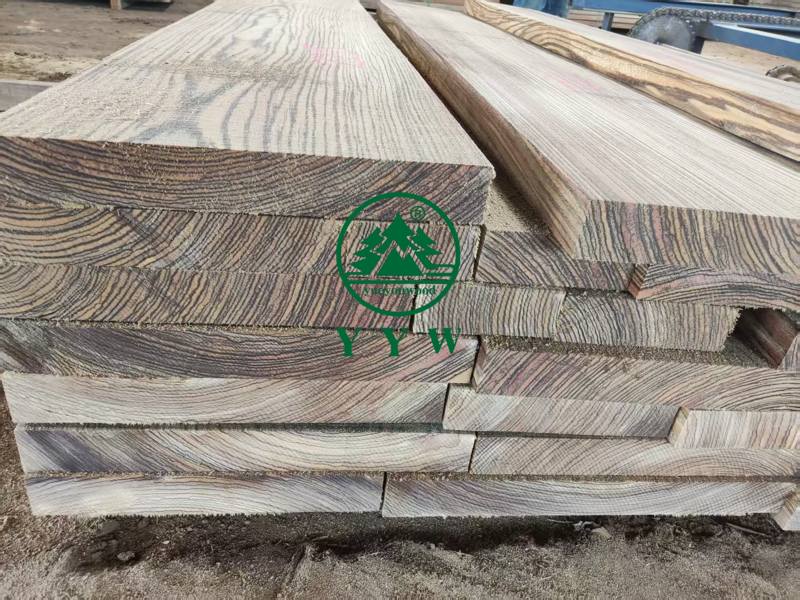
Explore the best uses for Zebra Wood, from luxury furniture and flooring to decorative veneers and architectural millwork. Before selecting it for exterior projects, explore whether Zebra Wood is suitable for outdoor use and what protective treatments are recommended.
If you’re considering Zebra Wood flooring, compare its advantages and maintenance requirements before installation. For decorative surfaces, Zebra Wood veneer offers the same striking figure while reducing material costs. Some manufacturers also use Zebra Wood for musical instruments, especially guitar bodies and decorative components.
Zebra Wood Pros and Cons
Operating successfully with Zebra Wood requires a balanced, objective understanding of its exceptional strengths and its inherent mechanical eccentricities. It is an uncompromising material that yields spectacular results only when handled with professional expertise.
| Advantages & Commercial Benefits | Technical Disadvantages & Challenges |
| Unrivaled Aesthetic Appeal: Offers an instantly recognizable, exotic look that commands premium pricing in retail markets. | Machining Tear-Out Risk: The highly interlocked grain frequently causes fiber tearing during planing and jointing. |
| Superior Surface Hardness: Exceptional Janka rating ensures elite resistance to scratches, impacts, and heavy surface wear. | Gluing Difficulties: Natural subsurface oils and resin pockets can interfere with standard PVA glue bonding. |
| Excellent Polish & Chatoyancy: Accepts high-gloss lacquers, oils, and urethanes beautifully, producing a luxurious 3D depth. | High Volumetric Shrinkage: Significant differential between radial and tangential shrinkage requires extreme drying care. |
| High B2B Profit Margins: Finished products utilizing authentic Zebrano consistently command higher market valuations. | Tool Wear: High density and mineral content dull cutting edges rapidly, requiring continuous carbide maintenance. |
Zebra Wood vs Other Hardwoods
To help procurement managers make informed supply chain decisions, it is essential to contrast Zebra Wood against other globally traded premium hardwoods across key mechanical and visual matrices.
| Wood Species | Janka Hardness (lbf) | Dried Density (kg/m³) | Aesthetic Grain Style | Primary Commercial Limitation |
| Zebra Wood (Microberlinia) | 1,570 | 750 | High-contrast linear black & gold stripes | Demands highly complex machining and specialized kiln drying |
| Teak (Tectona grandis) | 1,070 | 650 | Golden brown with uniform, straight lines | Lacks the dramatic visual contrast; highly expensive |
| American Walnut (Juglans nigra) | 1,010 | 610 | Muted, dark chocolate wavy grain curves | Significantly softer; lower resistance to high-impact wear |
| Sapele (Entandrophragma) | 1,410 | 670 | Uniform reddish-brown with interlocking ribbon grain | Fails to offer the modern, ultra-luxury aesthetic contrast |
| Iroko (Milicia excelsa) | 1,260 | 660 | Golden-yellow to medium brown uniform grain | Lacks distinctive striping; contains hard calcium deposits |
| African Mahogany (Khaya) | 1,070 | 640 | Light reddish-brown interlocking texture | Much softer; prone to deep fuzzing and structural warping |
| African Rosewood (Bubinga) | 2,410 | 890 | Deep red to purple with complex swirling quilts | Extremely heavy; subject to massive trade restrictions (CITES) |
When selecting decorative hardwoods, many buyers also compare Bubinga and Zebra Wood because both species offer exceptional appearance and durability, but differ significantly in color, grain pattern, density, and machining characteristics.
Another common comparison is between Zebra Wood and Beli. While both African hardwoods are suitable for furniture and interior applications, Zebra Wood is valued for its dramatic striped appearance, whereas Beli is often chosen for its lighter color and easier workability.
If you’re comparing premium hardwoods, our Zebra Wood vs Walnut, Zebra Wood vs Oak, Zebra Wood vs Mahogany, Zebra Wood vs Teak, Zebra Wood vs Rosewood and Zebra Wood vs Sapele guide explains the differences in appearance, density, durability, and ideal applications.
Zebra Wood Grades
Bulk industrial purchasing of Zebra Wood lumber requires strict adherence to standardized grading systems to ensure predictable yield and minimize waste factors at the manufacturing plant. We sort our manufactured lumber based on the National Hardwood Lumber Association (NHLA) standards, adapted for premium African tropical exports:
[Raw Milled Zebrano Lumber]
       │
       ├──> FAS Grade (Highest Yield: Minimum 83.3% Clear Cuts, Consistent Stripes)
       ├──> Select Grade (Mid-to-High Yield: Clean Face, Minor Sapwood Permitted)
       └──> Common No.1/2 Grade (Utility Yield: Structural Soundness with Natural Defects)
- FAS (First and Seconds): This represents the absolute pinnacle of export grading. FAS boards guarantee a minimum of 83.3% to 91.7% clear, defect-free wood on both faces. The boards must be at least 6 inches wide and 8 feet long. In Zebra Wood specifically, our FAS grade also guarantees consistent stripe distribution and excludes wide bands of non-commercial sapwood, making it the perfect choice for high-end furniture manufacturing and architectural millwork where maximum structural yields are mandatory.
- Select Grade: This grade provides an excellent cost-to-benefit ratio for factories. It treats the best face of the board as FAS quality, while the reverse face grades out at No. 1 Common standard. It allows for minor amounts of sound sapwood along the edges and occasional small pin knots, which can be easily optimized out during cross-cutting.
- Common Grade (No. 1 & No. 2 Common): Often referred to as “Shop Grade,” these boards are ideal for manufacturers producing shorter or narrower components, such as luxury flooring blocks, knife handles, or smaller turned items. These boards permit natural structural defects like knots, mineral streaks, and wider sapwood bands, but offer a highly economical price point for factories capable of programmatic defect clipping.
Zebra Wood Drying and Moisture Content
Drying Zebra Wood is widely considered one of the most technically challenging processes in the entire wood science discipline. Due to the radical structural variance between the dark and light wood fibers, the tangential and radial shrinkage rates differ significantly, creating immense internal tension during moisture evaporation. If dried too quickly, Zebra Wood will inevitably suffer severe surface checking, deep end-splitting, structural honeycombing, or complete warping.
Our industrial drying protocol is executed with meticulous precision over a multi-month schedule:
[Milling: Fresh Green Status]
       │
       ▼
[Phase 1: Controlled Air-Drying (AD)] ────> Slow reduction to ~20% MC under shade
       │
       ▼
[Phase 2: Progressive Kiln-Drying (KD)] ──> Computerized steam kiln down to 8%–10% MC
       │
       ▼
[Phase 3: Conditioning & Equalization] ──> Internal stress relief prior to container loading
- Controlled Air-Drying (AD): Freshly sawn lumber is stacked under protective shade structures with thick, uniform spacers (stickers) placed every 50 cm to ensure balanced horizontal airflow. The timber is held here until the core moisture content drops slowly to approximately 20%. This minimizes initial cell collapse.
- Progressive Kiln-Drying (KD): The seasoned lumber is transferred into computerized steam-injection dry kilns. We utilize a highly conservative, slow-step drying schedule (similar to T2-C2 or T3-C2 international schedules). The temperature is raised gradually while humidity is drawn down slowly, bringing the target moisture content to a perfectly uniform 8% to 10% for North American/European exports.
- Conditioning: A final steam-equalization phase is conducted inside the kiln to relieve internal drying stresses. This ensures that when the wood is machined at the destination factory, it remains perfectly flat and structurally stable without bowing or twisting.
How to Machine Zebra Wood
Processing Zebra Wood in an industrial setting requires specific adaptations to machinery, feed speeds, and cutting geometries to prevent catastrophic material destruction and maximize surface finish quality.
Controlled kiln schedules are recommended when learning how to dry Zebra Wood while minimizing internal stress.
- Sawing and Rip-Cutting: Always employ heavy-duty industrial machinery equipped with sharp, carbide-tipped saw blades. Because of the dense nature of the dark bands, high-speed steel blades will dull almost immediately, leading to overheating and severe thermal scorch marks on the wood face. Maintain a steady, uniform feed rate; pausing during a cut Zebra wood will leave deep burn lines that require intensive sanding to remove.
- Planing and Jointing: This is the most critical phase. The interlocked grain of Zebra Wood creates a massive risk of tear-out or “chipping” when the cutterhead rotates against the alternating fiber direction. To mitigate this, factories should exclusively use modern helical or spiral cutterheads equipped with indexable carbide inserts. Furthermore, reduce the cutting angle to 15 or 20 degrees and decrease the feed speed to maximize the number of cuts-per-inch (CPI), yielding a flat, clean surface.
- Sanding Operations: Because the pale wood bands are naturally softer than the dark streaks, careless drum sanding can result in “dishing,” where the softer wood is hollowed out deeper than the hard stripes. Always utilize wide-belt sanders with firm, high-durometer platens. Begin with a aggressive 80-grit to flatten the surface, then transition sequentially through 120, 180, and 220-grit.
- Gluing and Assembly: Zebra Wood contains natural organic resins and subsurface oils that can act as a barrier to standard water-based wood glues. Prior to applying adhesive, the bonding surfaces must be lightly sanded and completely wiped down with a volatile solvent such as acetone or denatured alcohol to strip surface oils. Utilize a high-strength, slow-cure polyurethane adhesive or an industrial epoxy for maximum joint longevity. (Proper preparation is essential if you need to glue Zebra Wood, especially for structural furniture applications.)
- Finishing Application: Zebrano responds beautifully to a vast array of finishes. Because it is an open-pored hardwood, achieving a glassy, mirror-like luxury finish requires the application of a professional clear grain filler. Once filled, the timber can be coated with high-solid conversion varnishes, polyurethane lacquers, or natural penetrating oils (like Tung or Danish oil), which profoundly accentuate the chatoyancy and depth of the zebra patterning. Applying the correct finish enhances contrast and highlights the natural striping, so it’s worth learning how to finish Zebra Wood properly.
Although many woodworkers prefer its natural appearance, some projects require techniques to stain Zebra Wood evenly. Following proper drying and storage procedures can help prevent Zebra Wood from cracking during machining and long-term use.
Zebra Wood Price Guide
Zebra Wood is firmly anchored in the luxury, high-value tier of the global exotic timber market. Pricing is never static and fluctuates based on strict qualitative variables, dimensional scarcity, and central African export logistics.
[Global Zebra Wood Pricing Structure]
       │
       ├──> Premium Logs (FOB Africa): $800 - $1,300 per m³ (Diameter dependent)
       ├──> Kiln-Dried FAS Lumber: $12 - $22 per Board Foot (Thickness dependent)
       └──> Sequenced Veneer Flitches: $3.50 - $7.50 per m² (Stripe regularity dependent)
The fundamental drivers of international B2B wholesale pricing include:
- Stripe Regularity and Density: “Pencil-stripe” material—where the dark lines are perfectly parallel, uniform, and tight—commands a 35% to 50% price premium over logs displaying wavy, asymmetrical, or broken grain patterns, as linear uniformity is highly prized in modern architectural panelling.
- Dimensional Thickness and Width: Standard 4/4 lumber represents the baseline price. Thick-cut lumber like 8/4 or 12/4 stock commands exponentially higher rates due to the extreme difficulty of kiln-drying thick sections without causing catastrophic internal honeycombing defects.
- Log Selection Criteria: High-grade veneer logs with a uniform diameter exceeding 80 cm, a perfectly centered pith, and zero visible external growth defects fetch premium prices at African shipping ports, as they yield the highest volume of quarter-sawn clear lumber.
- Geopolitical and Seasonal Logistics: Central Africa’s equatorial rainy seasons can severely disrupt logging operations, washing out interior roads and temporarily cutting off supply routes to coastal ports. These seasonal supply drops, coupled with fluctuating ocean freight container rates, directly impact the final Cost, Insurance, and Freight (CIF) or Free on Board (FOB) price quotes.
How to Buy Zebra Wood
Procuring authentic, commercial-grade Zebra Wood in volume requires a strict, systematic quality assurance protocol. B2B importers must never buy blindly based on price sheets alone; a formalized inspection and verification checklist is vital to safeguarding your capital investment.
B2B Sourcing Checklist
- 1. Verify Botanical Authenticity (Microberlinia)
- 2. Request Digital Video/Photo Grading Certification
- 3. Audit Moisture Content (Target: 8%-10% via Pin)
- 4. Review Legality Docs (FSC / EUTR / Lacey Act)
- 5. Inspect Container Seal & Secure Export Packaging
- Botanical and Grade Verification: Always insist on the explicit inclusion of the botanical name Microberlinia brazzavillensis on all Proforma Invoices, Bills of Lading, and Certificates of Origin. Request high-resolution digital photo/video evidence of the specific lumber bundles or log lots, verifying that the grading aligns with FAS expectations (minimal sapwood, zero structural heart cracks).
- Moisture Content Auditing: Demand a certified moisture content report prior to container loading. For premium manufacturing purposes, cross-reference the shipment with a digital pin-meter reading to ensure the core moisture strictly hovers between 8% and 10%. Any shipment showing a core moisture content exceeding 15% should be rejected, as it will inevitably warp and check inside closed ocean freight containers.
- Physical Defect Inspections: Inspect the ends of sawn lumber for professional end-coating application (such as Anchorseal). This wax barrier prevents rapid end-drying and splitting. Inspect the faces for any evidence of pin-holes caused by powder-post beetles or ambrosia beetles, which can occasionally infiltrate tropical timber if it was not subjected to a proper phytosanitary kiln sterilization cycle.
- Packaging and Container Protection: Ensure that all lumber bundles are bound with high-tensile steel strapping, wrapped in protective industrial plastic, and elevated on solid skids. The containers must include industrial-strength desiccant packs to absorb ambient moisture during the maritime transit across varying climate zones, eliminating the risk of surface mold development.
- Commercial Terms and MOQ: Our standard export framework operates on a Minimum Order Quantity (MOQ) of one 20-foot full container load (FCL), which translates to a volumetric capacity of approximately 18 to 21 cubic meters (m³) of packed lumber, typically executed under flexible FOB or CIF Incoterms to protect buyer logistics.
Many international importers purchase Zebrano sawn timber because it reduces processing time and provides consistent dimensions for furniture manufacturing, flooring, and architectural projects.
Before placing an order, it’s helpful to understand the current Zebra Wood cost, Zebra Wood price per cubic meter and the factors that influence market pricing.
Zebra Wood Sustainability
In the modern international timber commerce landscape, ecological sustainability and legal compliance are no longer optional—they are strict legal imperatives mandated by frameworks such as the European Union Timber Regulation (EUTR), the US Lacey Act, and the Australian Illegal Logging Prohibition Act. Microberlinia brazzavillensis is currently classified on the IUCN Red List as vulnerable due to its localized geographic range and historical logging pressures, which underscores why responsible B2B buyers must prioritize fully transparent supply chains.
               [Chain of Custody Verification]
  Concession Harvest -> State Forestry Audit -> Port Phytosanitary Clearance -> Global Customs
It is critical to note that Zebra Wood is not listed on any CITES Appendices (Convention on International Trade in Endangered Species), meaning it is fully legal for open international trade, provided it is backed by authentic, verifiable local origin documentation. Our company is deeply committed to ethical forestry practices across West Africa. We source our logs and lumber exclusively from state-approved, managed forestry concessions that operate under strict Selective Logging Protocols. This methodology ensures that only mature, over-canopy trees are carefully harvested, leaving the surrounding younger trees, biodiversity hot spots, and soil structures completely intact to naturally regenerate the ecosystem.
We work hand-in-hand with agencies providing FSC (Forest Stewardship Council) chain-of-custody tracking where available, alongside rigorous national export clearances, providing our international corporate clients with absolute legal security and the necessary compliance documentation to satisfy any green-building certification program or corporate sustainability mandate.
Partner with the Premier African Hardwood Authority
As an established, vertically integrated supplier with decades of direct on-the-ground experience across Central and West Africa’s premium forestry concessions, YYW Timber provides unparalleled supply chain security for all your exotic hardwood requirements. Whether your manufacturing plant requires precision kiln-dried FAS Zebra Wood lumber, sequential veneer-grade round logs, or custom architectural slabs, our international export division guarantees uncompromised grading, legal compliance, and reliable global logistics.
Eliminate supply chain instability and elevate your product line with authentic African Zebrano. Contact our commercial procurement team today to request a current wholesale FOB/CIF price quote, container availability matrix, and certified lumber samples.
Looking for a Reliable Zebra Wood Supplier?
Whether you need logs, rough sawn timber, or kiln-dried lumber, choosing an experienced supplier is essential for ensuring consistent quality and reliable delivery. YYW Timber supplies export-grade Zebra Wood for furniture manufacturers, wholesalers, and timber distributors worldwide.
Explore our premium Zebrano lumber to view available sizes, specifications, and customization options for your next project.