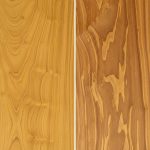
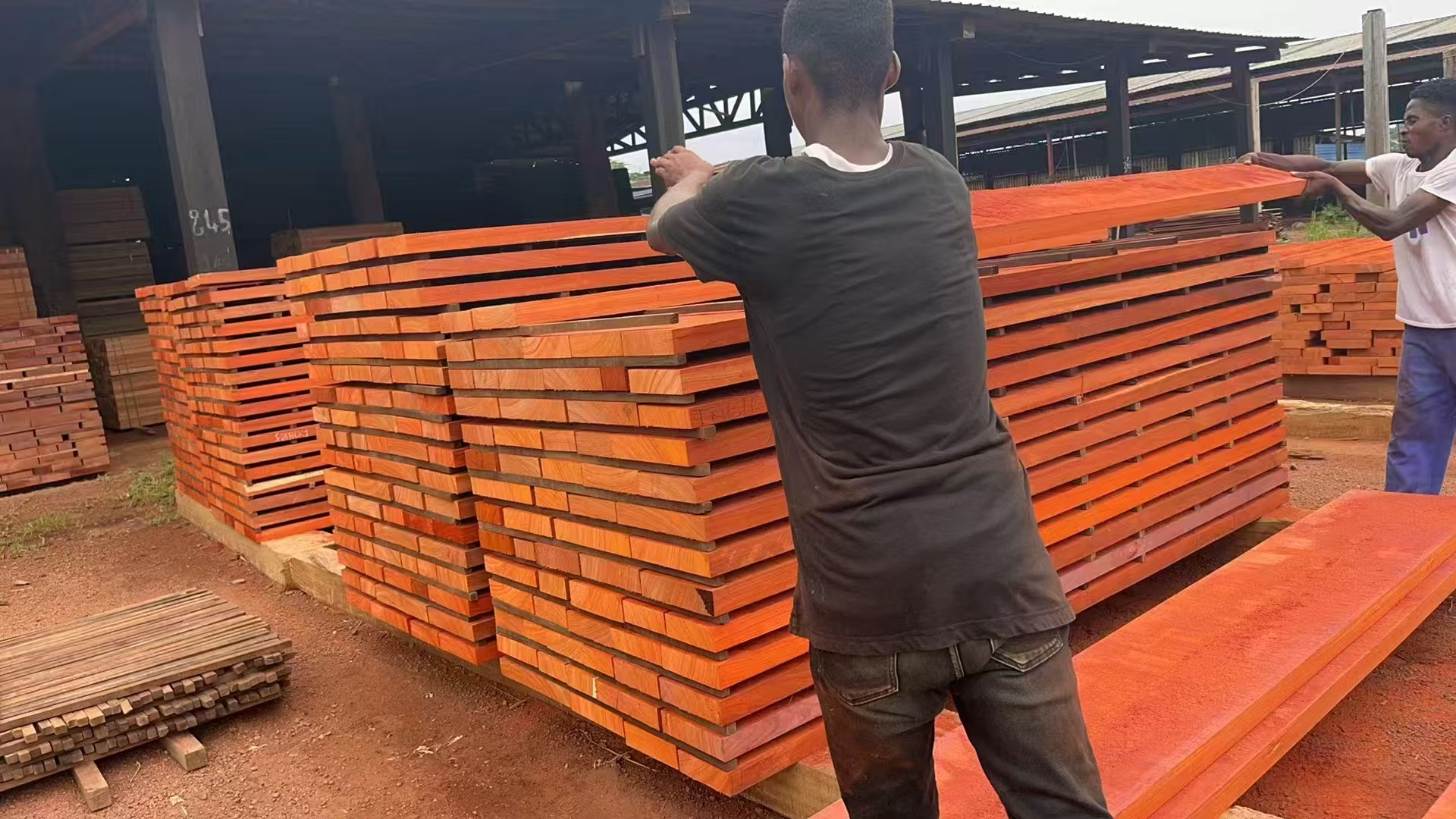
Architects must prioritize material longevity when specifying timber for high-traffic commercial environments. For airports, hotel lobbies, and premium retail spaces, surface durability is a non-negotiable KPI. The Janka Hardness test serves as the industry standard for evaluating a wood species’ resistance to denting and wear. While many traditionally turn to Teak or Oak, understanding Padauk timber as a premium hardwood reveals its superior engineering advantages. This guide analyzes why Padauk is the optimal choice for heavy-duty architectural applications.
What is the Janka Hardness Scale?
The Janka Hardness test measures the force required to embed a 0.444-inch steel ball halfway into the wood. This metric directly correlates with a floor’s ability to withstand high-heeled traffic, dropped objects, and heavy furniture movement. In the context of architectural timber specifications, a higher Janka rating translates to lower maintenance cycles and extended service life. For B2B procurement, this data provides the necessary justification for long-term ROI in commercial bidding.
Comparative Analysis: Padauk vs. Teak vs. Oak
To appreciate Padauk’s performance, we must compare it against industry benchmarks. Many engineers assume Teak or White Oak provide sufficient protection, but the data suggests otherwise. African Padauk offers a significant mechanical advantage over these species.
| Wood Species | Janka Hardness (lbf) | Density (kg/m³) | Crushing Strength (psi) |
|---|---|---|---|
| African Padauk | 1,720 | 745 | 8,130 |
| White Oak | 1,360 | 770 | 7,440 |
| Burmese Teak | 1,070 | 655 | 7,940 |
As the data shows, Padauk is approximately 60% harder than Burmese Teak. While Oak is a respectable contender, Padauk provides superior fiber density and impact resistance. For ultra-heavy industrial projects, professionals often compare Padauk vs. Azobe to find the ultimate balance of strength and aesthetics.
Engineering Advantages of High-Density Padauk
1. Superior Impact Resistance
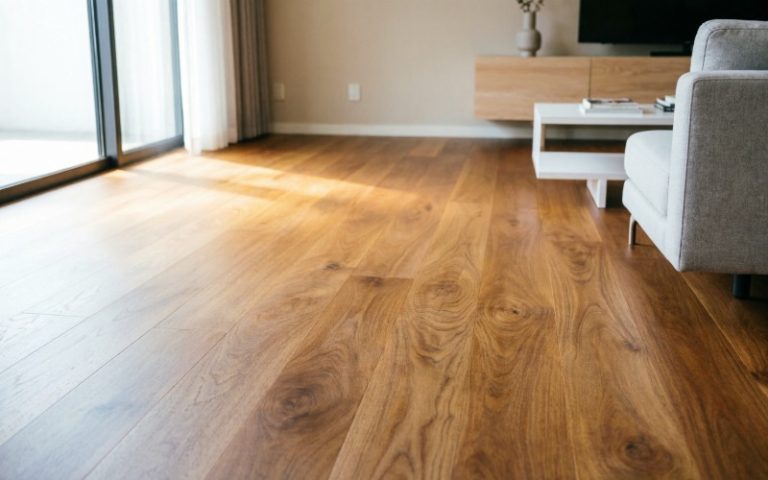
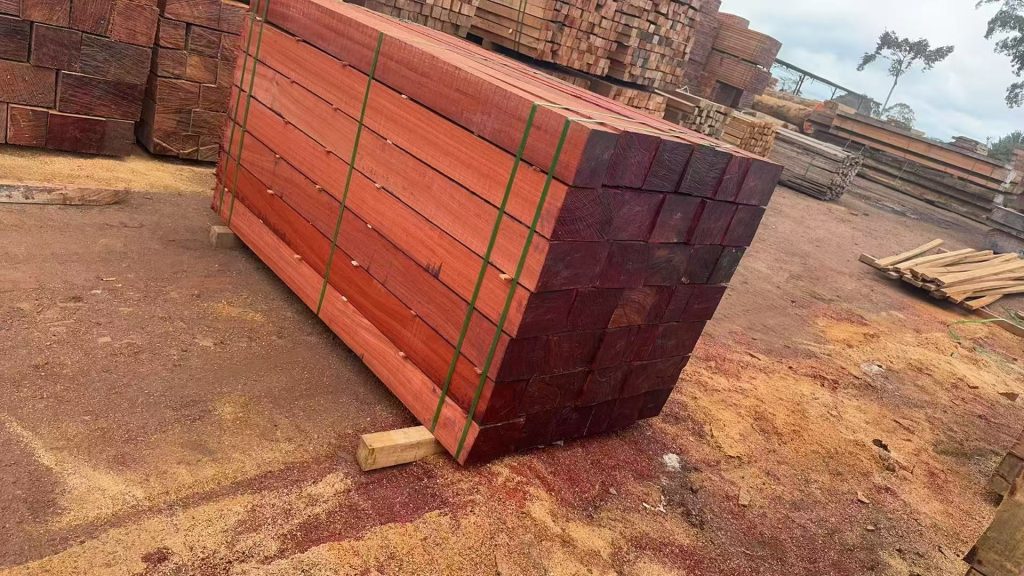
Heavy-duty wood flooring must absorb energy without fracturing or permanent deformation. Padauk’s interlocked grain structure provides a natural shock-absorption mechanism. This makes it ideal for public transit hubs and luxury automotive showrooms where point loads are extreme. Specifying FAS Grade Padauk lumber ensures a defect-free surface that maintains its integrity under constant stress.
2. Excellent Wear Resistance
In high-traffic areas, the rate of wood fiber erosion determines the refinishing frequency. Padauk’s high density slows down surface wear significantly. This technical advantage reduces the Total Cost of Ownership (TCO) for building managers. When you source African Padauk Wood, you are investing in a material that ages gracefully while retaining its structural hardness.
3. Dimensional Stability in Fluctuating Environments
Hardness is irrelevant if the wood warps due to humidity changes. Padauk exhibits a very low shrinkage coefficient once properly kiln-dried. This stability is critical for large-scale flooring installations where expansive movement can lead to buckling. Its performance in varying climates rivals that of premium Teak, but with the added benefit of nearly double the surface hardness.
Specifications for B2B Tendering
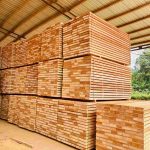
When drafting tender documents, engineers should specify “FAS Grade, Kiln-Dried (KD) African Padauk (Pterocarpus soyauxii).” This ensures the timber meets the mechanical requirements discussed in this guide. We provide comprehensive technical data sheets to support architectural firms during the material selection phase. Our direct-from-source model guarantees that the timber’s physical properties remain consistent across bulk shipments.
Conclusion: Why Engineers Choose Padauk
The Janka Hardness scale proves that African Padauk is a technical powerhouse in the timber industry. It offers the impact resistance required for commercial durability and the aesthetic prestige needed for luxury design. For architects seeking to deliver long-term value to their clients, Padauk is the scientifically superior choice over Teak and Oak for high-traffic projects.
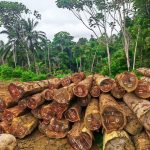
Looking for high-performance architectural timber? Contact us for Bulk Quotations of FAS Grade African Padauk Logs and Sawn Timber. We offer direct factory pricing and full technical support for your next large-scale development.