African Padouk Wood: Acoustic Tonewood Properties, Vibrant Color, and Stability
African padauk wood is a premium hardwood renowned for its exceptional acoustic resonance, brilliant coral-red coloration, and remarkably low dimensional movement. With a Janka hardness rating of 1,970 lbf and superior structural stability, it serves as an elite material for custom acoustic guitars, high-end fretboards, and architectural millwork.
What Gives African Padouk Its Signature Resonant Tone and Sustained Ring?
The acoustic properties of padauk wood stem from its dense cellular architecture and high stiffness-to-weight ratio. According to data published by The Wood Database, African padauk (Pterocarpus soyauxii) features an average dried density of approximately 745 kg/m³ (46 lb/ft³). This specific density profile creates a fast sound propagation velocity across the longitudinal grain. When struck, master-grade billets produce a clean, bell-like tap-tone with rich overtones and extended sustain.
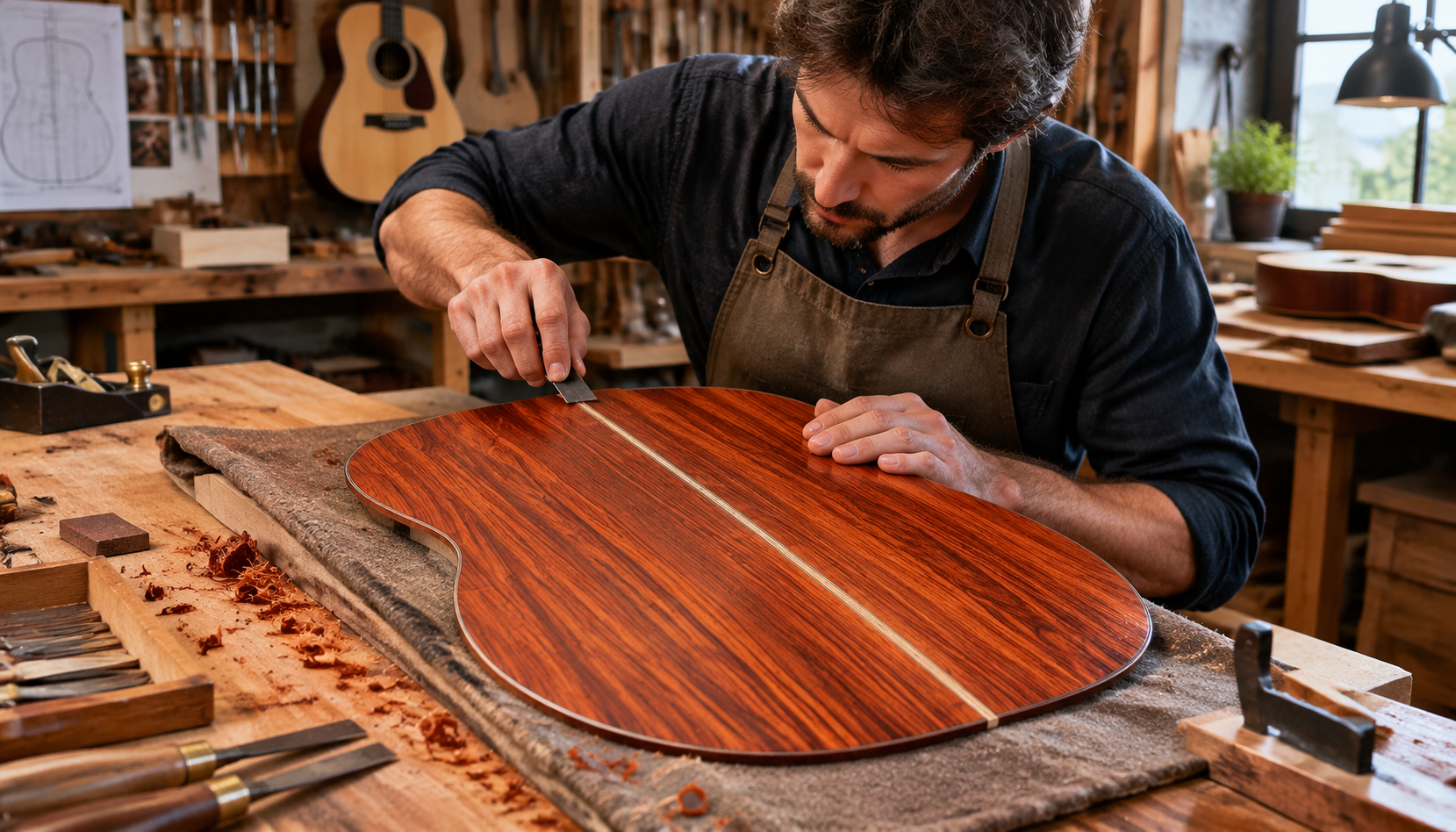
Instrument makers specifically select padouk tonewood for acoustic guitar backs, sides, and electric guitar bodies because it bridges the tonal gap between maple and rosewood. It delivers a punchy fundamental tone with bright, articulate highs and a robust lower-midrange response. The uniform distribution of diffuse-porous vessels allows sound waves to travel evenly without internal dampening.
Furthermore, the natural extractives embedded within the cell walls stiffen the timber matrix. These dense chemical compounds enhance mechanical energy transfer across the soundboard and bracing. Consequently, instruments crafted from african padauk lumber project exceptionally well in live acoustic environments.
Physical Stability Profile: Low Shrinkage and High Carving Precision
Dimensional stability is critical when manufacturing fine musical instruments and architectural components. Padouk hardwood exhibits exceptionally low volumetric shrinkage values during the seasoning process. Specifically, volumetric total shrinkage measures around 7.0%, with a radial shrinkage of 3.3% and a tangential shrinkage of 6.8%. These figures yield a remarkably low T/R ratio of approximately 2.0, indicating balanced movement across climatic shifts.
Because of this zero-movement dimensional stability, padouk timber resists warping, cupping, and splitting under fluctuating relative humidity conditions. Luthiers and architectural woodworkers rely on this predictability when executing intricate joinery, multi-laminated necks, and precision fret slots. The wood holds tight tolerances, ensuring that frets stay seated securely over decades of use.
Machining this material requires sharp carbide tooling due to its silica content and density. However, the wood cuts cleanly across both cross-cuts and rip-cuts without tearing out. Artisans can achieve razor-sharp edges and smooth profiles that require minimal sanding before applying a final finish.
How Does African Padouk Transition from Coral Orange to Deep Burgundy Patina?
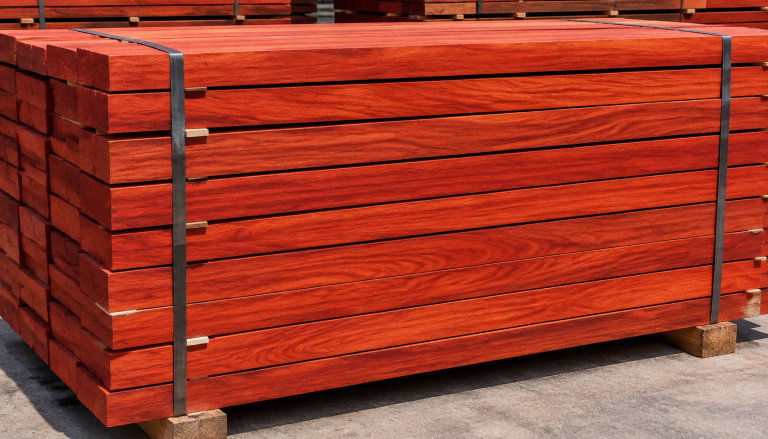
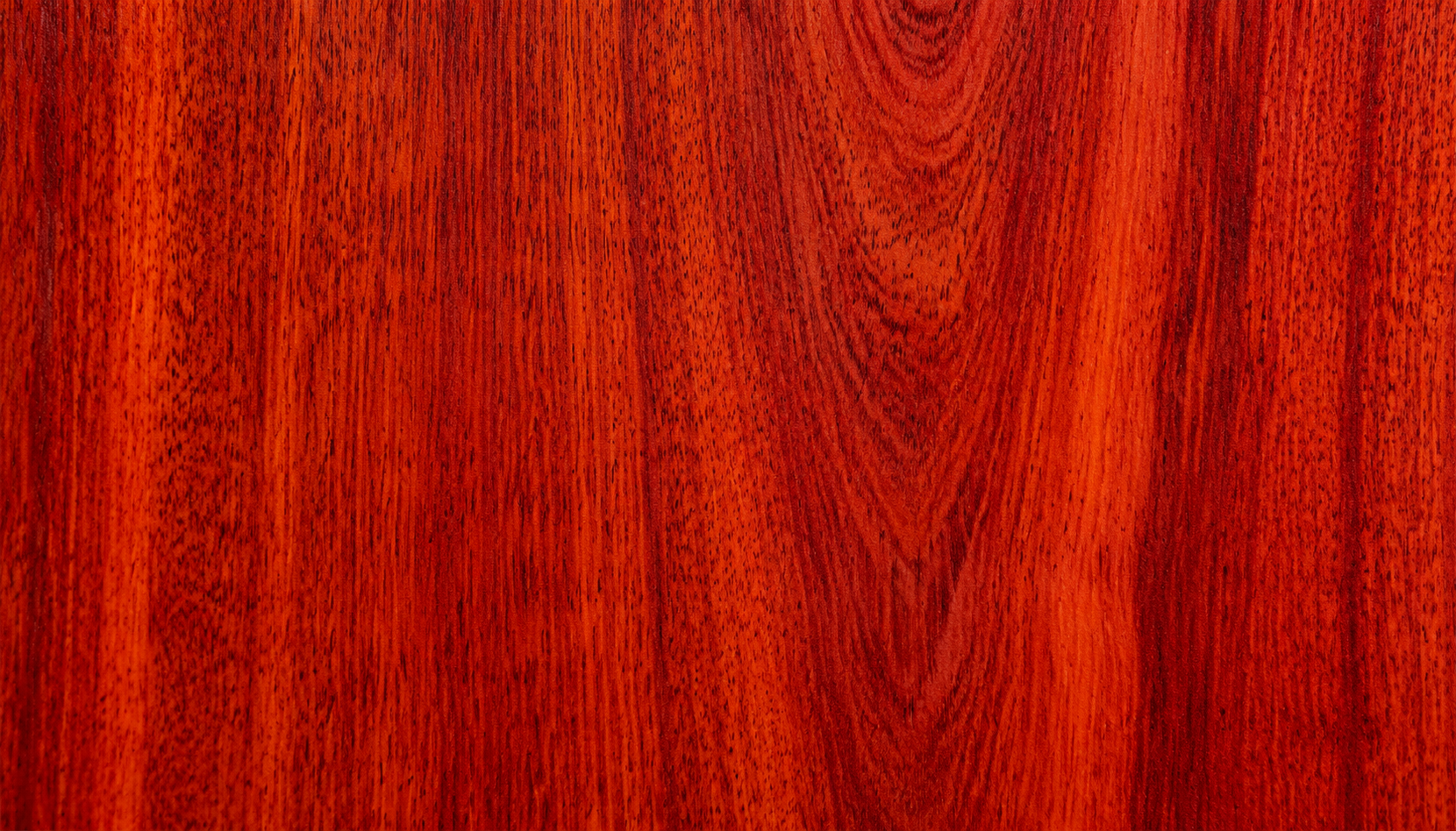
Freshly milled padouk wood displays a striking, vibrant coral-orange or bright vermilion hue that immediately captures attention. Over time, however, exposure to ambient light and atmospheric oxygen triggers a natural oxidation process. Within several months of exposure, the surface pigments transform into a rich, deep burgundy, purple-brown, or chocolate patina.
This color shift is driven by the photo-oxidation of organic extractives present within the heartwood cells. While some woodworkers attempt to halt this transformation completely, master artisans often embrace the aging process. The resulting vintage dark wine color exudes an air of timeless elegance suitable for luxury furniture and high-end architectural millwork.
To control or slow down this color evolution, makers employ specialized finishing techniques. Ultraviolet (UV) inhibiting sealers can delay the oxidation timeline significantly. By understanding this photochemical behavior, craftsmen can predict the final visual aesthetic of their finished pieces long before assembly.
Padouk vs. Rosewood: Why Luthiers Turn to African Padauk for Fretboards and Backs
When designing acoustic instruments, builders frequently evaluate padouk tonewood against traditional tropical hardwoods like East Indian Rosewood. While rosewood has long dominated the market, African padauk offers distinct engineering and aesthetic advantages for modern luthiers seeking unique performance characteristics.
| Technical Property | African Padouk | East Indian Rosewood |
|---|---|---|
| Average Dry Density | 745 kg/m³ | 830 kg/m³ |
| Janka Hardness | 1,970 lbf | 2,440 lbf |
| Radial Shrinkage | 3.3% | 5.5% |
| Tangential Shrinkage | 6.8% | 8.8% |
| T/R Ratio | 2.0 | 1.6 |
| Acoustic Response | Bright, punchy, articulate | Warm, complex, scooped |
As detailed in the comparison matrix above, padouk hardwood provides superior dimensional stability with lower radial and tangential shrinkage rates. This makes it exceptionally forgiving during seasonal humidity fluctuations. Furthermore, its excellent stiffness-to-weight ratio allows builders to graduate acoustic guitar back plates slightly thinner without sacrificing structural integrity.
Best Wood Stains and UV-Inhibiting Finishes for Preserving Padouk’s Red Hue
Protecting the initial vibrant coloration of african padauk lumber requires careful chemical formulation. Because UV rays accelerate the transition to a dark brown patina, standard clear coats offer limited protection against light degradation. Artisans must apply marine-grade varnishes or polyurethane topcoats containing hindered amine light stabilizers (HALS).
Water-based finishes tend to preserve the natural brightness better than oil-based varnishes, which impart an amber tint that shifts the base color toward brown. Applying a non-yellowing epoxy sealer as a base coat locks in the natural extractives and prevents bleed-through. This technique ensures the wood retains its fiery aesthetic for decades in indoor architectural settings.
For instrument builders, hand-rubbed oil finishes offer a tactile, organic feel but require periodic maintenance. A UV-blocking paste wax applied over a polymerized tung oil base provides a balanced compromise between tactile warmth and color retention. Regular upkeep keeps custom millwork and guitars looking freshly crafted.
Selecting Master-Grade Padouk Slabs and Quarter-Sawn Billets for Production
Procuring commercial quantities of padouk timber requires strict adherence to grading standards and moisture content specifications. Master-grade guitar sets and architectural slabs must be kiln-dried to a stable moisture content between 8% and 12%. This prevents post-manufacturing movement in climate-controlled environments.
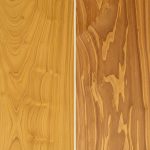
Buyers should inspect inventory for straight grain alignment, absence of internal check fractures, and uniform color saturation. Quarter-sawn padouk wood billets provide the highest degree of dimensional stability and are mandatory for guitar necks and stiff architectural paneling. Flat-sawn slabs reveal stunning cathedral grain patterns ideal for statement furniture tabletops.
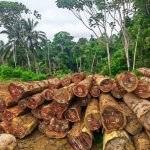
Working with an experienced global supplier ensures access to legally harvested, sustainably managed African hardwood stocks. Professional importers verify origin documentation and grade lumber strictly according to international export standards. Securing certified material guarantees consistency across large-scale manufacturing runs.
Frequently Asked Questions About Padouk Wood
Is padouk wood difficult to glue during furniture assembly?
No, padouk glues reasonably well. However, because of its dense natural oils, wiping joint surfaces with acetone immediately before glue application ensures a robust, permanent bond.
Does padouk wood require special health precautions during woodworking?
Yes. Fine dust generated when sanding or cutting padouk can cause respiratory irritation or skin sensitization. Artisans should always wear appropriate dust masks and maintain proper dust extraction systems.
Can padouk timber be used for outdoor decking or exterior architectural projects?
Yes, padouk possesses exceptional natural durability against decay and insect attack. It performs exceptionally well outdoors, though its bright red color will weather to an even silver-gray without UV finishes.
Secure High-Grade African Padouk for Your Next Project
YYW Timber supplies premium African hardwood logs, square logs, and custom-cut sawn timber for international manufacturers and artisans. Contact our expert team today to request a quote for master-grade padouk wood, custom dimensions, and wholesale export specifications tailored to your production requirements.