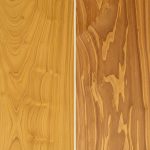
Working with Super-Dense Okan Wood: Machining, Sawing, and Joinery Best Practices
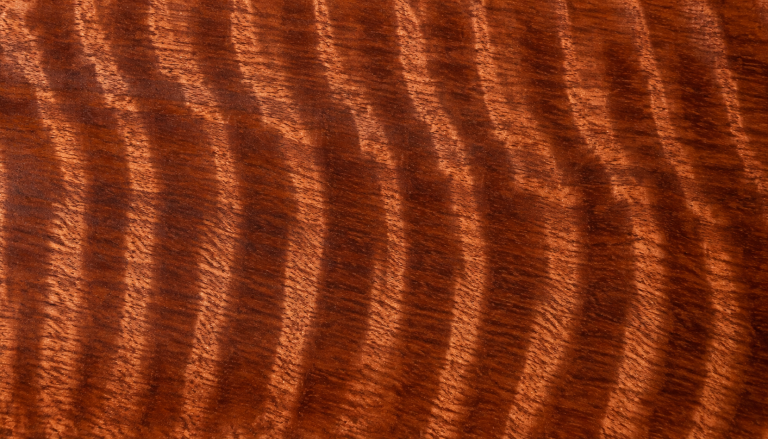
Okan wood (Cylicodiscus gabunensis) is an extremely dense African hardwood boasting an air-dry density of approximately 950 to 1,100 kg/m³ and a Janka hardness rating exceeding 15,000 Newtons. Heavy timber fabricators must utilize tungsten carbide-tipped tooling, slow feed rates, and rigorous pre-drilling protocols to successfully process okan lumber for demanding structural and exterior marine applications. According to technical reports by the International Tropical Timber Organization (ITTO), high silica content and interlocked grain patterns demand specialized machinery adjustments to prevent severe tool wear and surface tear-out.
Why Does Okan Rapidly Dull Standard High-Speed Steel Tools?
Standard high-speed steel (HSS) cutting edges degrade rapidly when introduced to okan hardwood. The primary culprit behind this aggressive blunting effect is the presence of natural mineral deposits and high silica content embedded within the cellular matrix. According to materials science data published by the Forest Products Laboratory, timbers with high silica content accelerate abrasive wear on metal edges by up to 300 percent compared to temperate hardwoods. When high-speed steel cutters shear through dense interlocked fibers, frictional heat compounds the structural stress on the cutting edge. Consequently, standard blades lose their sharp profile within minutes of continuous production milling.
Furthermore, the high density of okan lumber generates immense localized cutting pressure during standard workshop operations. As the cutting tool forces its way through the dense cellulose structure, microscopic fractures occur along the shear plane. If the steel lacks adequate hardness, the cutting edge chips and rounds over almost instantaneously. Fabricators attempting to force unreinforced tools through heavy construction hardwood will experience severe burning, smoke emission, and motor stall. Understanding this severe abrasive nature is the first critical step toward establishing a profitable and efficient timber processing workflow.
Recommended Tooling: Carbide Tipped Blades and Optimized Feed Rates
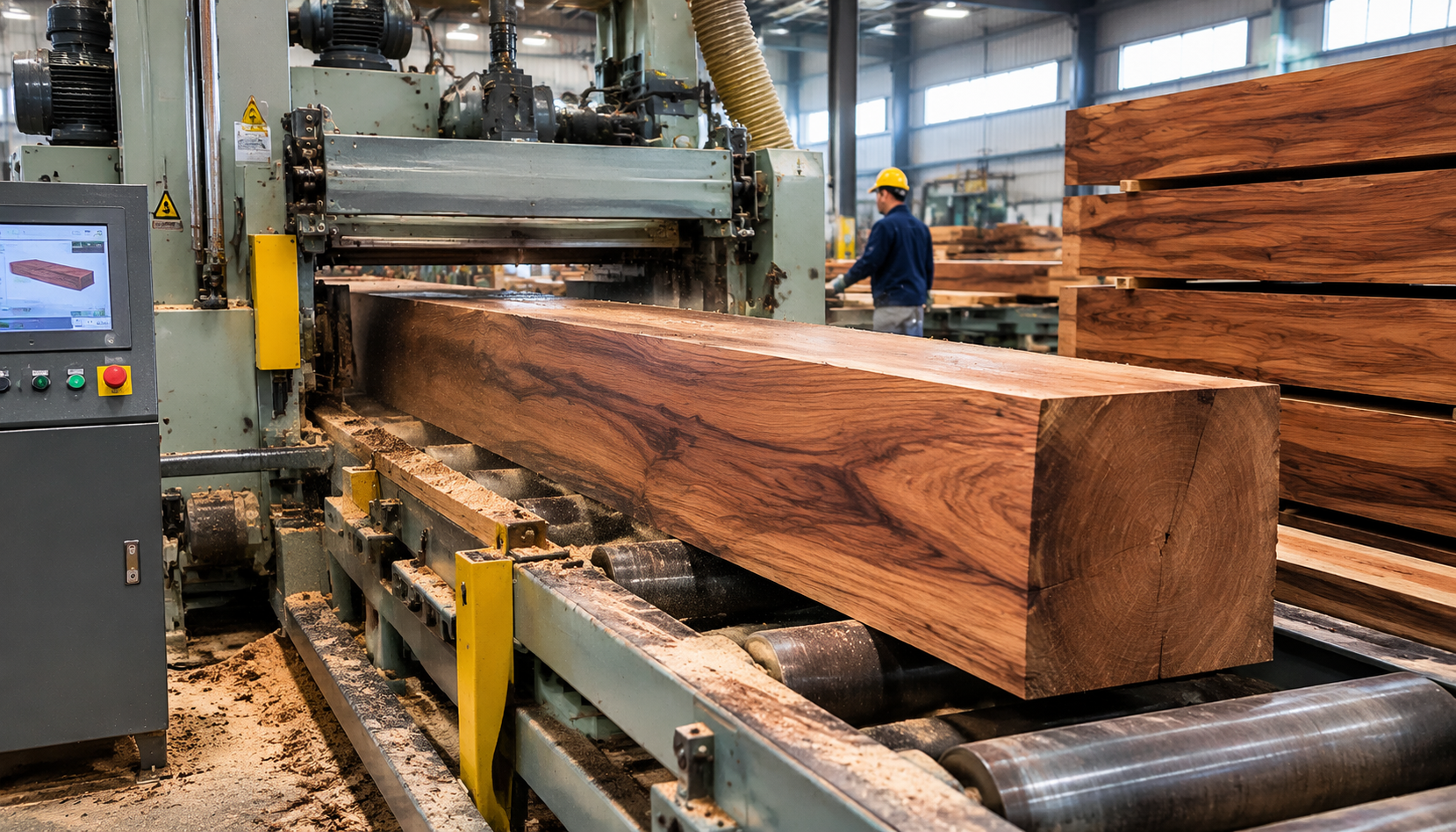
Overcoming the extreme abrasiveness of okan hardwood requires a complete upgrade to industrial-grade tungsten carbide-tipped (TCT) or polycrystalline diamond (PCD) tooling. According to industrial woodworking guidelines published by the European Committee for Standardization (CEN), carbide matrices maintain structural integrity at significantly higher operating temperatures than standard steel alloys. When sawing okan lumber, workshops should select circular saw blades featuring a positive hook angle of 10 to 15 degrees combined with alternate top bevel (ATB) tooth geometries. These specific configurations ensure a clean slicing action that minimizes fiber distortion and reduces thermal buildup.
Optimizing feed speeds is equally vital for achieving a smooth, burn-free finish on heavy construction hardwood. Operators must reduce mechanical feed rates by approximately 35% to 50% compared to standard processing speeds used for oak or maple. Slower feed rates allow the tungsten carbide tips to cleanly shear individual wood fibers rather than crushing them under high pressure. Additionally, maintaining a consistent spindle speed prevents erratic load distribution across the cutter head. The table below outlines recommended machining parameters for processing dense okan lumber safely and efficiently.
| Machining Operation | Tooling Material | Recommended Speed / Feed Rate | Key Operational Tip |
|---|---|---|---|
| Rip Sawing | TCT Flat Top / Alternate | 3,500 RPM / Reduced Feed | Use a riving knife to prevent pinching. |
| Planer / Jointer | Helical Carbide Insert Cutter | Shallow cuts (max 1.5mm) | Spiral heads eliminate tear-out. |
| Routing / Shaping | Solid Carbide / Insert Bits | 18,000 RPM / Slow Travel | Take multiple passes for deep profiles. |
Can Okan Hardwood Be Glued and Finished Successfully Outdoors?
Achieving a reliable glue bond on okan hardwood presents unique challenges due to the dense cellular structure and natural extractives. According to adhesive testing standards established by ASTM International, dense tropical hardwoods require careful surface preparation before bonding to ensure long-term structural integrity. Because okan lumber features natural oils that can inhibit adhesive curing, joinery workshops must thoroughly degrease joint surfaces using a fast-evaporating solvent immediately prior to application. Furthermore, mechanical abrading with 80-grit sandpaper creates microscopic surface anchors that significantly improve mechanical interlocking for structural epoxies or resorcinol glues.
Finishing okan for exterior decking or marine construction requires penetrating oils rather than film-forming surface coatings. Due to the high volumetric shrinkage and seasonal movement inherent to heavy construction hardwood, traditional polyurethane or varnish layers will quickly crack and peel. According to wood science research by the USDA Forest Products Laboratory, penetrating alkyd-based oils or specialized teak oils absorb deeply into the wood pores without sealing them entirely. This breathable finish allows the timber to adjust naturally to changing atmospheric humidity without causing unsightly flaking or localized moisture trapping.
Fastening Standards: Pre-Drilling Tolerances and Stainless Steel Hardware Requirements
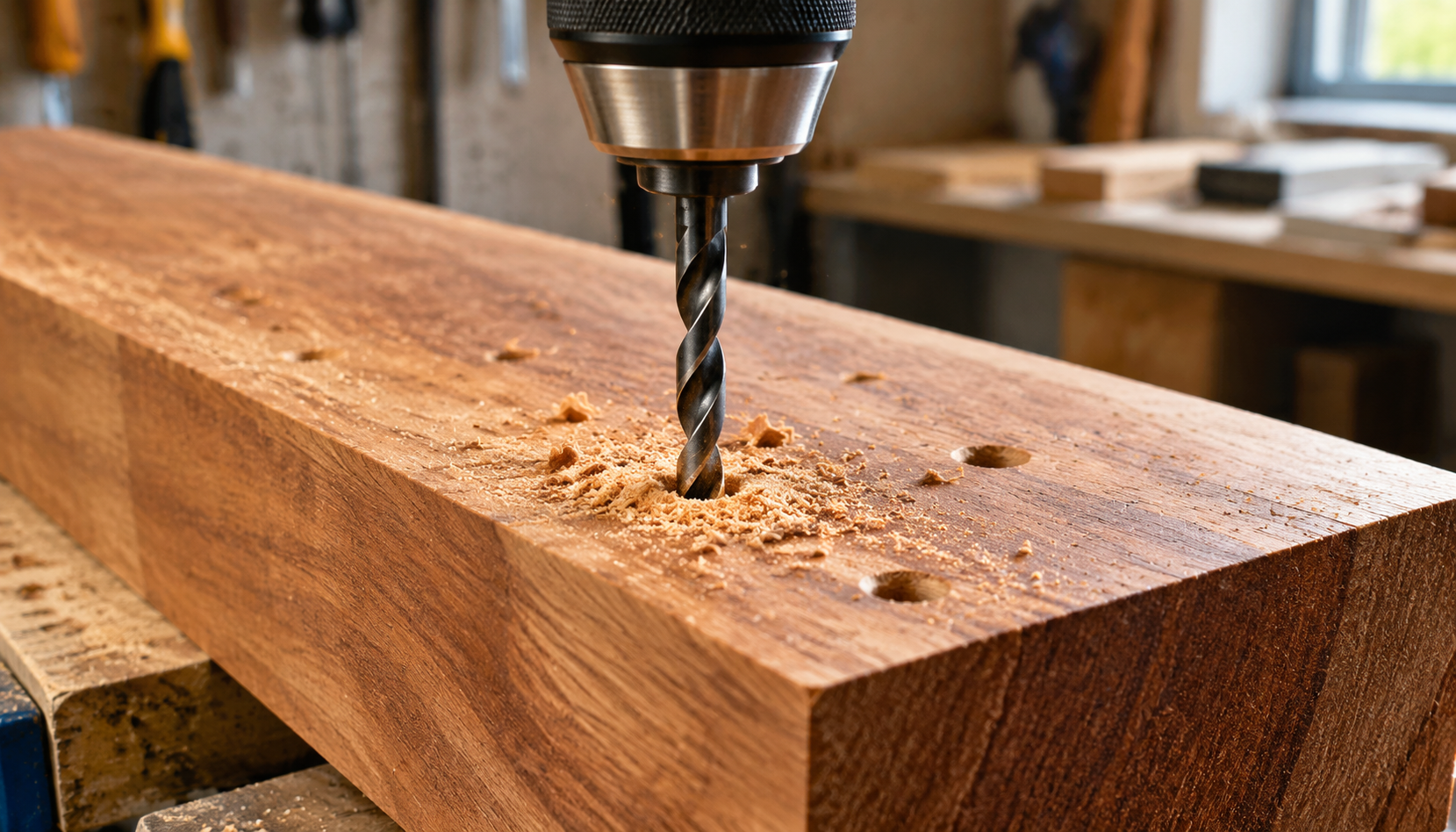
Driving standard fasteners directly into okan hardwood will inevitably result in snapped screw heads, split timber, or stripped threads. According to structural engineering standards outlined in Eurocode 5 for timber structures, dense hardwoods with densities exceeding 900 kg/m³ demand strict pilot hole sizing. Commercial joinery workshops should always pre-drill holes matching 80% to 90% of the fastener’s shank diameter and 100% of the root diameter. Utilizing a high-speed twist drill bit with regular chip clearing prevents friction-induced binding during deep hole creation in thick timbers.
Hardware selection is equally critical when installing okan lumber in demanding exterior or marine environments. According to corrosion engineering specifications published by NACE International, the high concentration of natural tannic acids in okan wood reacts aggressively with standard carbon steel. This chemical reaction leads to rapid fastener corrosion, structural staining, and eventual joint failure. Builders must exclusively specify marine-grade 316 stainless steel screws, bolts, and custom brackets for all permanent outdoor joinery and heavy decking projects to guarantee long-term durability.
Managing High Shrinkage Values During Outdoor Weathering Cycles
Managing dimensional stability is essential when designing exterior structures using okan hardwood. According to technical data compiled by tropical timber research institutes, okan exhibits moderate-to-high tangential and radial shrinkage rates during initial seasoning and environmental equilibration. The volumetric shrinkage from green to oven-dry condition can reach up to 12%, meaning unseasoned timber will undergo significant movement in service. Outdoor deck builders and heavy timber fabricators must allow for adequate expansion gaps between boards to prevent buckling when seasonal humidity rises.
When exposed to direct sunlight and fluctuating rain cycles, unfinished okan wood naturally weathers to an attractive silver-gray patina over a period of 12 to 18 months. This surface weathering does not compromise the exceptional core strength or decay resistance of the timber. According to outdoor durability testing benchmarks, okan achieves a Class 1 durability rating against fungal decay, making it exceptionally well-suited for unground contact and marine engineering. Ensuring proper ventilation underneath decks and raised structures prevents localized moisture accumulation and mitigates extreme differential movement.
Ordering Custom Cut-to-Size Okan Beams and Heavy Slabs Directly from African Sawmills
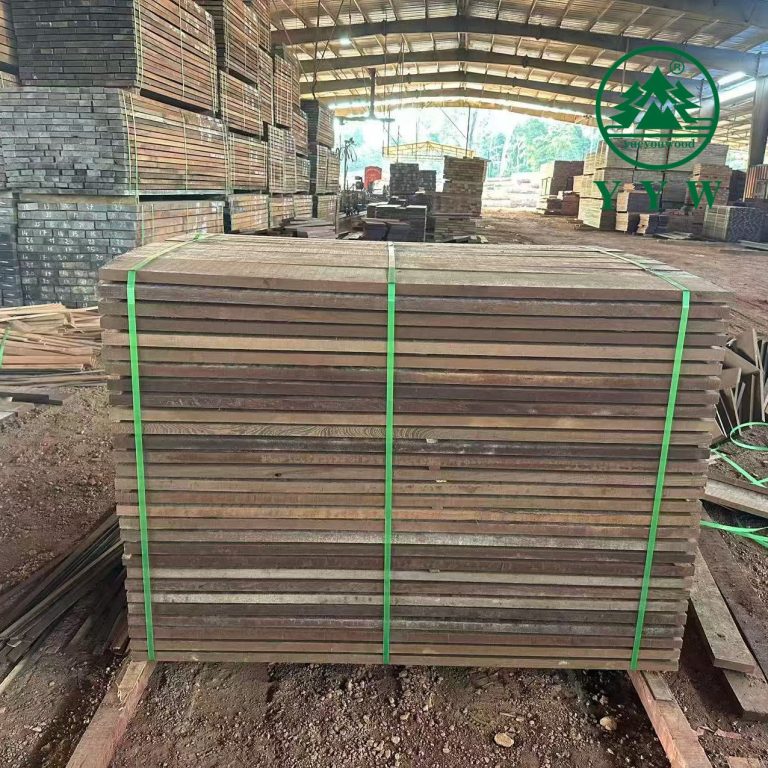
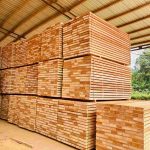
Procuring high-grade okan lumber requires partnering with a reliable, experienced timber supplier capable of fulfilling precise commercial specifications. YYW Timber specializes in sourcing, processing, and exporting premium African hardwoods, including custom cut-to-size okan beams, square logs, and heavy structural slabs. By managing the supply chain directly from sustainable forest concessions to international ports, we ensure consistent grading compliance, accurate moisture management, and reliable delivery schedules for global timber traders, heavy fabricators, and commercial contractors.
Whether you require specific dimensional tolerances for an upcoming marine boardwalk project or large architectural beams for heavy timber framing, our mill processing facilities deliver exact specifications. Avoiding unnecessary on-site recutting saves valuable workshop hours and minimizes material waste when handling ultra-dense African species. Contact the YYW Timber export team today to request a formal quotation, discuss custom grading requirements, or schedule a direct shipment of certified okan lumber for your next industrial construction project.