Moisture content is one of the most important factors affecting timber quality and performance. Whether timber is used for furniture manufacturing, flooring, construction or interior joinery, its moisture condition can influence dimensional stability, strength, processing and long-term performance.
For timber buyers and manufacturers, understanding wood moisture content is essential when selecting the right material for a project.
But what exactly does moisture content mean, and why does it matter so much in the timber industry?
1. What Is Wood Moisture Content?
Wood moisture content (MC) refers to the amount of water contained in wood compared with the oven-dry weight of the wood itself. It is normally expressed as a percentage.
For example, when timber has a moisture content of 12%, the water inside the wood weighs 12% of its oven-dry weight.
Wood naturally absorbs and releases moisture from its surrounding environment. This means its moisture content can change depending on temperature, relative humidity, storage conditions and exposure to water.
Unlike many industrial materials, wood is hygroscopic. It continuously responds to changes in the moisture conditions around it.
2. Why Does Moisture Content Matter?
Moisture content affects several important properties of timber.
Dimensional Stability
As wood loses moisture below the fibre saturation point, it begins to shrink. When it absorbs moisture, it expands. These changes can cause boards to shrink, swell, warp or develop gaps after installation.
Strength and Mechanical Properties
Moisture content influences the mechanical properties of wood. As wood dries below the fibre saturation point, its strength and stiffness generally increase. However, excessive drying or poor drying practices can introduce defects.
Processing Performance
Timber with unsuitable moisture content can create difficulties during cutting, machining, gluing and finishing. Manufacturers need to consider the moisture requirements of their production processes.
Final Product Quality
For furniture, flooring, doors and other finished products, moisture differences between timber and the surrounding environment can lead to dimensional changes after manufacturing.
3. Understanding AD and KD Timber
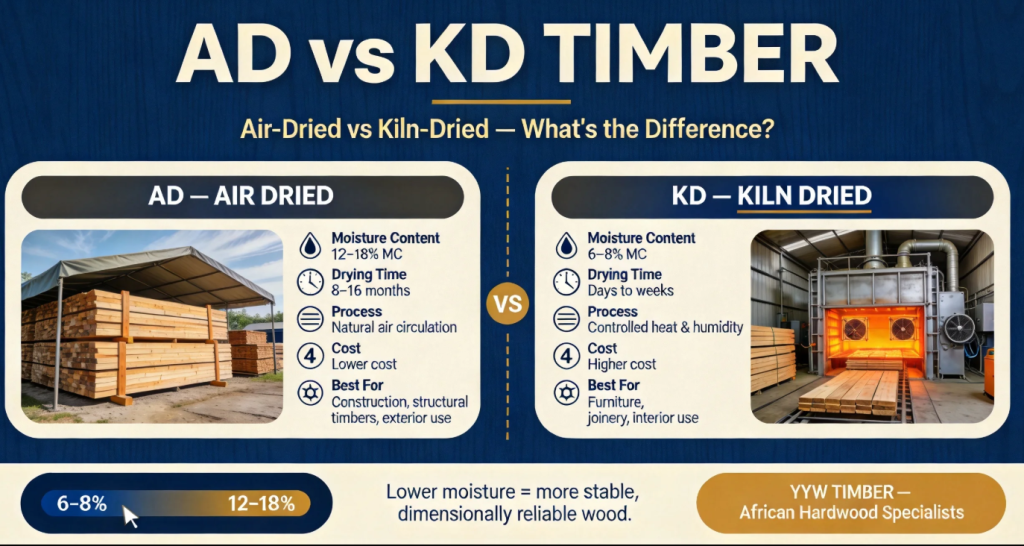
In the timber industry, buyers commonly encounter two terms: Air-Dried (AD) and Kiln-Dried (KD).
| Comparison | Air-Dried Timber (AD) | Kiln-Dried Timber (KD) |
|---|---|---|
| Drying method | Natural air circulation | Controlled drying in a kiln |
| Drying speed | Generally slower | Generally faster |
| Moisture control | Depends heavily on climate and storage | Allows more controlled moisture management |
| Drying conditions | Outdoor or covered drying areas | Temperature and humidity-controlled environment |
| Typical applications | Depends on achieved MC and end use | Often preferred where tighter moisture control is required |
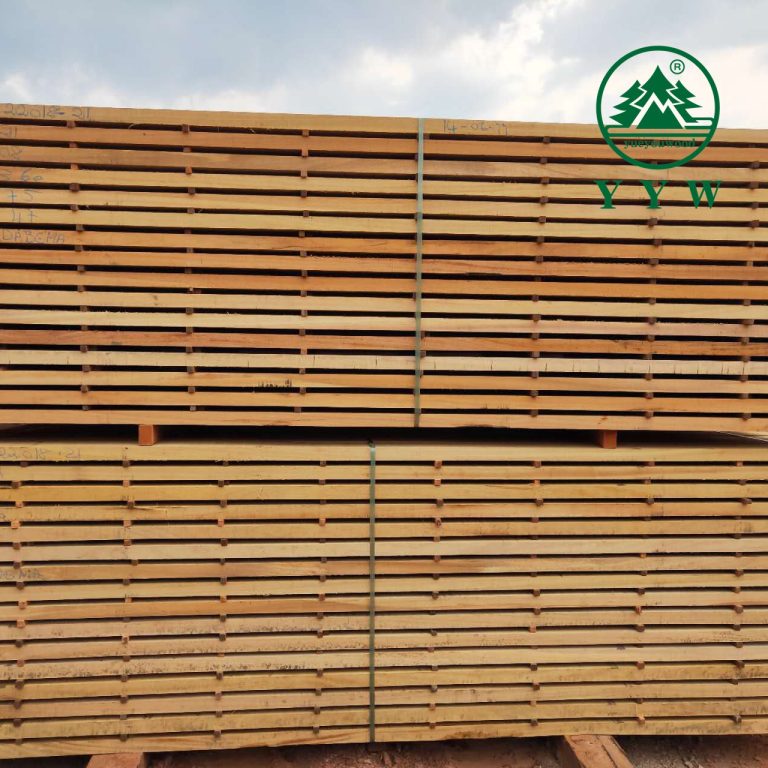
Air drying allows timber to release moisture naturally through exposure to moving air. Kiln drying uses controlled temperature, humidity and airflow to accelerate moisture removal.
Neither method automatically guarantees perfect timber. The drying schedule, species, board thickness and handling conditions all influence the final result.
4. What Is the Fibre Saturation Point?
The fibre saturation point (FSP) is an important concept in wood science.
It describes the condition where the cell walls contain bound water at saturation, while the cell cavities contain no free water. For many wood species, the fibre saturation point is around 30% moisture content, although the actual value varies.
Above this point, removing free water generally causes relatively little shrinkage.
Below this point, the wood begins to shrink as it loses bound water from its cell walls.
This is why controlling moisture content during drying is so important.
5. What Moisture Content Is Suitable for Timber?
There is no single moisture content that suits every timber application.
The correct target depends on the intended use, the local climate, indoor or outdoor conditions, the timber species and the manufacturing process.
For example:
- Furniture manufacturing often requires timber with moisture content suitable for the indoor environment where the furniture will be used.
- Interior joinery requires careful moisture control to reduce dimensional changes after installation.
- Outdoor applications need consideration of local weather conditions and moisture exposure.
- Construction timber must meet the moisture requirements of the relevant design, standards and installation conditions.
Buyers should always communicate their target moisture content before placing an order.
6. How Can Buyers Check Timber Moisture Content?
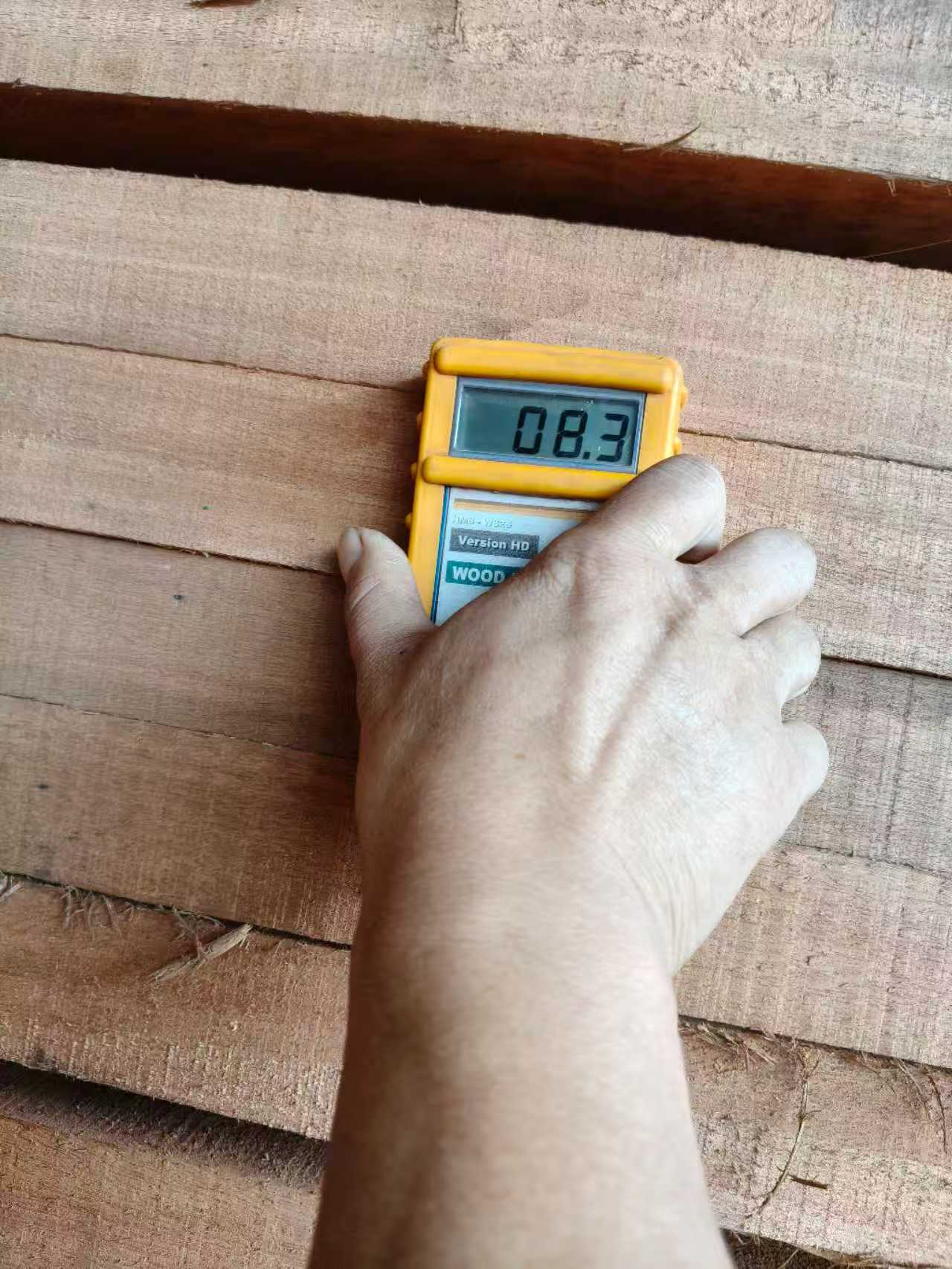
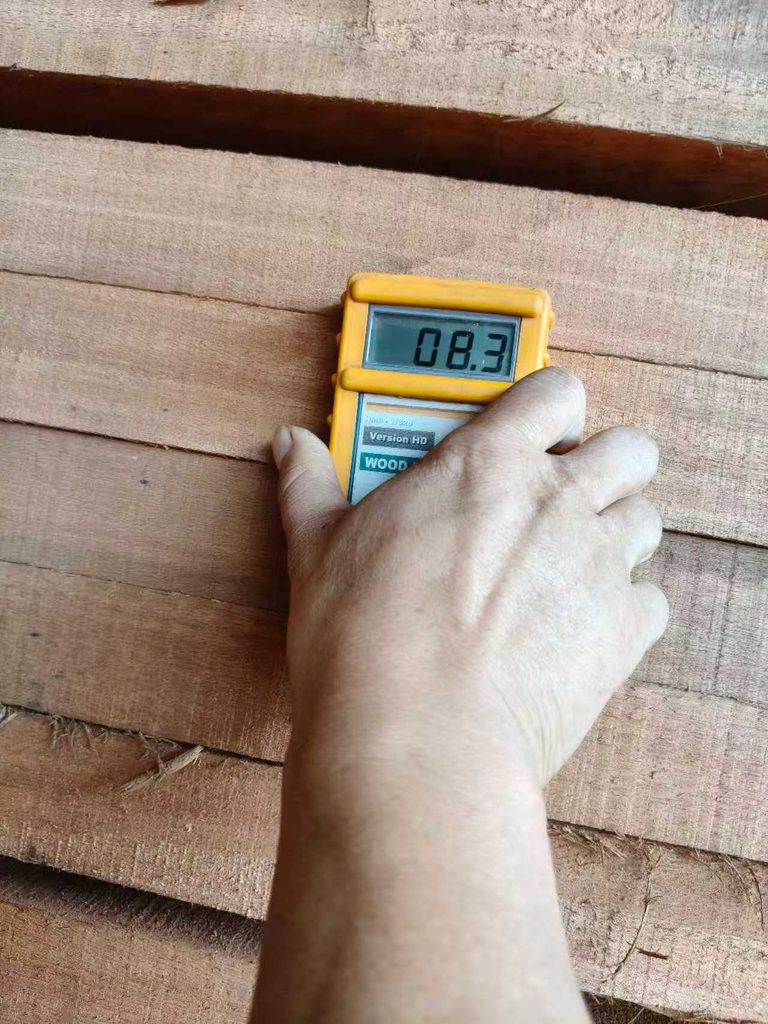
A moisture meter provides a practical way to check timber moisture content.
However, accurate measurement requires more than simply placing a meter against one board.
Buyers should consider:
- Checking several boards rather than relying on one reading.
- Taking measurements at different positions across the timber.
- Considering board thickness and possible moisture differences between the surface and core.
- Using a suitable meter setting or correction for the wood species.
- Recording the measurement conditions and agreed acceptance criteria.
For more accurate verification, the oven-dry method provides a reference measurement based on the weight difference before and after drying a sample to a constant weight.
7. Moisture Content: An Important Part of Timber Quality
Timber quality involves much more than appearance, dimensions and species selection. Moisture content also plays a major role in determining whether timber suits a buyer’s production requirements.
At YYW Timber, we understand the importance of matching timber specifications with customers’ intended applications. When discussing an order, buyers should clearly communicate their required timber condition and moisture range.
Need African hardwood sawn timber with specific moisture requirements?
Contact YYW Timber to discuss your required species, dimensions, timber condition and target moisture content.