Why Is Timber Thickness Important?
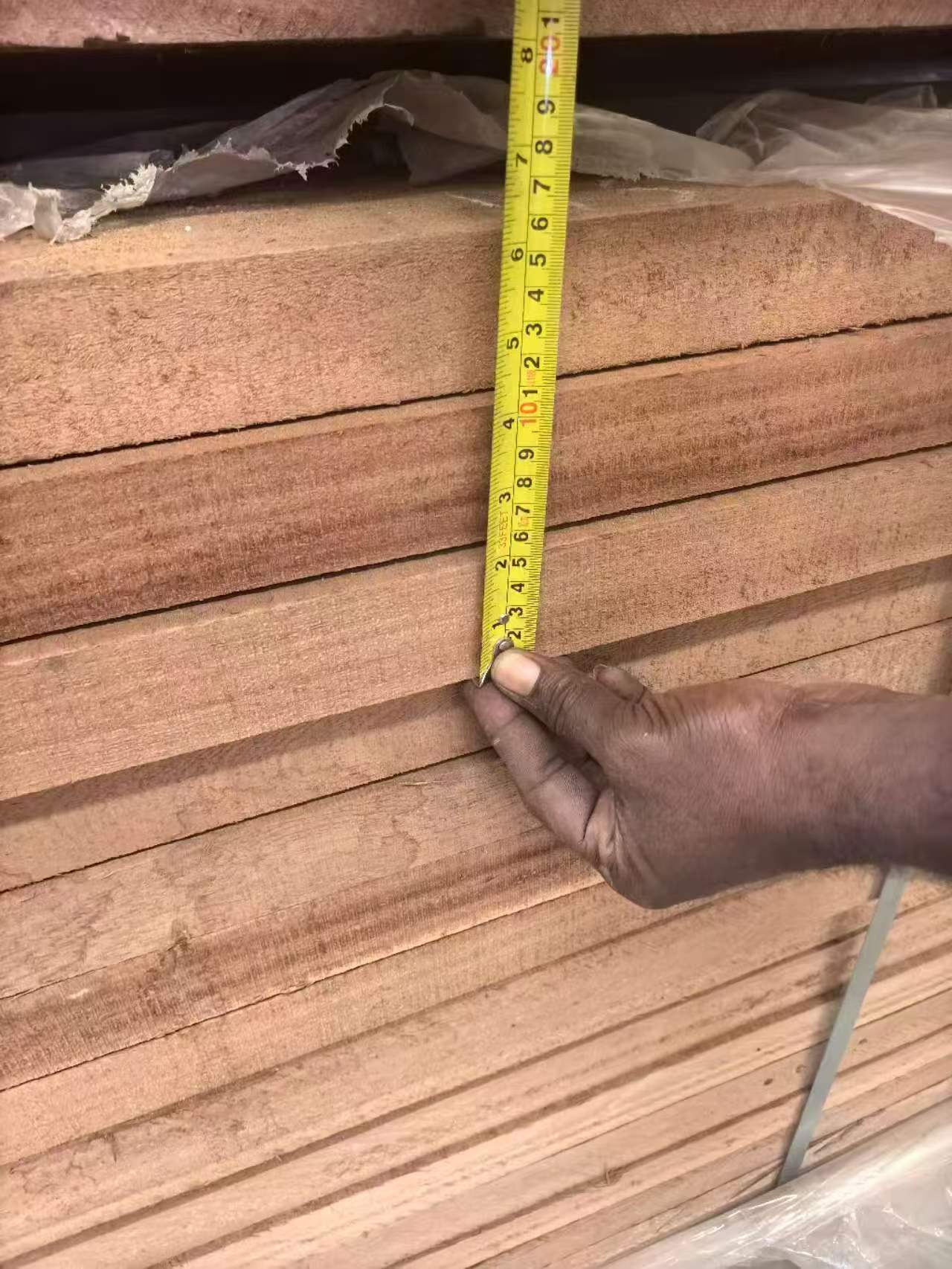
When purchasing African hardwood sawn timber, choosing the right thickness is just as important as selecting the species.
Different manufacturing processes require different dimensions. A furniture factory producing tabletops may need thicker boards, while a manufacturer producing cabinet components may prefer thinner timber.
Choosing the correct thickness can help reduce unnecessary machining, improve material utilization, and control production costs.
At YYW Timber, we understand that every customer has different requirements. Here is a practical guide to some commonly requested timber thicknesses.
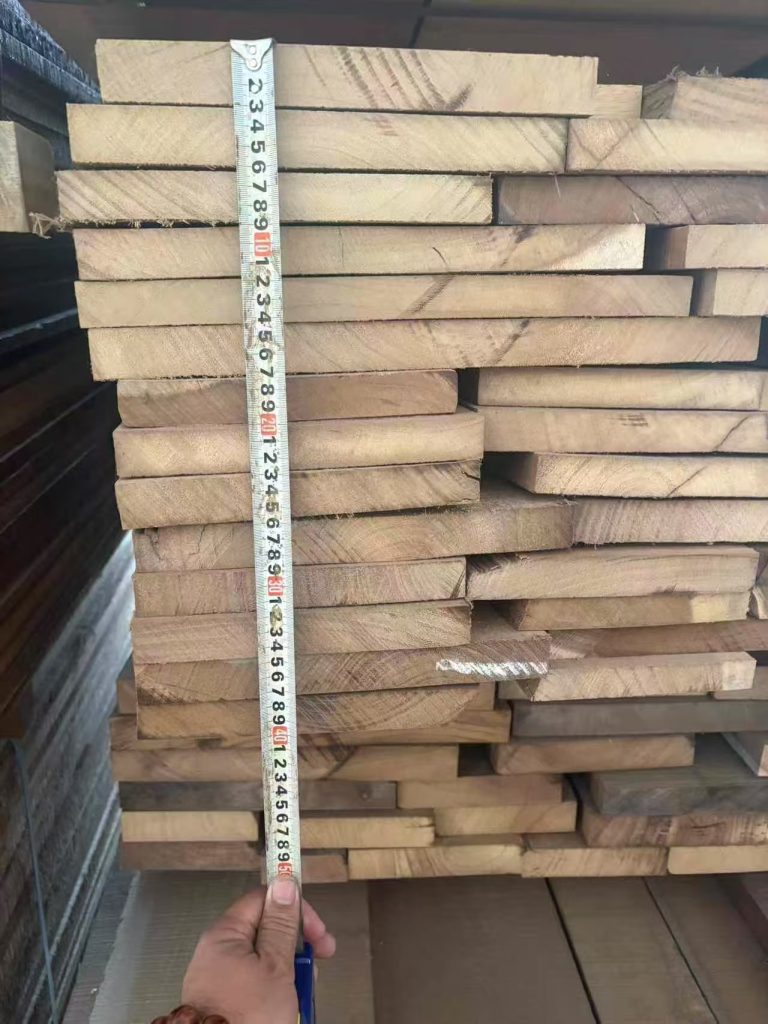
1. 25 mm Timber – For Furniture Components and Interior Woodwork
25 mm is a commonly requested thickness for lighter woodworking applications.
Typical applications include:
- Furniture components
- Cabinet parts
- Drawer components
- Interior woodwork
- Customized woodworking products
This thickness is suitable for manufacturers who require relatively thin raw timber for further processing.
2. 38 mm Timber – For General Furniture Manufacturing
38 mm timber provides additional machining allowance compared with thinner boards.
Typical applications include:
- Furniture components
- Table and chair parts
- Cabinet frames
- Customized furniture production
- General woodworking
It can be a practical option for manufacturers who need a balance between material thickness and processing flexibility.
3. 50 mm Timber – A Versatile Choice for Hardwood Processing
50 mm is one of the versatile specifications requested by many hardwood buyers.
Typical applications include:
- Solid wood furniture
- Table components
- Door components
- Furniture frames
- General-purpose woodworking
Depending on the timber species and production requirements, 50 mm boards can be used for different furniture and woodworking projects.
4. 75 mm Timber – For Thicker Furniture Components
75 mm timber provides more material for machining and shaping.
Typical applications include:
- Thick tabletops
- Heavy furniture components
- Furniture legs and frames
- Customized solid wood products
- Special woodworking projects
For manufacturers producing larger or thicker components, 75 mm timber can offer additional processing flexibility.
5. 100 mm Timber – For Heavy and Customized Applications
100 mm timber is generally selected for projects requiring thicker raw material.
Typical applications include:
- Heavy-duty furniture components
- Large table parts
- Customized solid wood products
- Special woodworking applications
Due to its larger section, buyers should pay particular attention to drying requirements and the expected finished dimensions.
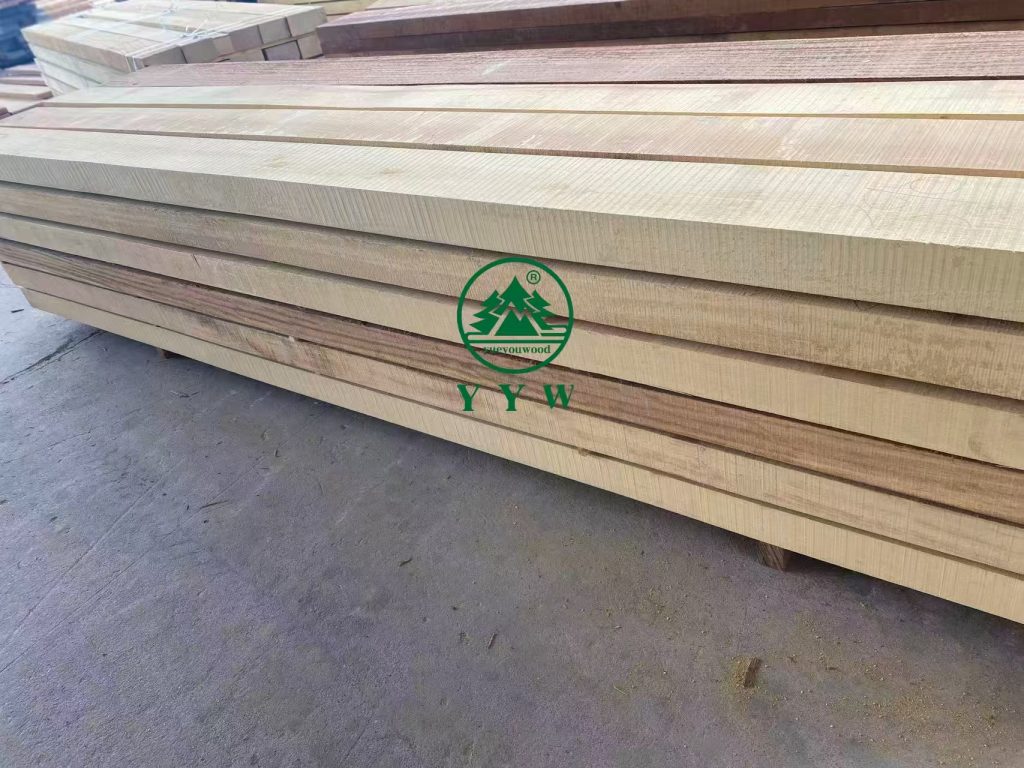
6. Rough-Sawn Thickness vs. Finished Thickness
One important detail that buyers should understand is the difference between rough-sawn thickness and finished thickness.
Rough-sawn timber usually requires additional processing before it becomes a finished product.
During planing, sanding, and machining, some material is removed from the original board.
For example, if your finished furniture component requires a thickness of 40 mm, ordering 40 mm rough-sawn timber may not leave sufficient material after processing.
Therefore, always consider machining allowance when confirming your raw timber specifications.
The required allowance depends on the original board condition, drying quality, machining process, and finished product requirements.
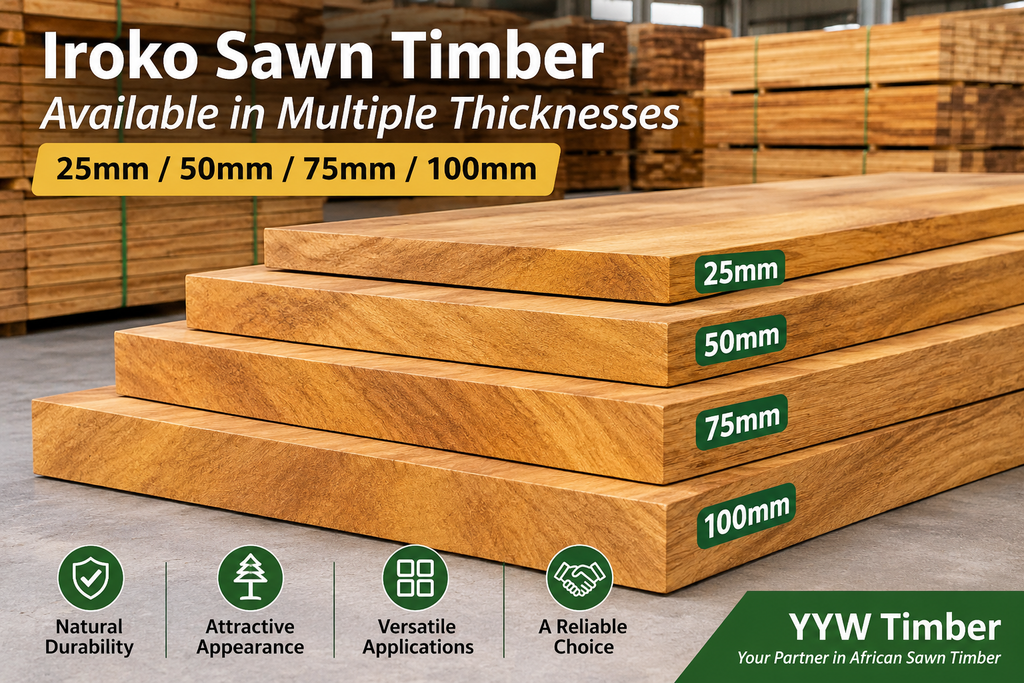
7. How to Choose the Right Timber Thickness?
Before placing an order, consider these five factors:
1. Your Finished Product
Are you manufacturing doors, furniture, tabletops, cabinets, flooring, or decorative products?
2. Required Finished Dimensions
Determine the final thickness before selecting the rough-sawn specification.
3. Timber Species
Different African hardwood species have different densities, working properties, and drying characteristics.
4. Moisture Content
Confirm whether you need air-dried (AD) or kiln-dried (KD) timber.
5. Processing Requirements
Consider how much material will be removed during cutting, planing, and sanding.
A clear specification helps your supplier prepare the right timber for your production.
8. African Hardwood Timber Specifications at YYW Timber
YYW Timber supplies African hardwood sawn timber in various thicknesses, subject to species and production availability.
Commonly requested thicknesses include:
| Thickness | Supply Specification |
|---|---|
| 25 mm | Available according to species and production |
| 38 mm | Available according to species and production |
| 50 mm | Commonly requested specification |
| 75 mm | Available for selected species and orders |
| 100 mm | Customized supply according to availability |
We also discuss different widths and lengths, including random-width and fixed-width options.
Our African hardwood range includes Okoume, Sapele, Iroko, Padouk, Tiama, Okan, Azobe, Bilinga, Zebrano, and other species.
9. Tell Us Your Required Timber Dimensions
Choosing the right timber is not only about selecting a species.
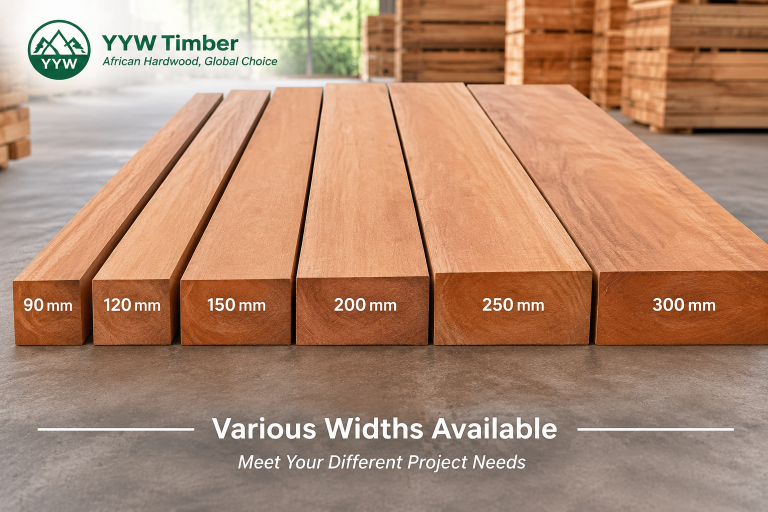
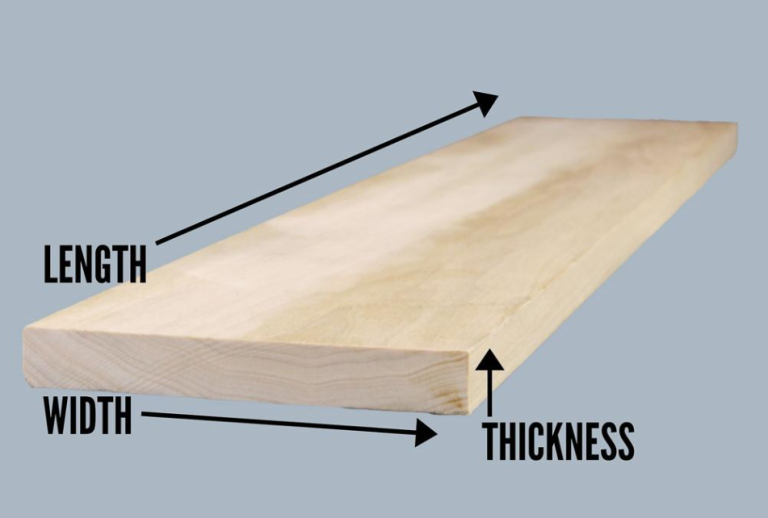
Thickness, width, length, moisture content, and quality requirements all play an important role in your purchasing decision.
At YYW Timber, we welcome inquiries from timber importers, wholesalers, furniture manufacturers, and woodworking factories.
Whether you need 25 mm, 38 mm, 50 mm, 75 mm, or 100 mm African hardwood sawn timber, contact us with your specifications.
Tell us what you manufacture, and let’s discuss the right timber dimensions for your production.
Contact YYW Timber
Hong Kong Yueyou Wood Limited
Contact Person: Elaine Zhang
Position: Foreign Trade Salesman
Website: www.yywtimber.com
Email: kenny@yueyouwood.com
WhatsApp: +86 18933092079
YYW Timber – African Hardwood Sawn Timber for Your Manufacturing Needs.