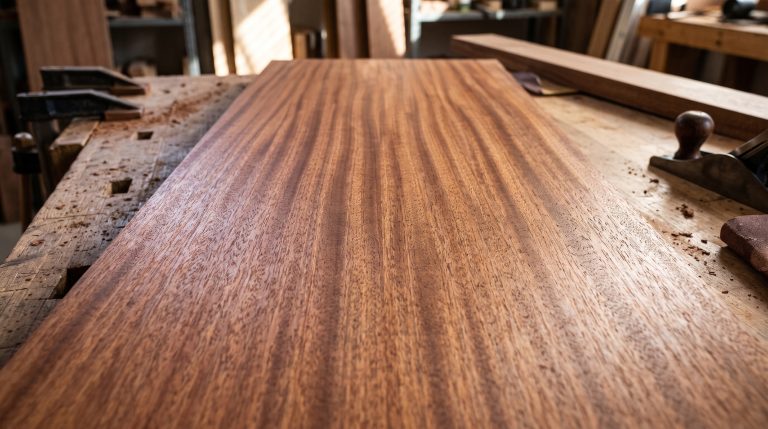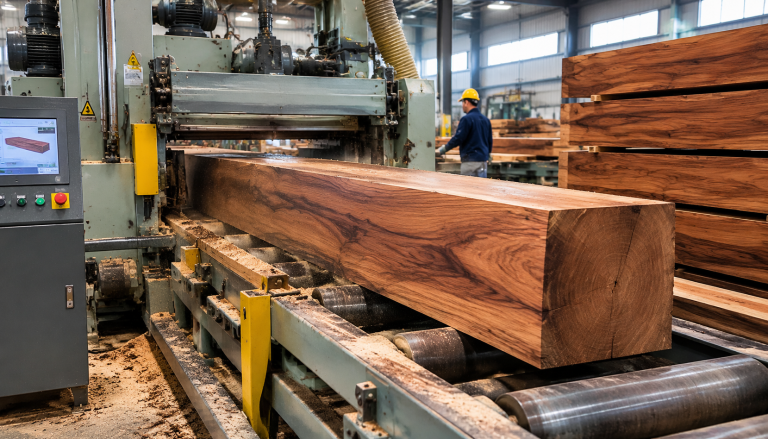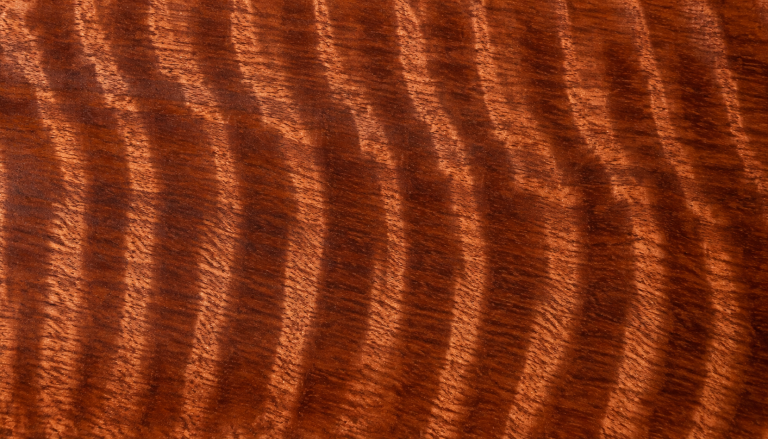
Let’s take a closer look at how African hardwood timber is prepared for international delivery.
From African Forests to International Markets
For international timber buyers, purchasing quality African hardwood is only the beginning. Consistent production, proper drying, careful inspection, secure packaging, and efficient container loading also play important roles in a successful shipment.
At YYW Timber, we understand that overseas buyers expect more than just quality timber. They also need a supplier who can manage the production process and prepare orders according to their specifications.
So, how do we prepare African hardwood sawn timber for international delivery? Let’s take a closer look at each stage.
1. Log Selection and Preparation
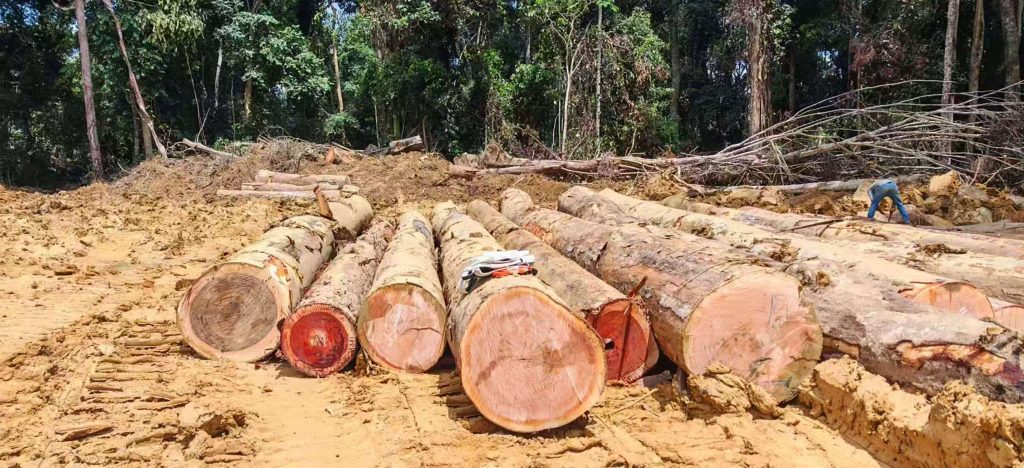
First, every production process starts with suitable timber logs.
Our production partners select logs according to the timber species, available dimensions, and customer requirements. Once the logs arrive at the sawmill, workers inspect their condition and prepare them for further processing.
Next, they remove the bark before sending the logs into the sawing line.
Careful log selection and preparation help us make better use of natural timber resources and establish a solid foundation for quality sawn timber production.
2. Sawing: Turning Logs into Timber
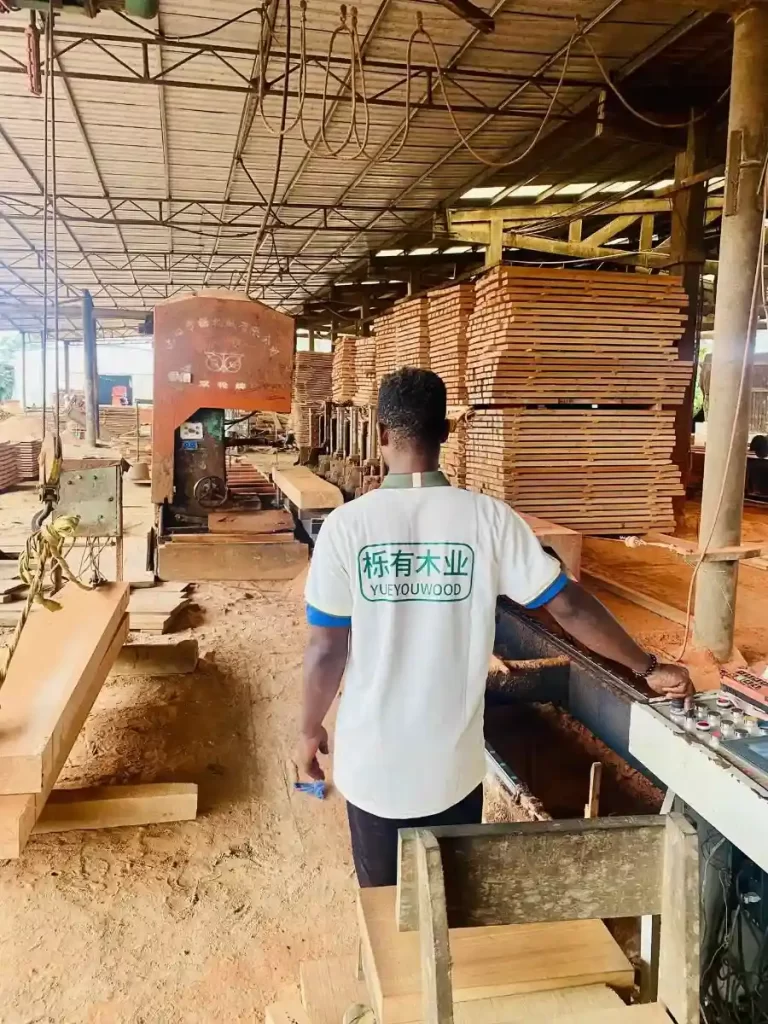
After preparing the logs, workers feed them into the sawing machines and cut them into individual boards according to the required specifications.
Depending on the customer’s order, we can discuss different thicknesses, widths, and lengths.
For example, common thickness options include:
- 25 mm
- 38 mm
- 50 mm
- 75 mm
- 100 mm
In addition, buyers can request either fixed-width or random-width timber, depending on their manufacturing requirements.
Since every African hardwood species has its own natural characteristics, our production team considers the available log dimensions and agreed specifications when arranging the cutting process.
3. Kiln Drying and Moisture Content Inspection
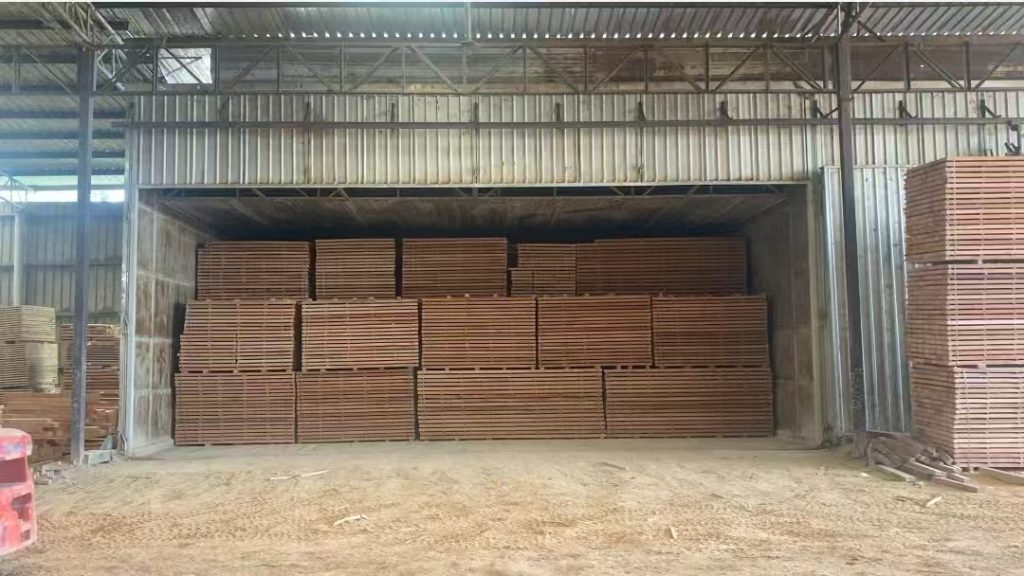
For customers who require kiln-dried (KD) timber, our production partners use controlled kiln-drying processes to reduce moisture content.
Proper kiln drying helps improve dimensional stability and prepares timber for furniture manufacturing and other woodworking applications.
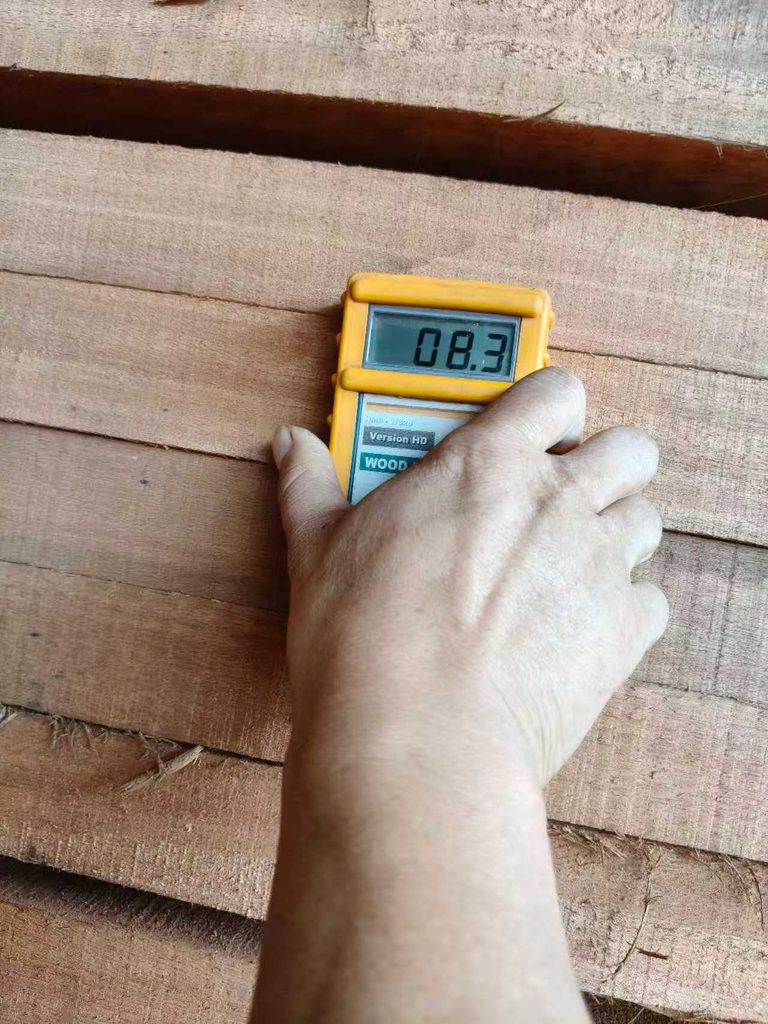
After the drying process, workers use suitable moisture meters to check the timber’s moisture content.
For example, KD Okoume commonly targets a moisture content of approximately 8–12%, depending on the agreed order specifications.
However, different timber species and applications may require different moisture content levels. Therefore, buyers should confirm their target moisture content before production begins.
4. Quality Inspection Before Packing
Before packing each order, our production team checks the timber against the buyer’s agreed specifications.
During this stage, workers pay attention to several important details:
Species Identification
First, they confirm that the timber matches the species specified in the purchase order.
Dimensions
Next, they measure the thickness, width, and length to check whether the boards meet the agreed dimensions.
For KD timber, workers use moisture meters to check the moisture content against the agreed target and inspection method.
Surface Condition
Meanwhile, the inspection team examines the board surfaces for visible cracks, knots, insect damage, and other natural characteristics.
Quantity and Volume
Finally, the team checks the number of pieces and calculates the total cubic meters (CBM) before packing.
Through these inspection steps, we can identify potential issues before shipment and help buyers avoid unnecessary misunderstandings.
5. Timber Packaging and Protection
Once the team completes the inspection, workers sort the timber and prepare each order for shipment.
Depending on the timber species, dimensions, and customer requirements, our packaging process may include:
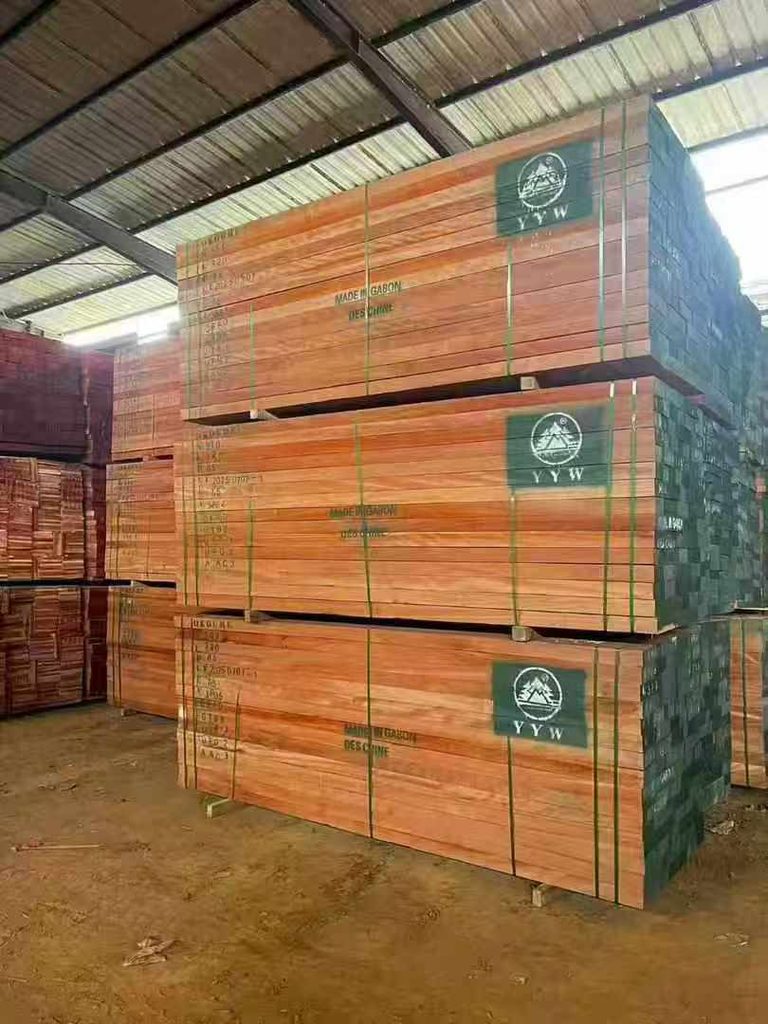
- Organizing timber boards into neat stacks
- Bundling and strapping the timber securely
- Adding protective wrapping where necessary
- Identifying timber packages clearly
- Preparing packing information and shipment details
Proper packaging keeps the timber organized and helps reduce movement during transportation.
Furthermore, our team considers the destination market and shipping conditions when choosing suitable packaging arrangements.
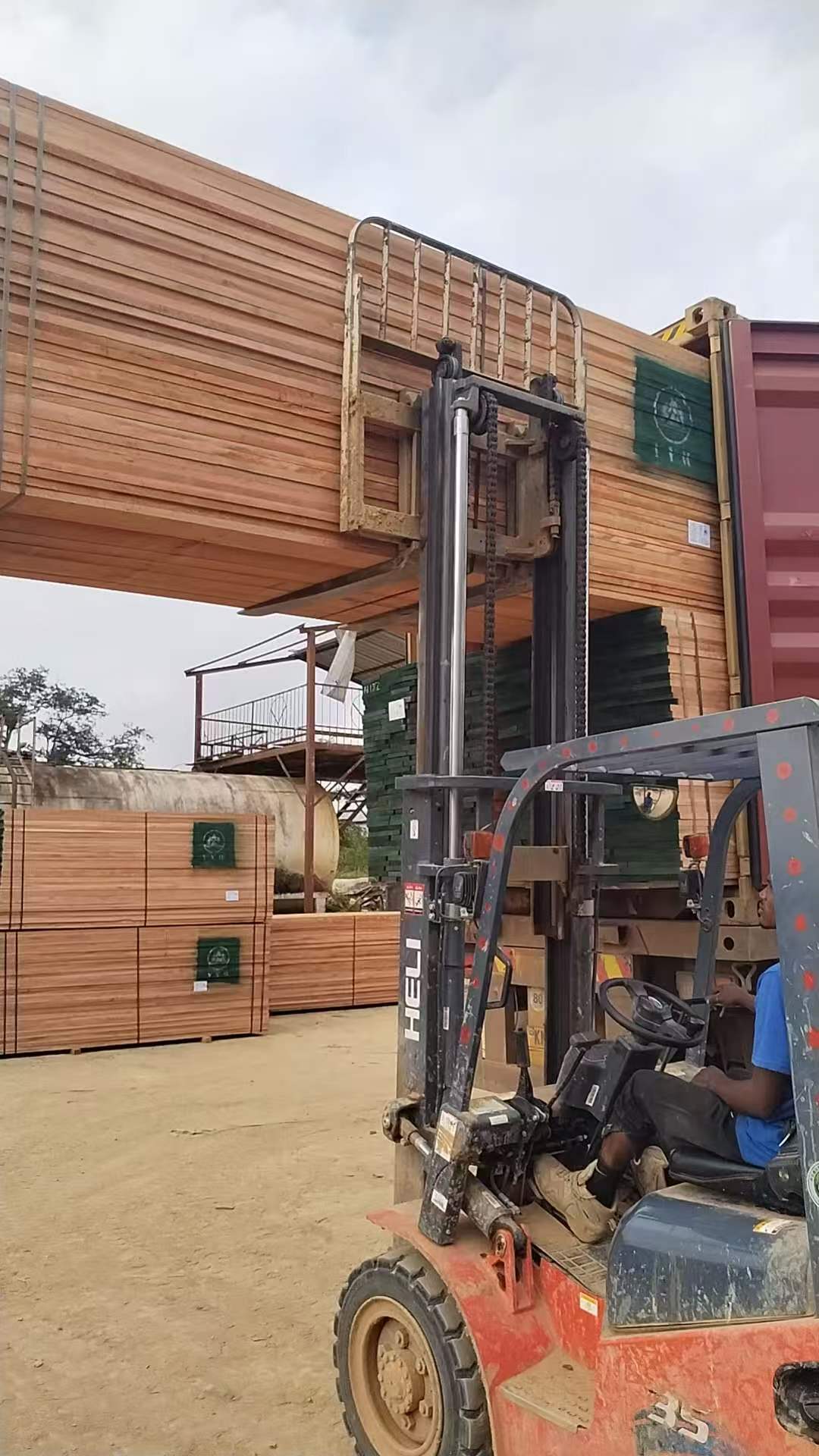
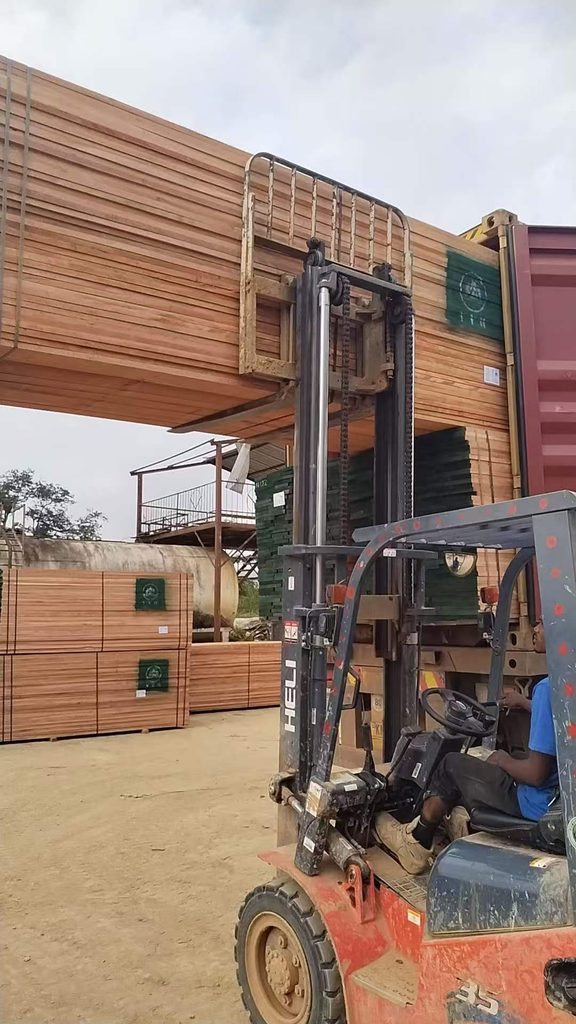
6. Container Loading: Preparing Timber for Export
Container loading represents another important stage in the export process.
Before loading starts, workers inspect the container to check its cleanliness, dryness, structural condition, and suitability for timber transportation.
During loading, our team pays particular attention to the following factors:
Weight Distribution
First, workers arrange the timber packages to distribute the cargo weight appropriately throughout the container.
Loading Arrangement
Next, they organize the timber bundles to make practical use of the available container space while maintaining cargo stability.
Cargo Protection
In addition, workers use suitable securing and protective materials to reduce cargo movement during transportation.
Container Payload
Finally, our team checks the total cargo weight against the permitted container payload and applicable transportation restrictions.
For heavy African hardwood species such as Azobe, weight requires particular attention because the cargo may reach the permitted weight limit before the container reaches its full loading capacity.
Therefore, buyers should not assume that every 20ft container can accommodate the same volume of timber. The actual loading quantity depends on the species, dimensions, moisture content, packaging, and container payload.
7. Preparing Documents for International Delivery
After completing the container loading process, our team coordinates the shipment details and prepares the relevant export documents according to the sales contract and destination requirements.
Depending on the transaction, the documents may include:
- Commercial Invoice
- Packing List
- Bill of Lading
- Certificate of Origin
- Phytosanitary Certificate, where applicable
- Relevant timber legality documents or other supporting certificates, where required
However, document requirements vary according to the destination country, timber species, product type, and applicable regulations.
For this reason, buyers should confirm the necessary documents before shipment to ensure a smoother export process.
From the first stage of log selection to the final container loading, every step contributes to a successful African hardwood timber shipment.
8. YYW Timber: Your African Hardwood Sawn Timber Supplier
At YYW Timber, we specialize in African hardwood sawn timber and work with modern African sawmilling and processing operations to supply international customers.
Our product range includes:
- Okoume
- Sapele
- Iroko
- Padouk
- Tiama
- Okan
- Azobe
- Bilinga
- Zebrano
- Other African hardwood species
We understand that buyers in different markets have different purchasing requirements.
For example, some furniture manufacturers prefer kiln-dried timber, while other buyers need air-dried timber, thick sections, random widths, or customized dimensions.
Therefore, our team welcomes inquiries from timber importers, wholesalers, distributors, furniture manufacturers, and woodworking factories.
Looking for a reliable African hardwood sawn timber supplier?
Contact YYW Timber today to discuss your required species, dimensions, moisture content, and shipment arrangements.
Let’s work together to build a stable and long-term timber supply relationship.
Contact YYW Timber
Hong Kong Yueyou Wood Limited
Contact Person: Elaine Zhang
Position: Foreign Trade Salesman
Website: www.yywtimber.com
Email: kenny@yueyouwood.com
WhatsApp: +86 18933092079
YYW Timber – From African Hardwood Processing to Global Timber Supply.