Mastering Sapele Ribbon Stripe Grain: How to Prevent Tear-Out in Planing and Milling
When machining quarter-sawn sapele wood, interlocked grain causes severe surface tear-out and fuzzy grain. To achieve a flawless finish, woodworkers must combine specialized helical cutterheads, reduced feed rates, and strict moisture control standards provided by professional sapele lumber suppliers.
What Causes the Iconic Ribbon Stripe Pattern and Interlocked Grain in Sapele?
Sapele wood, scientifically known as Entandrophragma cylindricum, features a distinctive and highly sought-after aesthetic known as ribbon stripe figure. According to The Wood Database, this visual phenomenon occurs because of interlocked grain patterns where wood fibers grow in alternating directions from one growth ring to the next. When logs are quarter-sawn, these alternating spiral growth directions reflect light differently, producing striking light and dark bands across the surface.
However, this same interlocked grain structure presents significant engineering challenges during primary and secondary manufacturing. As trees grow, the periodic reversal of fiber orientation creates zones of extreme tension within the lumber matrix. High-end architectural millwork shops frequently encounter resistance when these tension lines interact with traditional straight-knife planers. Understanding this cellular layout is the first step toward controlling machining defects in luxury cabinetry and architectural millwork.
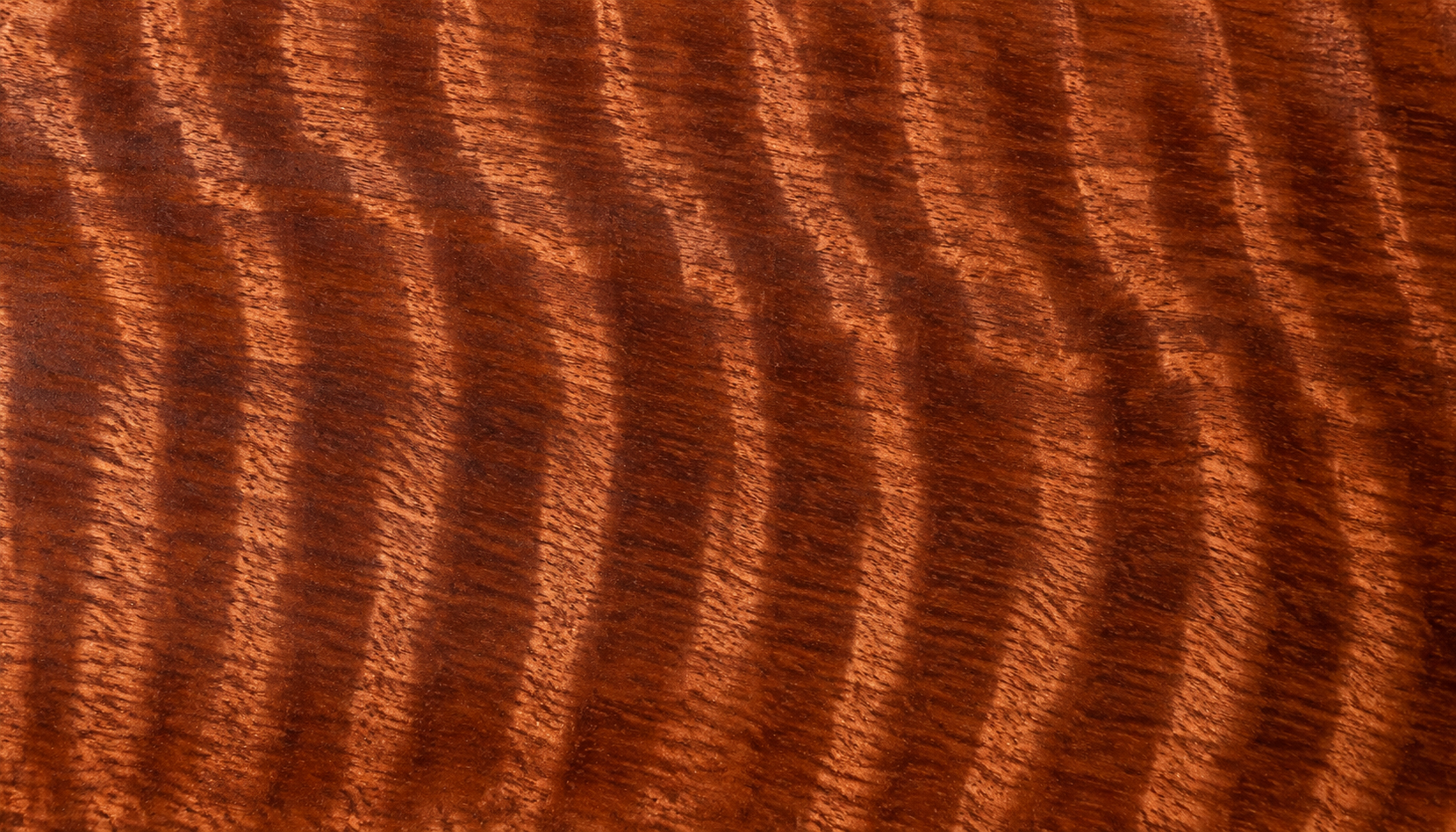
The Science of Tear-Out: Why Standard Planing Angles Ruin Quarter-Sawn Sapele
Standard straight-knife planers utilize a fixed rake angle ranging from 15 to 30 degrees, which works exceptionally well for straight-grained hardwoods like American cherry or hard maple. When processing sapele lumber through these conventional machines, the cutting edge lifts the wood fibers rather than slicing cleanly through them. Because the grain switches direction every few millimeters, the cutter inevitably digs into downward-sloping fibers, causing deep, disruptive surface tear-out.
Mechanical shear failure occurs when the downward force exerted by the knife exceeds the internal tensile strength of the wood cells spanning the growth rings. According to industry machining studies, up to 35% of standard sapele lumber production boards require secondary hand-scraping or heavy wide-belt sanding when planed with traditional straight knives. This excessive stock removal increases production labor costs and wastes valuable raw material in custom manufacturing environments.
Optimal Machine Setups: Helical Cutterheads, Low Feed Rates, and Skew Angles
Eliminating surface defects in ribbon stripe sapele requires upgrading workshop machinery to modern carbide insert helical cutterheads. Unlike straight knives that strike the wood surface simultaneously along the entire board width, helical cutterheads feature small, indexable carbide inserts arranged in a spiral pattern. Each insert engages the wood at a localized shear angle, slicing the fibers progressively rather than executing a destructive blunt chop.
Furthermore, operators should adjust power feeder speeds downwards by 20% to 30% to increase the number of cuts per inch (CPI). A higher CPI ensures that each carbide insert removes an extremely thin micro-chip, minimizing the shock transmitted to interlocked grain boundaries. Combining a helical cutterhead with a reduced depth of cut—typically limited to 0.5mm to 1.0mm per pass—drastically improves final surface smoothness on high-end sapele projects.
| Machining Parameter | Traditional Straight-Knife Setup | Optimized Helical Setup for Sapele |
|---|---|---|
| Cutterhead Type | Straight high-speed steel (HSS) knives | Insert carbide multi-row helical drum |
| Effective Rake Angle | 15° to 20° standard fixed angle | 10° to 15° with shearing pocket angle |
| Feed Rate Speed | 12 to 18 meters per minute | 8 to 10 meters per minute |
| Maximum Depth of Cut | 2.0mm per pass | 0.5mm to 1.0mm per pass |
| Surface Tear-Out Incidence | High (Requires intensive hand sanding) | Minimal (Ready for fine grit polishing) |
Sandings and Surface Preparation Protocol for Mirror-Like Clear Finishes
Achieving a mirror-like clear finish on sapele wood demands a disciplined, progressive sanding protocol that addresses microscopic fuzzing caused by residual grain distortion. Wide-belt sanders operating in custom millwork shops must utilize sharp aluminum oxide or ceramic belts starting at 120-grit, stepping systematically through 150-grit, 180-grit, and finishing at 220-grit. Skipping grit stages often leaves deep scratch patterns that become magnified under clear polyurethane or conversion varnish topcoats.
Cabinetmakers should also implement a water-popping technique prior to the final sanding stage to raise loose micro-fibers embedded within the interlocked ribbon figure. Spraying a light mist of distilled water across the sapele surface causes compressed cells to swell and stand upright. Once dried, a light pass with a 220-grit sanding sponge removes these stray fibers permanently, ensuring an exceptionally smooth substrate for high-gloss architectural millwork applications.
How Does Quarter-Sawn Sapele Behave Under Seasonal Humidity Fluctuations?
Material stability remains a primary reason luxury door manufacturers and upscale cabinetmakers specify quarter-sawn sapele over flat-sawn alternatives. According to The Wood Database, sapele has a Janka hardness rating of 1,810 lbf and a volumetric shrinkage value of 11.5%. Because quarter-sawn lumber exhibits its movement primarily across the thickness rather than the board width, panels experience minimal cupping or warping during seasonal humidity shifts.
During installation in high-end residential or commercial properties, quarter-sawn sapele lumber maintains dimensional equilibrium remarkably well compared to tropical alternatives like African mahogany. Radial movement coefficients average approximately 3.4%, meaning wide architectural panels and exterior entry doors maintain tight joinery tolerances throughout changing environmental seasons. Proper kiln-drying to an export moisture content of 8% to 12% further stabilizes internal stresses prior to fabrication.
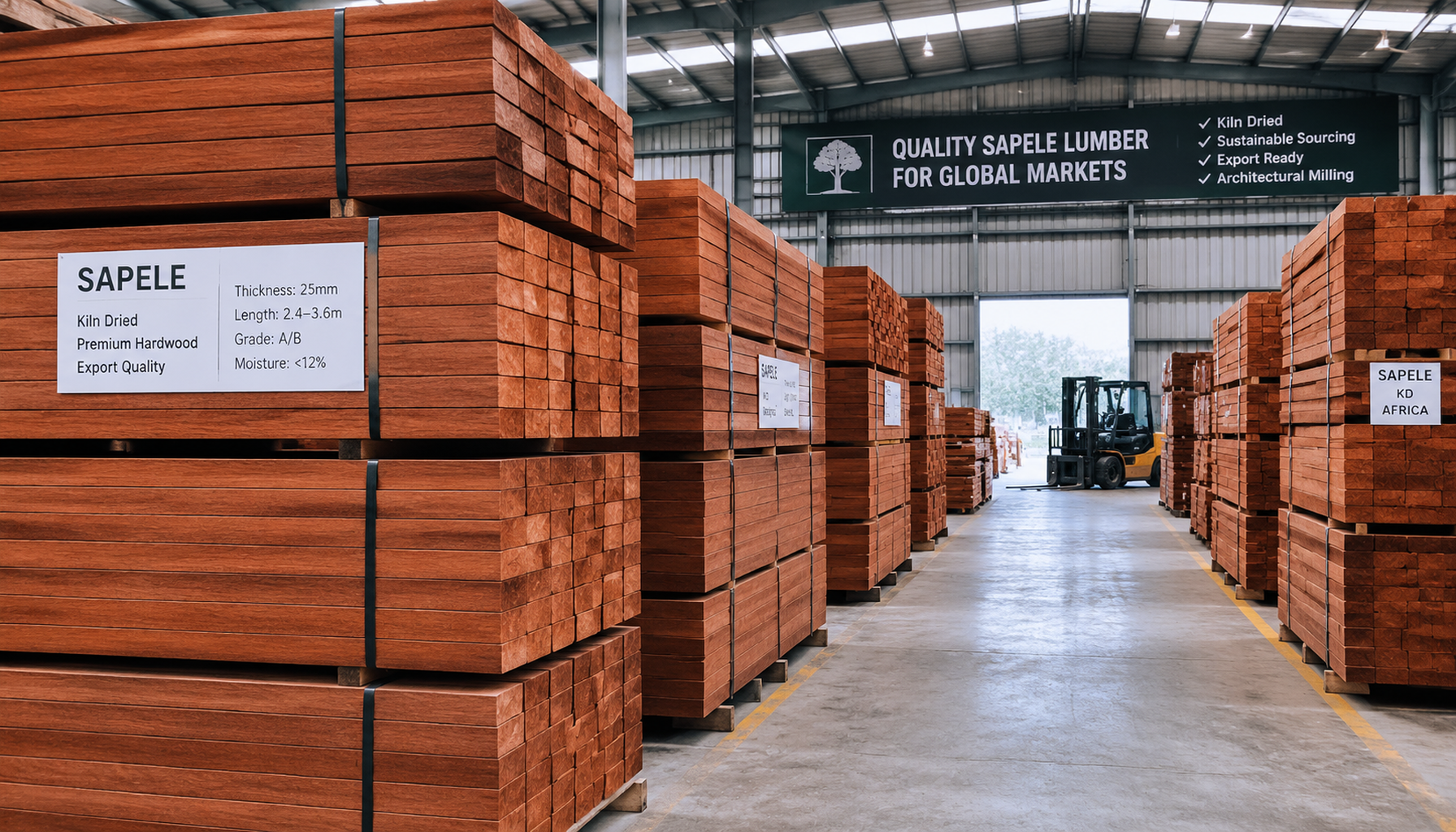
Specifying 100% Quarter-Sawn Sapele Lumber with YYW Timber Sawmills
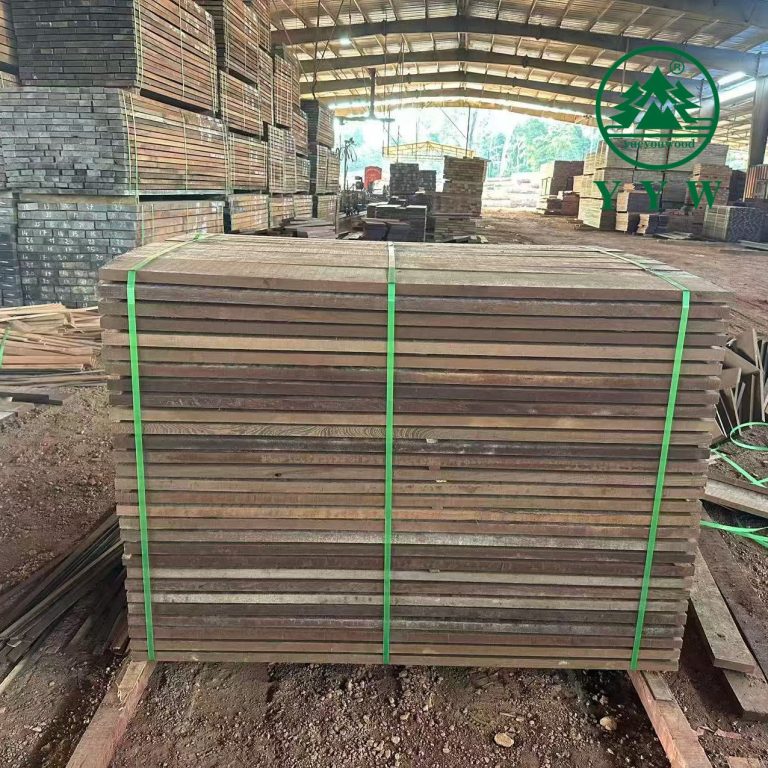
Procuring raw material that consistently exhibits uniform ribbon stripe figure requires partnering with an experienced direct-source timber supplier. YYW Timber specializes in supplying premium African hardwoods, including meticulously sorted sapele logs, square logs, and kiln-dried sapele lumber destined for international architectural markets. Our partner sawmills employ precision quarter-sawing techniques that maximize grain alignment and eliminate flat-sawn contamination.
By enforcing strict timber grading standards and controlled kiln-drying protocols, YYW Timber ensures that luxury furniture manufacturers and architectural millwork shops receive stable, defect-free material. Whether you require custom dimensions for luxury entry doors or large-volume sawn timber for commercial interior paneling, our export specialists provide tailored grading solutions. Contact YYW Timber today to request a professional quotation for high-grade quarter-sawn sapele lumber tailored to your precise manufacturing specifications.