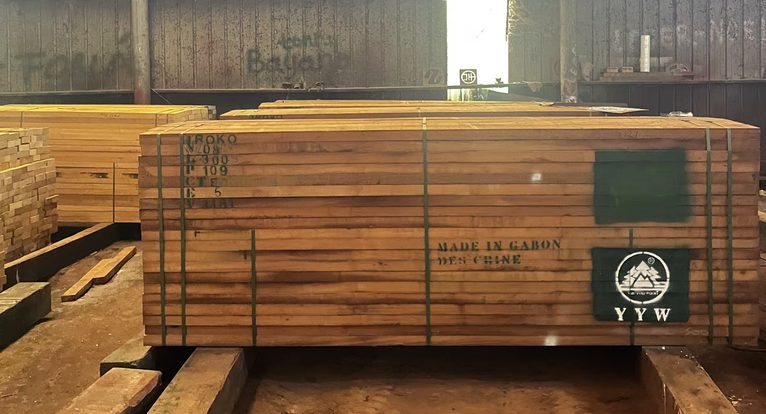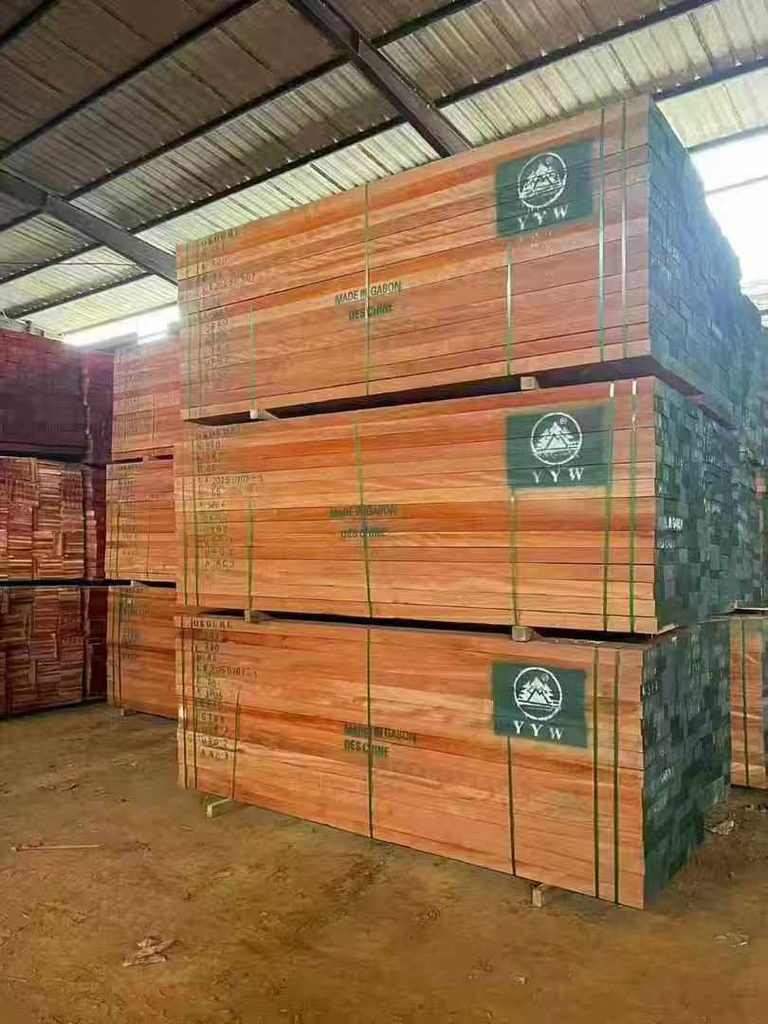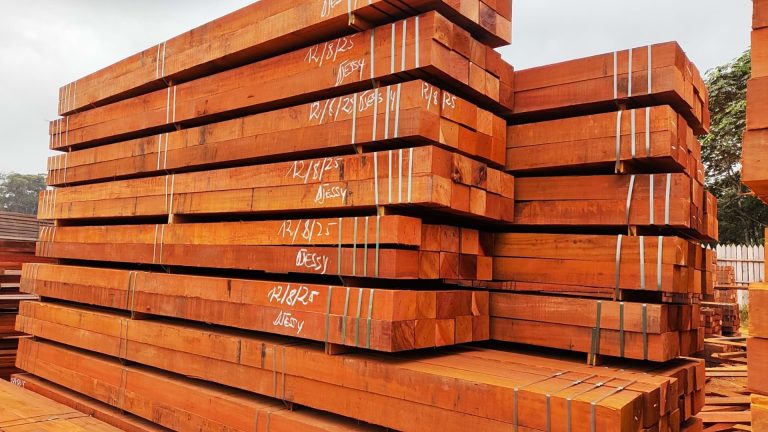
Tali timber (Erythrophleum spp.) is an ultra-dense, highly durable African hardwood essential for marine and heavy construction. Delivering exceptional ROI through a 30-plus year lifespan in extreme conditions, this FAS grade sawn timber resists marine borers and heavy impacts, outperforming standard structural materials in global infrastructure projects.
Key Takeaways
- Unmatched Durability: Tali timber provides Class 1 natural durability, making it highly resistant to fungal decay and insect attacks in harsh marine environments.
- Premium Procurement: Sourcing FAS Grade sawn timber ensures maximum yield and structural integrity for large-scale B2B engineering projects.
- Strict Compliance: Certified procurement via FSC and FLEGT frameworks guarantees adherence to global ecological standards and eliminates supply chain risks.
- Versatile Supply Formats: Available in both precision-milled boards and robust log cants to suit various industrial milling requirements.
Why Tali Timber Sets the Global Standard for Heavy Construction
As a B2B system integrator, structural engineer, or global wholesaler, selecting the right material for demanding infrastructure projects is a critical decision. Tali timber, scientifically known as Erythrophleum suaveolens or Erythrophleum ivorense, has emerged as the premier African hardwood for heavy-duty applications. Consequently, it consistently outpaces traditional structural woods in both longevity and mechanical strength. This exceptional species boasts an incredibly dense fiber network that naturally resists moisture absorption, marine borers, and severe abrasive forces. Furthermore, by integrating Sawn Timber produced from mature African logs, project developers can achieve unprecedented structural stability in commercial decking and bridge construction. Throughout this guide, we will explore the technical nuances, procurement strategies, and field applications that make Tali an indispensable asset for high-performance builds.
Technical Specification Matrix for Engineering Integration
To truly understand the value of Tali timber, we must examine its mechanical properties. For industrial buyers, data-backed specifications dictate material selection. Below is a detailed technical matrix outlining the core performance metrics of this formidable hardwood.
| Technical Property | Standard Measurement | Engineering Implication |
|---|---|---|
| Average Dried Weight | 900 – 1,100 kg/m³ | Provides immense ballast and structural anchoring for marine applications. |
| Janka Hardness | 2,900 lbf (12,900 N) | Extremely resistant to denting, pedestrian traffic, and industrial impacts. |
| Modulus of Rupture | 150 MPa | Capable of bearing extreme loads without structural failure or snapping. |
| Natural Durability | Class 1 (EN 350-2 Standard) | Offers a 30-plus year lifespan outdoors with zero chemical treatments. |
| Shrinkage Capacity | Volumetric: 14.5% | Requires careful acclimatization and proper fastening during installation. |
Core Applications in Marine Engineering and High-Traffic Decking
Because of its unparalleled physical properties, Tali timber excels in environments where other materials rapidly degrade. Let us examine the specific sectors where this wood dominates.
Marine Port Infrastructure and Coastal Defenses
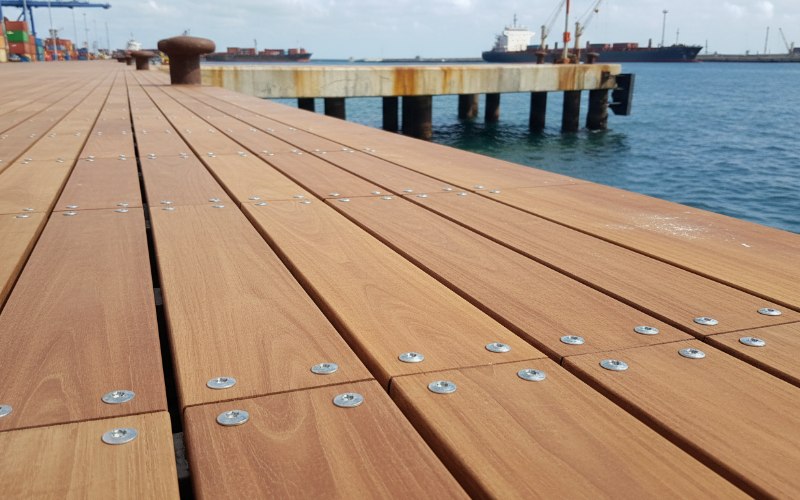
Marine environments impose ruthless conditions on structural materials. Saltwater corrosion, tidal erosion, and biological attacks from marine borers (such as Teredo navalis) compromise standard timber within months. However, Tali timber contains natural alkaloids and a dense interlocking grain that naturally repel these aquatic threats. Port authorities and system integrators frequently utilize Tali for port fenders, lock gates, slipways, and protective dolphins. By specifying high-density Tali Sawn Timber, marine engineers dramatically reduce maintenance budgets and extend the operational life of coastal infrastructure.
Commercial Decking and Urban Boardwalks
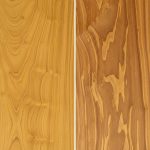
In the realm of commercial landscaping, urban planners demand materials that withstand millions of footfalls while maintaining aesthetic integrity. Tali timber presents a warm, reddish-brown hue that gradually weathers to a distinguished silver-grey when exposed to UV light. More importantly, its immense Janka hardness rating prevents splintering and wear. When installing Tali for commercial decking, contractors must pre-drill all fastening points due to the wood’s density. Using high-grade stainless steel screws is mandatory to prevent oxidation staining. Ultimately, integrating commercial hardwood decking solutions utilizing Tali ensures a highly aesthetic, maintenance-free public space.
Optimizing Procurement: Sourcing FAS Grade Sawn Timber and Log Cants
Procuring raw materials for international B2B operations requires strict adherence to quality grading standards. The financial success of your project relies heavily on the yield and workability of the imported timber.
The Importance of FAS Grade Standards
FAS (Firsts and Seconds) Grade represents the highest quality tier in the hardwood lumber market. When you order FAS Grade Tali timber, you are guaranteed long, clear cuttings with minimal defects such as knots, sapwood, or severe checking. For a system integrator manufacturing precision decking boards, utilizing FAS Grade wood drastically reduces manufacturing waste and lowers the overall cost per linear meter. At YYW Timber, we meticulously inspect every consignment to ensure it meets strict international grading rules.
Evaluating Sawn Timber vs. Log Cants
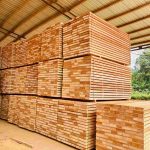
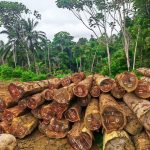
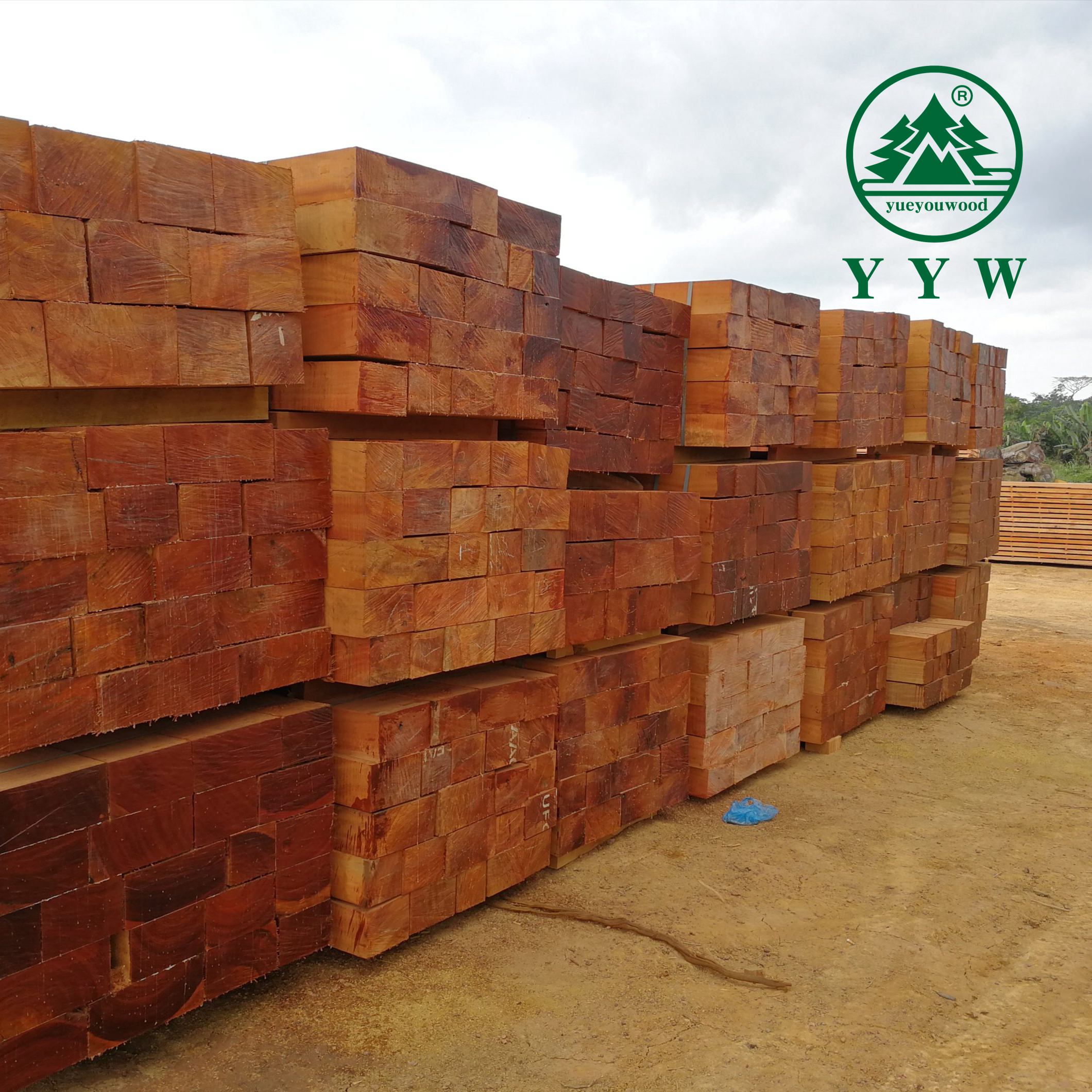
Depending on your onshore milling capabilities, you may choose between fully processed sawn boards or raw Log Cants. Log Cants are partially processed logs that have been squared off, offering a versatile bulk material for wholesalers who possess high-capacity breakdown saws. Conversely, custom-cut Sawn Timber provides immediate readiness for final machining or direct installation. Selecting the appropriate format minimizes transit costs and optimizes your local manufacturing workflow.
Navigating Legal Compliance: FLEGT, FSC, and CITES Verification
In today’s global market, environmental compliance is non-negotiable. Leading B2B buyers mandate absolute transparency regarding the origin of their African hardwoods.
Firstly, Tali timber is currently not listed under the CITES Appendices, meaning it is not considered critically endangered and does not require complex export permits for international trade. However, proactive importers must prioritize legality. Under the strict guidelines of the EU Timber Regulation (EUTR) and the upcoming EU Deforestation Regulation (EUDR), all imported timber must prove legal harvesting. Consequently, sourcing from regions that issue Forest Law Enforcement, Governance and Trade (FLEGT) licenses is highly recommended. Furthermore, prioritizing FSC-certified (Forest Stewardship Council) suppliers ensures that the forest ecosystem remains protected. YYW Timber guarantees that every cubic meter of Sawn Timber exported is accompanied by verified documentation, entirely mitigating your legal and reputational risks.
Field Experience: A 20-Year African Timber Expert Perspective
Generic data sheets cannot replace hands-on experience. Over the past two decades facilitating the African timber trade, I have overseen the export of thousands of cubic meters of Tali timber from the ports of Douala and Libreville. One specific scenario stands out: In 2018, a major European port contractor faced critical supply shortages of Azobe for a massive lock-gate refurbishment. They urgently needed a biologically equivalent alternative.
I advised them to substitute their specification with FAS Grade Tali Sawn Timber. Initially skeptical about the substitution, the engineering team tested our provided Log Cants for shear strength and aquatic resilience. The results were outstanding. Not only did the Tali timber match the required structural tolerances, but its slightly more favorable cross-grain machining characteristics saved the contractor 15% in tool-wear costs.

Frequently Asked Questions
Final Thoughts and Procurement Strategy
Mastering the integration of Tali timber into your global supply chain offers a tremendous competitive advantage. From its invulnerability in marine port environments to its enduring beauty in urban public spaces, this timber stands unyielding against both time and the elements. By prioritizing legally compliant, FAS Grade Sawn Timber, you safeguard both your structural integrity and your corporate reputation.
I encourage you to bypass the complexities of international lumber sourcing by partnering with proven experts. If you are a B2B system integrator planning your next major marine or commercial decking project, let us provide the precision-milled materials you require. Contact YYW Timber today to discuss your specific Log Cants and Sawn Timber specifications, and secure a reliable, fully certified supply chain for your enterprise.