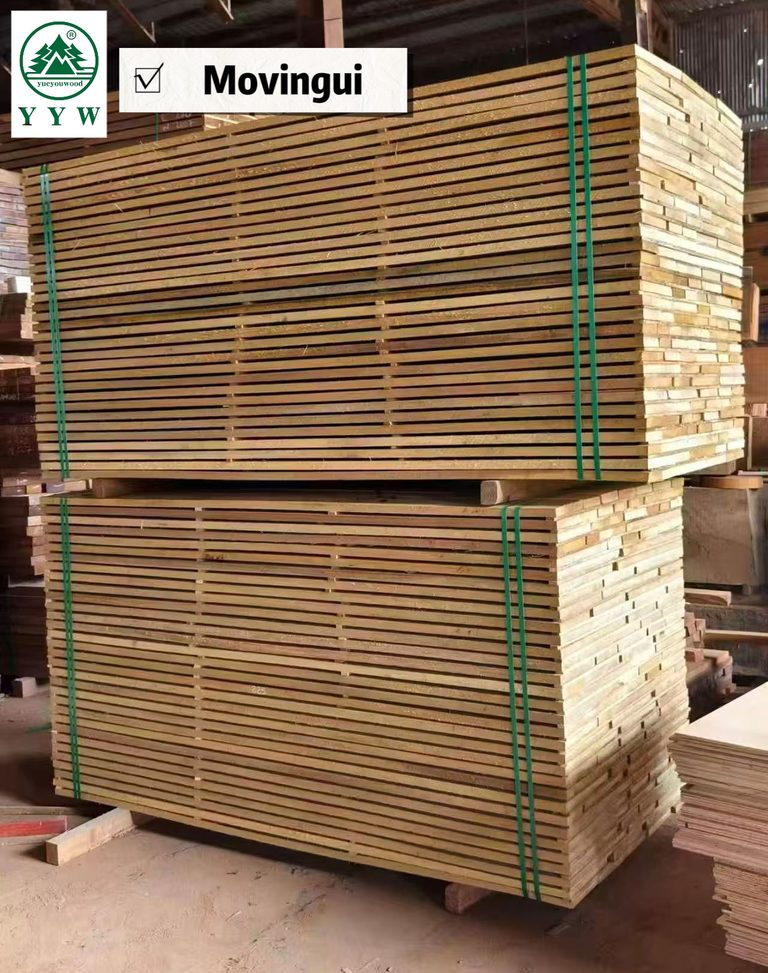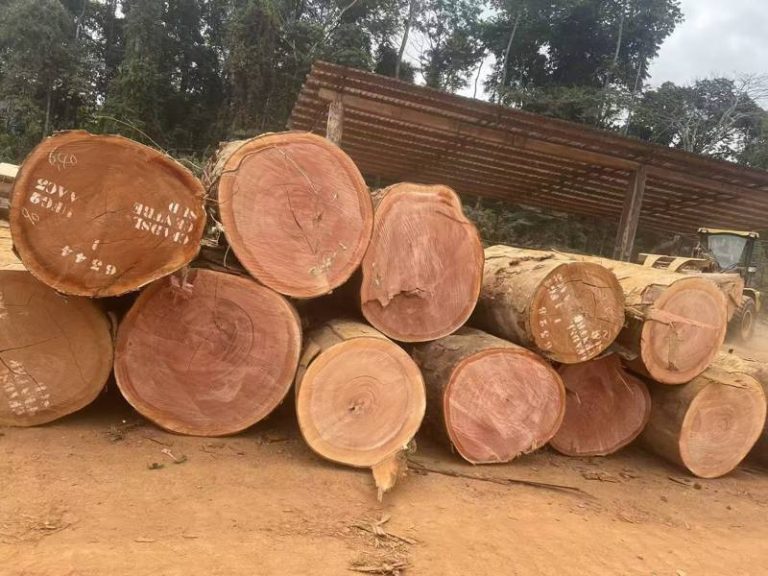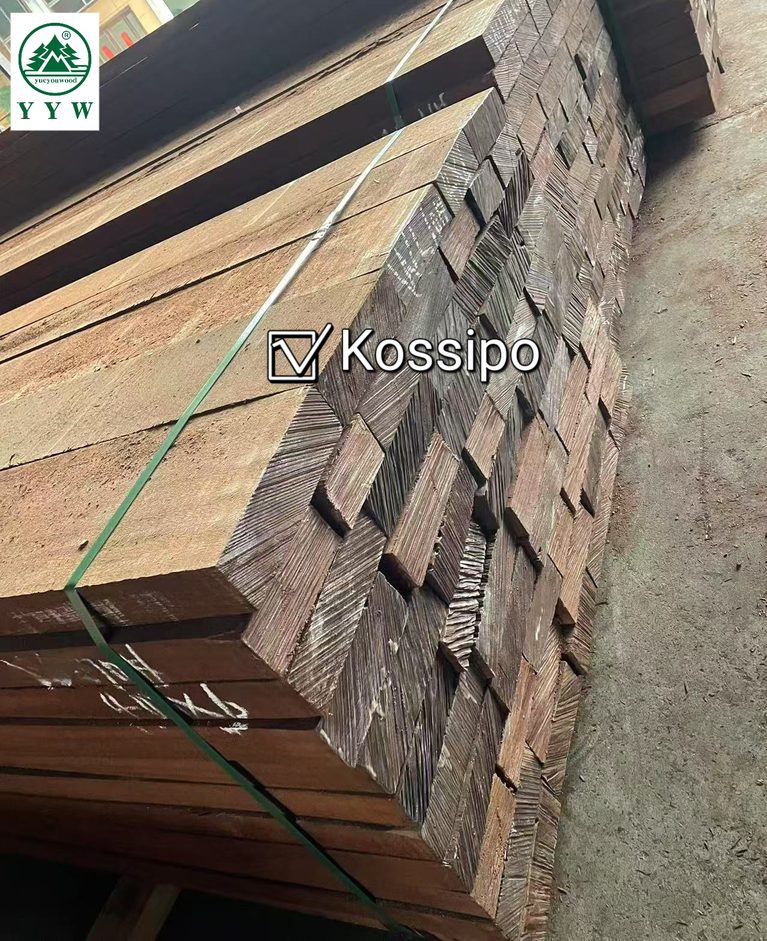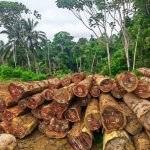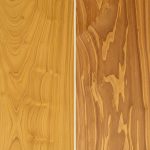
Wholesale sapele lumber (Entandrophragma cylindricum) is a premier African hardwood prized for its high density of approximately 640 kg/m³, rich ribbon-figured grain, and exceptional durability. According to technical data from The Wood Database, sapele serves as a stable, premium alternative to Honduras mahogany for large-scale window, door, and architectural millwork manufacturing projects worldwide.
What Are the Differences Between FAS, No. 1 Common, and Mill Run Sapele Grades?
Understanding timber grading rules prevents costly yield losses in commercial manufacturing operations. Sapele lumber is predominantly traded using modified National Hardwood Lumber Association (NHLA) grading standards adapted for African export specifications. Importers must evaluate whether they are purchasing FAS (Firsts and Seconds), No. 1 Common, or unselected Mill Run batches.
According to international lumber trade standards, FAS grade sapele requires minimum board dimensions of 6 inches in width and 8 feet in length. It must yield a minimum of 83.3% clear-face cuttings, making it ideal for high-end furniture and exterior joinery. Conversely, No. 1 Common yields a minimum of 66.6% clear faces, which suits shorter cutting lengths required in cabinet production.
| Grade Name | Minimum Width | Minimum Length | Clear Face Yield | Primary Commercial Application |
|---|---|---|---|---|
| FAS Sapele | 6 inches (150mm) | 8 feet (2.44m) | 83.3% | Architectural millwork, high-end windows, exterior doors |
| No. 1 Common | 3 inches (75mm) | 4 feet (1.22m) | 66.6% | Cabinet components, interior trim, edge-glued panels |
| Mill Run | Variable (Unsorted) | Variable | Mixed (FAS/Common mix) | Budget-constrained bulk manufacturing, structural packaging |
Procuring wholesale sapele lumber through Mill Run sorts requires careful evaluation of factory output ratios. Purchasing directors typically negotiate an agreed-upon minimum percentage of FAS boards—often targeting a 70/30 or 80/20 FAS-to-Common split—to maintain predictable production yields and minimize waste.
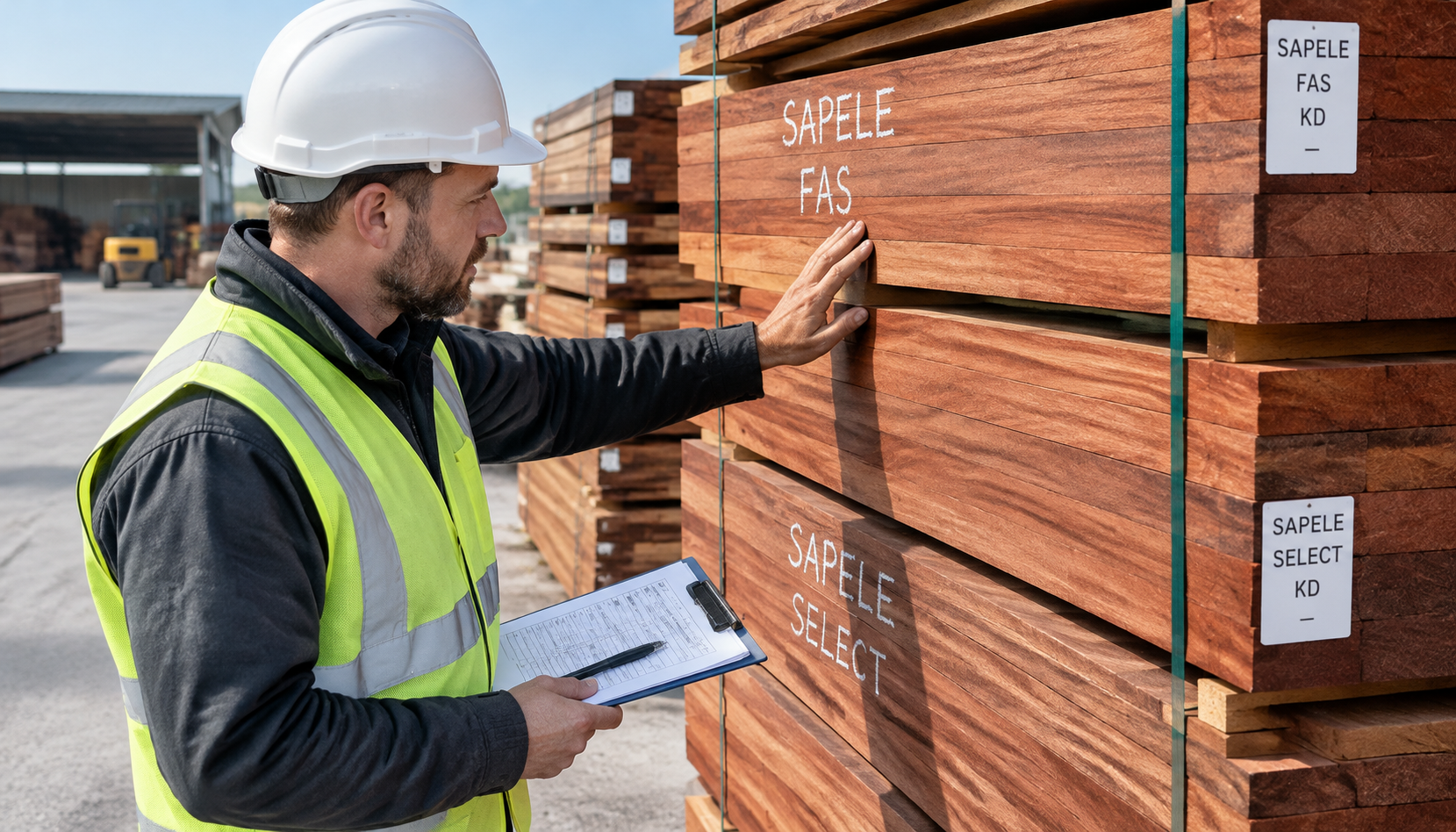
Kiln Drying Standards: Why 8%–10% Target Moisture Content Is Non-Negotiable
Green sapele timber possesses a natural moisture content ranging from 50% to 80% depending on the harvesting season and forest origin. Controlling moisture reduction is critical because sapele experiences volumetric shrinkage rates of approximately 4.8% radially and 7.8% tangentially during the drying process, according to data from wood science research institutes.
Commercial window and door manufacturers must mandate an 8% to 10% kiln-dry (KD) moisture content specification in their purchasing contracts. Failing to enforce this precise moisture window leads to severe post-manufacture dimensional instability, cupping, twisting, and joint failure when the timber enters temperate or climate-controlled environments.
Professional sapele timber suppliers utilize computerized steam-heated kilns with schedule-controlled temperature ramps to eliminate internal stresses. Independent moisture meter testing across 100% of container shipments guarantees that core moisture levels align with international woodworking standards.
How Do You Accurately Verify Green vs. KD Board Footage Tally on Container Shipments?
Calculating accurate sapele board feet tally requires strict adherence to standard measurement formulas before containers leave African port facilities. The standard board foot (BF) calculation multiplies nominal thickness in inches, width in inches, and length in feet, divided by 12:
$$\text{Board Feet (BF)} = \frac{\text{Thickness (in)} \times \text{Width (in)} \times \text{Length (ft)}}{12}$$
Discrepancies often arise between green tally measurements at the sawmill and dry tally measurements at the destination port. According to international shipping benchmarks, a natural drying shrinkage allowance of 2% to 4% in nominal thickness and width dimensions is standard during the kiln-drying process.
Purchasing directors should insist on dual-tally documentation from independent inspection agencies like SGS or Cotecna. Verifying bundle tallies prior to container door sealing prevents short-shipment disputes and ensures that freight costs per board foot remain economically viable.
Common Sapele Defects to Inspect Before Approving African Port Loading
Export-grade sapelli timber undergoes rigorous pre-shipment quality control to identify biological and mechanical defects. Identifying these vulnerabilities early protects importers from customs rejections and costly factory downtime.
| Timber Defect | Primary Cause | Acceptable Tolerances for FAS Grade | Corrective Action |
|---|---|---|---|
| End Splits | Rapid moisture loss during air-drying | Maximum length not exceeding board thickness | Trim affected ends with a crosscut saw |
| Bow and Crook | Stacking misalignment or internal growth stress | Under 6mm deviation per 3-meter length | Reject or re-rip during secondary milling |
| Pinholes | Ambrosia beetle activity in unbarked logs | Scattered pinholes allowed if sound and inactive | Treat with approved anti-sapstain solutions |
| Wane | Bark remaining on raw board edges | Zero tolerance on FAS faces; minor on edges | Square-edge trimming before container loading |
Professional wood buyers must cross-reference inspection certificates against physical bundle photos taken at port terminals such as Douala or Kribi. Ensuring compliance with phytosanitary regulations (ISPM 15 heat treatment standards) is mandatory for all international timber shipments.
Current Market Trends: Price Forecasts and Central African Port Freight Rates
Global hardwood markets face continuous pressure due to evolving log export bans and sustainable forestry mandates across Central Africa. According to industry trend reports from timber trade organizations, strict legality verification systems (such as FLEGT-aligned policies in the Republic of Congo and Cameroon) have reduced raw log availability while increasing processed sapele lumber values.
Ocean freight volatility from West African ports to major hubs in Europe, North America, and Asia continues to influence wholesale sapele lumber pricing structures. Importers mitigate these cost fluctuations by securing long-term supply contracts directly with primary processors rather than relying on spot-market intermediaries.
Data from international shipping indexes indicates that container freight rates fluctuate by 12% to 18% quarterly, making landed cost forecasting essential for large-scale manufacturers operating on fixed-price project bids.
Why Global Hardwood Importers Partner with YYW Timber for Direct Sapele Supply
Sourcing sapele wood for sale requires a reliable supply chain partner with deep roots in African forest concessions and processing facilities. YYW Timber delivers unmatched value through direct-from-source logging, strict quality grading, and transparent container loading protocols.
By controlling every stage from forest harvesting and sawmill processing to precise 8%-10% kiln drying, YYW Timber ensures that wholesale buyers receive consistent FAS-grade sapele lumber. Our logistics team handles complex export documentation, phytosanitary certifications, and container optimization to minimize your landed costs.
Are you looking to secure a reliable, high-volume supply of premium sapele timber for your manufacturing operations? Contact YYW Timber today to request a customized quotation, current port pricing, or a detailed specification sheet for your next container shipment.