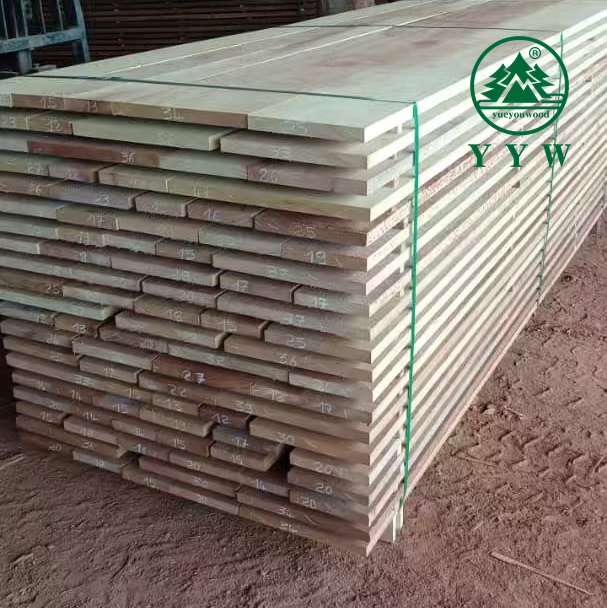
Iroko is one of the well-known African hardwood species used in international timber markets. Recognised for its golden-brown appearance, natural durability and good strength properties, Iroko has earned a place in various European woodworking and construction applications.
From exterior doors and window frames to decking, garden furniture and interior joinery, Iroko offers a combination of characteristics that makes it a practical choice for many timber buyers.
But what makes Iroko attractive to European markets? And what should importers and manufacturers consider when purchasing Iroko sawn timber?
Let’s take a closer look.
1. Natural Durability for Exterior Applications
One of the main reasons European buyers consider Iroko is its natural durability.
Iroko heartwood is generally classified as durable to very durable, with commonly referenced durability classifications of Class 1–2 under EN 350. This makes it suitable for a range of applications where timber may be exposed to changing weather conditions.
Unlike many less durable timber species, Iroko can perform well in exterior applications when properly selected, processed, installed and maintained.
Typical applications include:
- Exterior doors and window frames
- Garden furniture
- Decking and outdoor flooring
- Exterior cladding
- Gates and pergolas
- Boatbuilding and marine joinery
For European manufacturers and timber merchants, this natural durability makes Iroko an important option when customers require hardwood for outdoor projects.
However, performance still depends on the quality of the heartwood, the design of the finished product, moisture exposure and installation conditions. Sapwood does not share the same natural durability as heartwood and should be assessed separately.
2. A Warm Golden-Brown Appearance
Appearance is another reason why Iroko attracts attention.
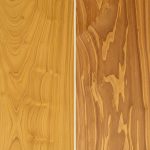
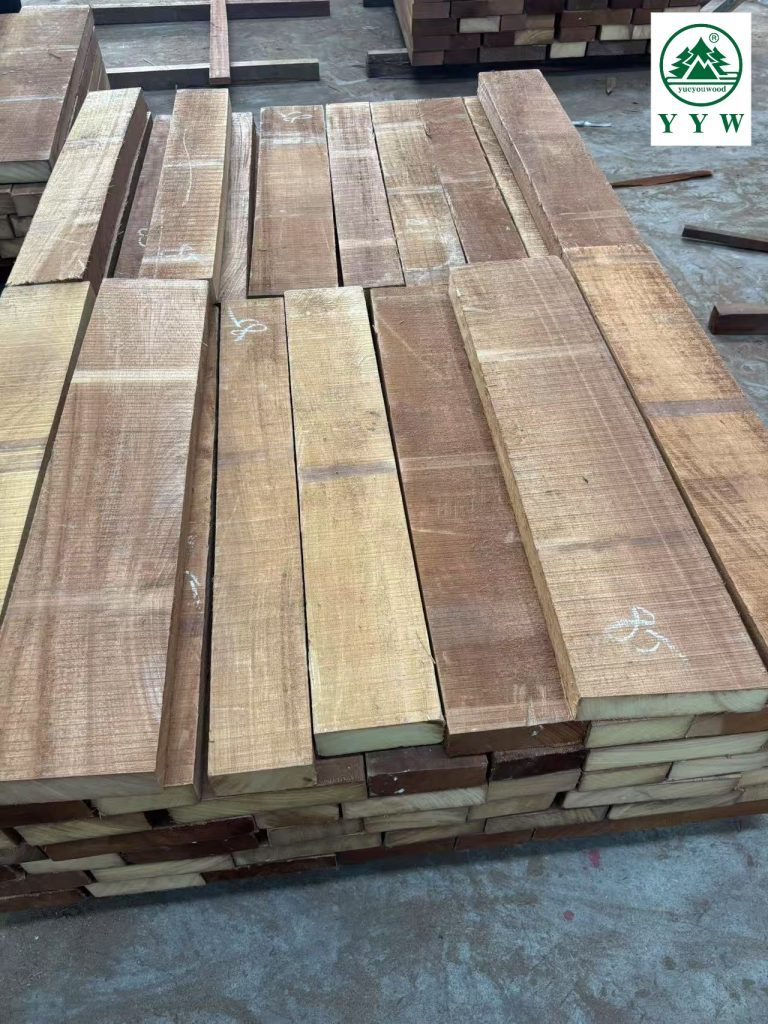
Freshly processed Iroko heartwood usually ranges from yellowish brown to golden brown or medium brown. As the timber ages and reacts to light, its colour generally becomes darker and richer.
When exposed outdoors without a surface coating, Iroko gradually develops a natural silver-grey appearance. Some buyers appreciate this weathered look, while others prefer to preserve the original golden-brown colour through suitable finishing and maintenance.
Iroko also has an interlocked grain and medium-to-coarse texture, giving the timber a distinctive natural appearance.
These visual characteristics make it suitable for both traditional and contemporary designs, particularly in exterior joinery, furniture and architectural woodworking.

3. Strength and Dimensional Stability
Its strength and relatively low shrinkage make it useful for applications that require a combination of durability and dimensional performance.
Compared with some other hardwoods, Iroko generally shows moderate movement during moisture changes. This is one reason it is used in joinery, flooring, doors and other manufactured products.
For European buyers, however, dimensional stability should never be judged by species name alone.
The timber’s moisture content, drying quality, board dimensions, grain direction and storage conditions all influence its performance.
For this reason, buyers should confirm the required moisture content and timber condition before placing an order, especially when purchasing kiln-dried Iroko for further manufacturing.
4. Versatile Applications Across Different Industries
Iroko is not limited to one particular industry. Its combination of durability, strength and appearance allows manufacturers to use it in a variety of products.
| Industry | Typical Applications |
|---|---|
| Exterior joinery | Doors, windows and frames |
| Outdoor construction | Decking, cladding, gates and pergolas |
| Furniture manufacturing | Indoor and outdoor furniture |
| Flooring | Solid hardwood flooring and stairs |
| Marine applications | Boatbuilding and exterior marine joinery |
| Specialist manufacturing | Worktops, laboratory benches and other durable surfaces |
For European timber importers and distributors, this range of applications provides opportunities to supply different customer groups with one established African hardwood species.
The exact suitability of each application should still be checked against the required technical specification and service conditions.https://www.wood-database.com/iroko/?utm_source=chatgpt.com
5. Iroko as an Alternative to Teak
Iroko is sometimes known commercially as African Teak because of its colour, durability and use in outdoor applications.
It is also considered by some manufacturers as an alternative to genuine teak.
However, Iroko and teak are different timber species, and their properties are not identical.
| Property | Iroko | Teak |
|---|---|---|
| Botanical name | Milicia excelsa / Milicia regia | Tectona grandis |
| Main origin | Tropical Africa | South and Southeast Asia |
| Colour | Golden brown to medium brown | Golden brown to dark brown |
| Natural durability | Generally Class 1–2 heartwood | Generally highly durable heartwood |
| Typical applications | Exterior joinery, decking, furniture and flooring | Marine work, decking, furniture and joinery |
| Workability | Generally workable, but grain and mineral deposits require attention | Generally good, though oily characteristics may affect finishing |
For buyers comparing the two species, the decision should consider the required appearance, technical performance, available dimensions, quality grade and total purchasing cost.
Iroko should not simply be treated as an identical replacement for teak. Instead, it is a distinct African hardwood that may meet many similar project requirements.
6. Processing Considerations When Buying Iroko Sawn Timber
Although Iroko offers several advantages, manufacturers should understand its processing characteristics before purchasing.
Interlocked Grain
Iroko often has interlocked or irregular grain. During planing and machining, this can sometimes cause surface tear-out. Suitable cutting angles, sharp tools and careful machining can help achieve a better finish.
Tool Wear
Iroko may contain mineral deposits, including calcium carbonate, which can increase cutting-tool wear. Manufacturers should consider appropriate tooling and maintenance when processing larger quantities.
Drying and Moisture Content
Proper drying is essential for producing stable finished products. Buyers should specify whether they require air-dried (AD) or kiln-dried (KD) timber and agree on the target moisture content before shipment.
Heartwood and Sapwood
Iroko heartwood is valued for its natural durability, while the paler sapwood has lower durability. Buyers should clearly communicate their expectations regarding sapwood allowance, colour variation and grading.
Understanding these factors helps manufacturers select timber that better matches their production requirements.
7. What Should European Buyers Check Before Importing Iroko?
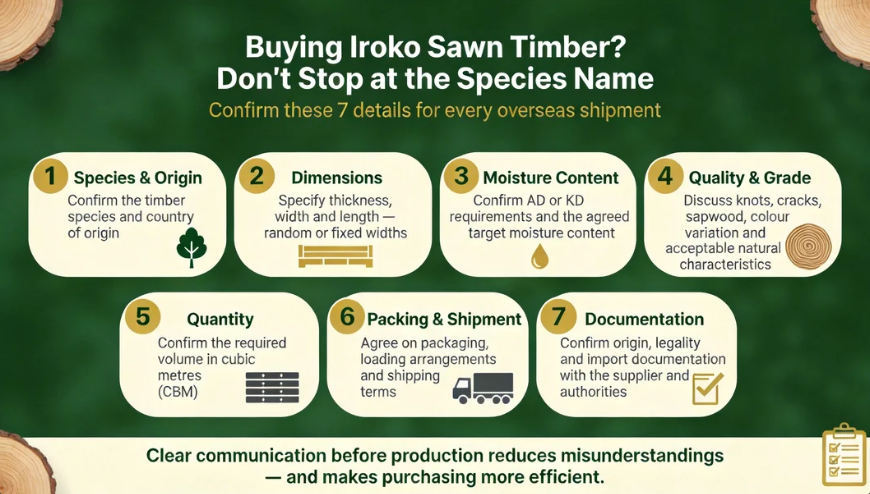
When sourcing Iroko sawn timber from overseas suppliers, buyers should look beyond the species name and confirm the details of each shipment.
Here are some important points:
- Species and origin: Confirm the timber species and country of origin.
- Dimensions: Specify thickness, width and length, including whether random or fixed widths are required.
- Moisture content: Confirm AD or KD requirements and the agreed target moisture content.
- Quality and grade: Discuss knots, cracks, sapwood, colour variation and other acceptable natural characteristics.
- Quantity: Confirm the required volume in cubic metres (CBM).
- Packing and shipment: Agree on packaging, loading arrangements and shipping terms.
- Documentation: Confirm the required origin, legality and import documentation with the supplier and relevant authorities.
Clear communication before production helps reduce misunderstandings and makes the purchasing process more efficient.
8. YYW Timber: Your African Iroko Sawn Timber Supplier
At YYW Timber, we focus on African hardwood sawn timber and work with overseas buyers to meet different market and manufacturing requirements.
Iroko is one of the important species in our African hardwood range. At YYW Timber, we understand the specific requirements of European buyers when it comes to timber dimensions, moisture content, quality and appearance.
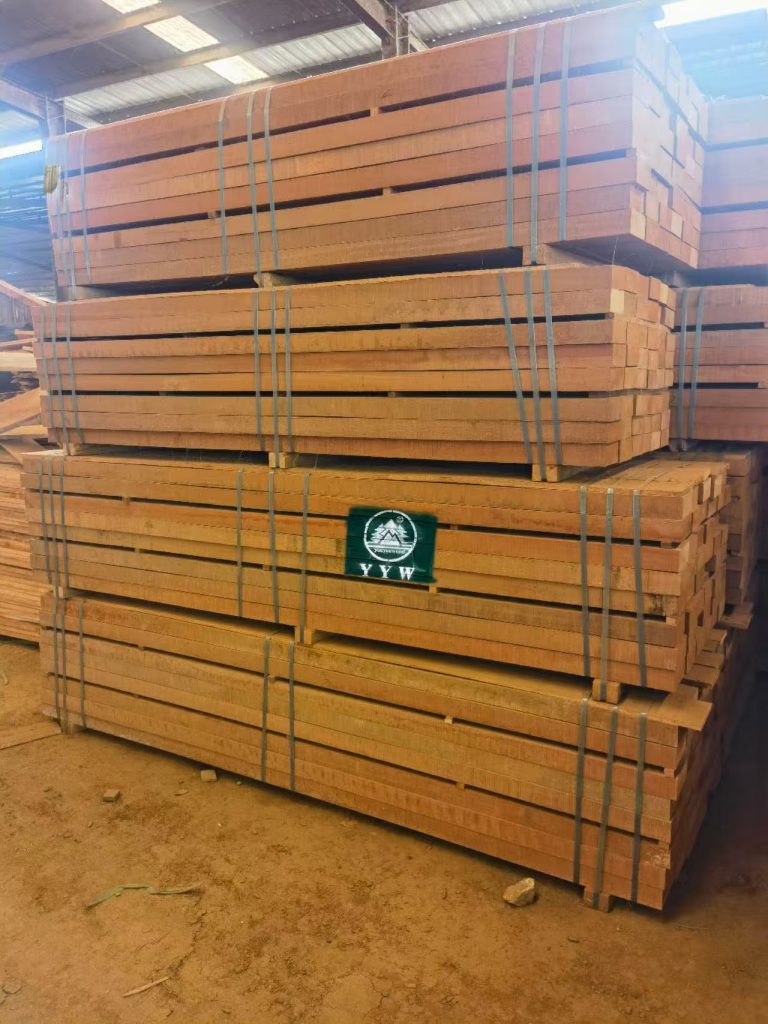
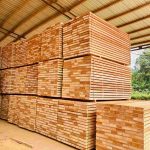
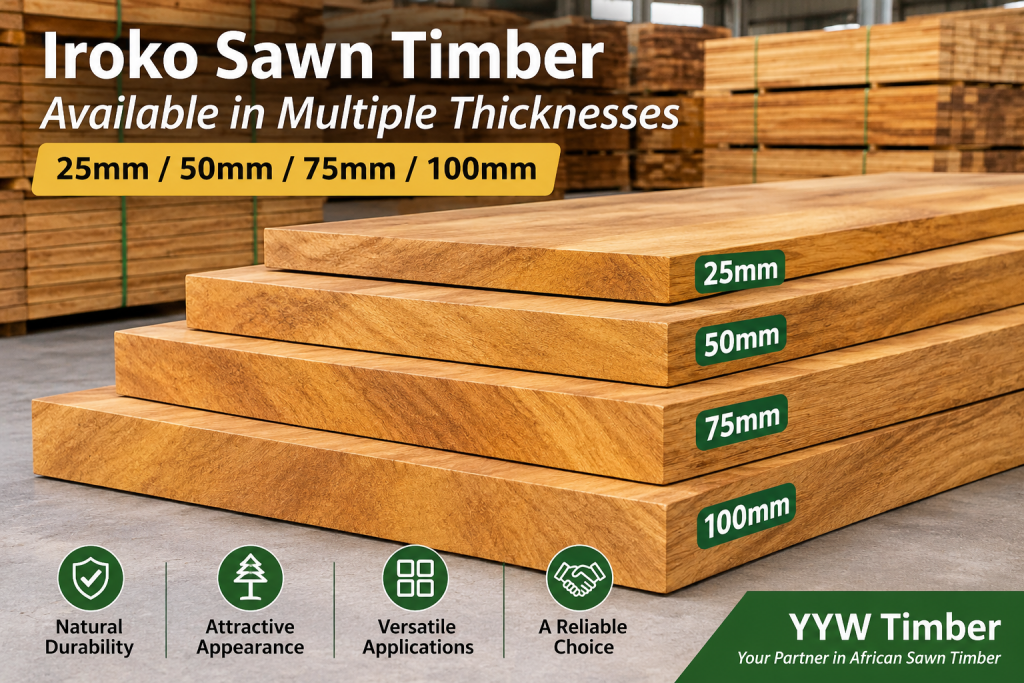
To meet different purchasing needs, we offer Iroko sawn timber in various thicknesses, including 25 mm, 50 mm, 75 mm and 100 mm, subject to order requirements and stock availability.
Our team welcomes enquiries from timber importers, wholesalers, distributors and woodworking manufacturers seeking a reliable source of African hardwood.
Whether you need Iroko for exterior joinery, furniture, decking or other woodworking applications, our team is ready to discuss your specifications.
Looking for Iroko Sawn Timber?
If you are sourcing African hardwood for the European market, Iroko is a species worth considering.
Contact YYW Timber to discuss your required dimensions, moisture content, quality expectations and purchasing quantity.
YYW Timber – Your Partner for African Hardwood Sawn Timber.