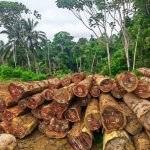
When choosing African hardwood, buyers often look for more than strength and durability. Natural colour, grain appearance, workability and dimensional stability can also play an important role in selecting the right timber for a project.
Movingui is an attractive African hardwood known for its distinctive golden-yellow to yellow-brown colour, natural lustre and versatile applications. Its appearance makes it an appealing option for furniture manufacturers, joinery workshops, flooring producers and other woodworking businesses.
Scientifically known as Distemonanthus benthamianus, Movingui grows in tropical West and Central Africa. Timber buyers may also encounter regional trade names such as Ayan, Eyen and Bonsamdua.
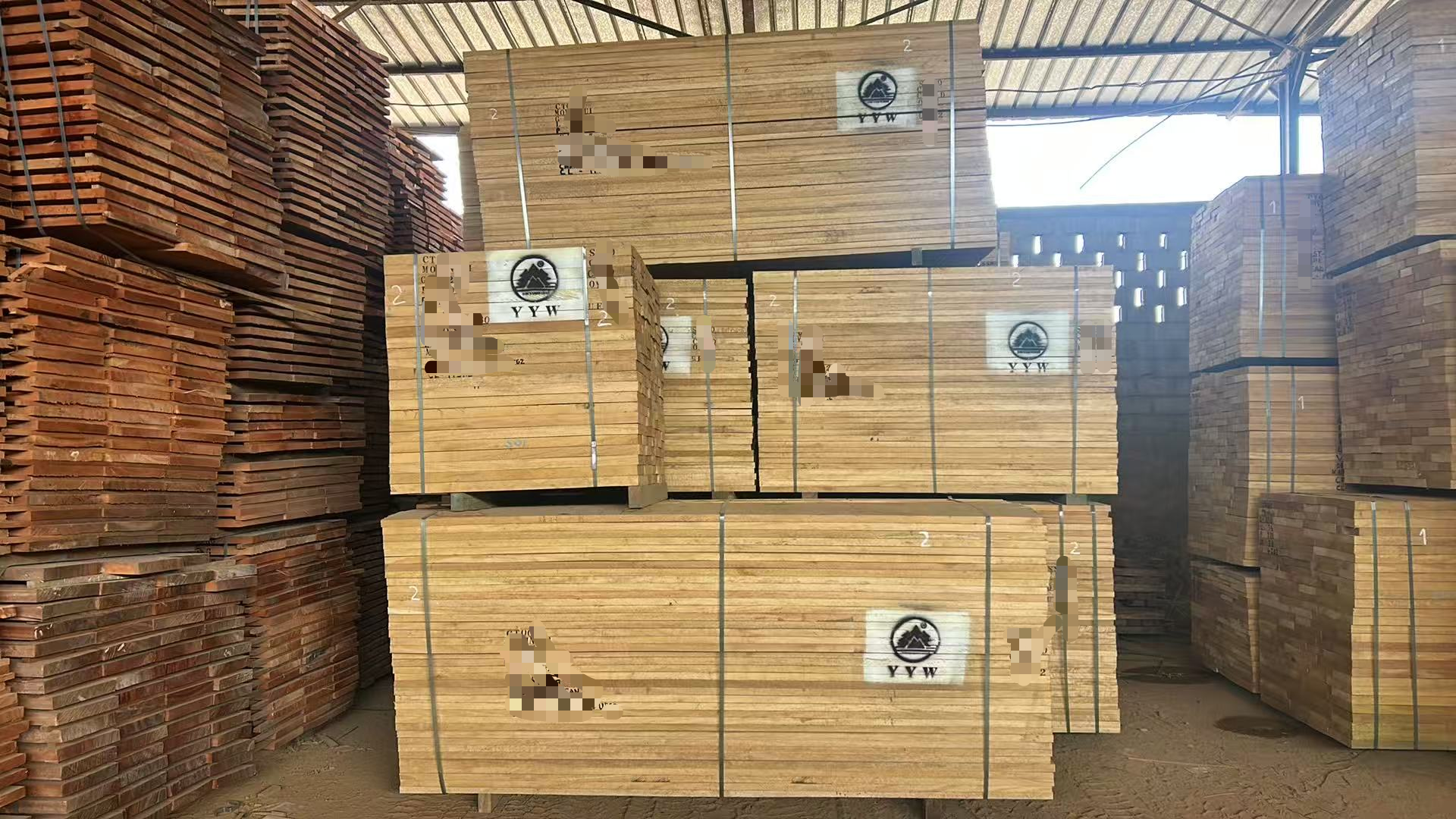
At YYW Timber, we supply African hardwood sawn timber and understand the importance of matching timber characteristics with buyers’ actual processing and production requirements. This guide explores the main properties, applications and purchasing considerations of Movingui timber.
1. What Is Movingui Wood?
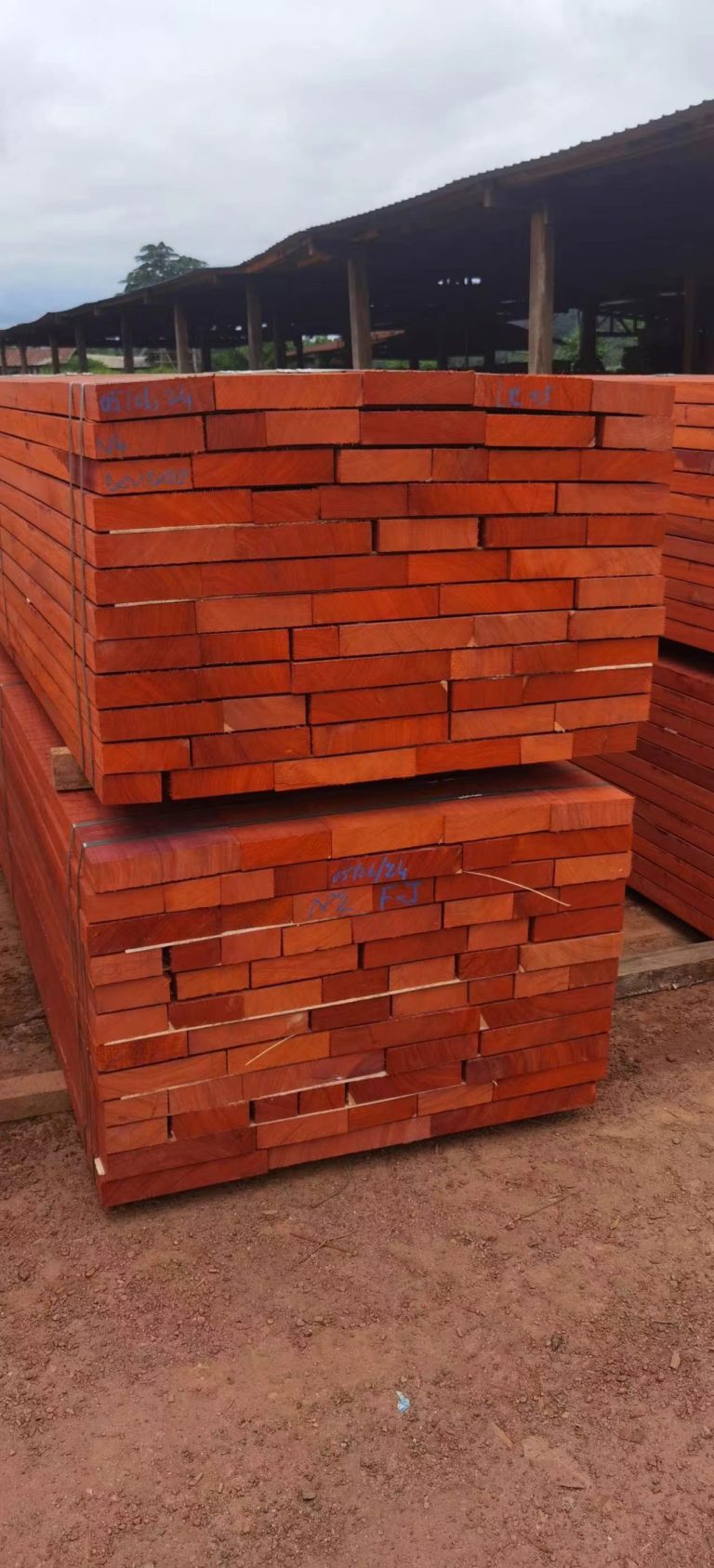
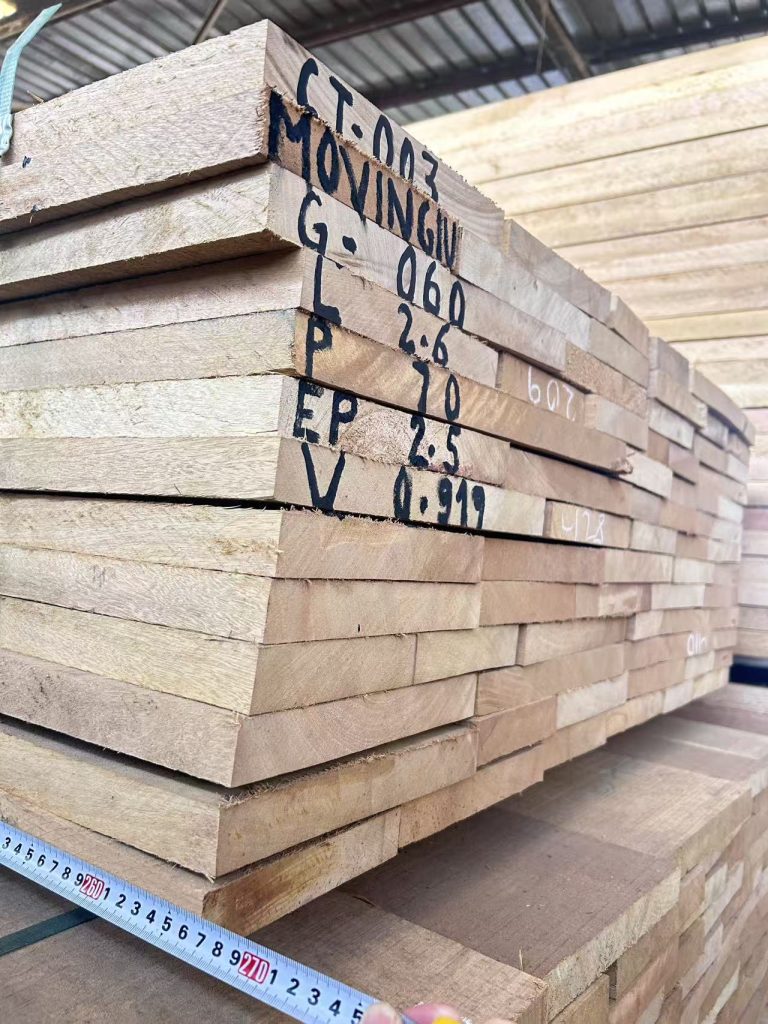
Movingui is a tropical African hardwood belonging to the Fabaceae family. It is particularly recognised for its attractive yellow colour, which ranges from lemon-yellow to golden yellow and yellow-brown.
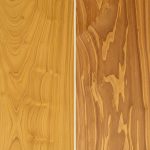
Freshly sawn Movingui heartwood often displays a bright yellow appearance. After exposure to air and light, its colour can gradually become deeper and more brownish.
The sapwood is generally pale yellow or straw-coloured and clearly distinguishable from the heartwood. Some boards also show attractive natural figuring, including wavy or mottled patterns that add visual interest to finished products.
Movingui generally has a straight to slightly interlocked grain and a medium texture. Its natural lustre gives the timber an appealing surface after suitable machining and finishing.
2. Key Characteristics and Physical Properties of Movingui
Movingui combines moderate natural durability with good mechanical properties and relatively good dimensional stability. These characteristics make it suitable for a variety of furniture, flooring and joinery applications.
| Property | General Characteristics |
|---|---|
| Commercial name | Movingui |
| Botanical name | Distemonanthus benthamianus |
| Wood type | African hardwood |
| Main origin | West and Central Africa |
| Heartwood colour | Lemon-yellow to golden yellow and yellow-brown |
| Sapwood | Pale yellow or straw-coloured |
| Grain | Straight to slightly interlocked |
| Texture | Medium |
| Air-dry density | Approximately 730 kg/m³ at 12% MC |
| Natural durability | Moderately durable |
| Dimensional stability | Moderately stable to stable |
Note: These are general reference values. Actual properties may vary according to forest origin, growing conditions, timber quality and moisture content.
Golden Yellow Natural Colour
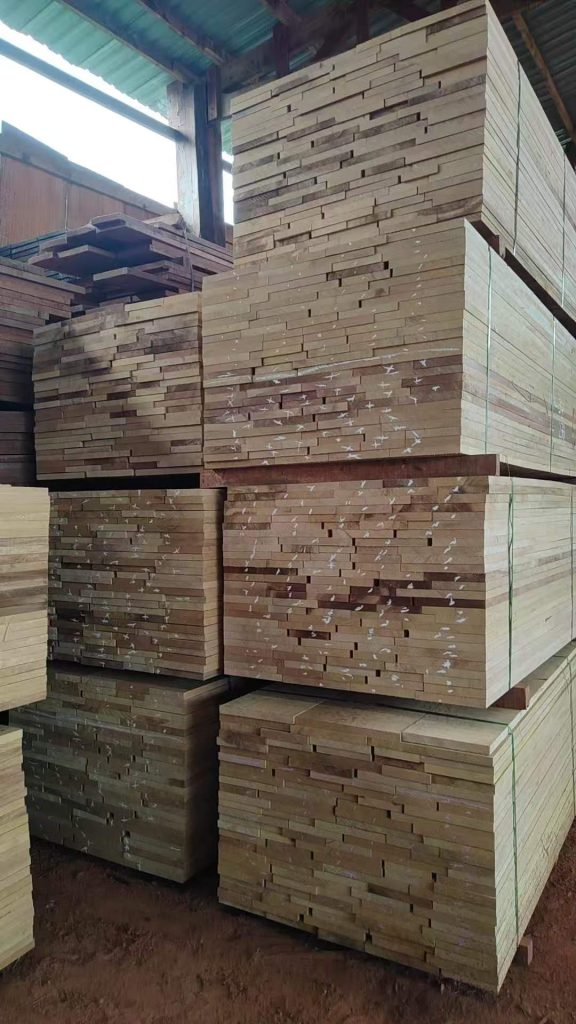
Colour is one of the most distinctive features of Movingui. Its yellow heartwood creates a warm, bright appearance that works well in both modern and traditional interior designs.
Some pieces display attractive natural patterns and a slight lustre, giving finished furniture and joinery products additional visual character.
Buyers should also consider natural colour variation between boards. If a project requires a consistent appearance, colour selection and the acceptable range of variation should be agreed upon before production.
Density and Strength
Movingui has an average air-dry density of approximately 730 kg/m³ at 12% moisture content. This makes it a moderately heavy African hardwood.
Its mechanical properties support applications such as furniture components, flooring, stairs and general joinery. The timber also offers good strength for various interior woodworking projects.
Dimensional Stability
Movingui generally demonstrates moderate to good dimensional stability when properly dried. This is an important consideration for manufacturers producing doors, furniture, flooring and other components where changes in timber dimensions can affect fitting and assembly.
However, good stability still depends on proper drying, moisture control and suitable storage conditions.
3. Common Applications of Movingui Sawn Timber
Movingui is a versatile hardwood with applications across furniture manufacturing, interior joinery and other woodworking industries.
Furniture and Cabinetmaking
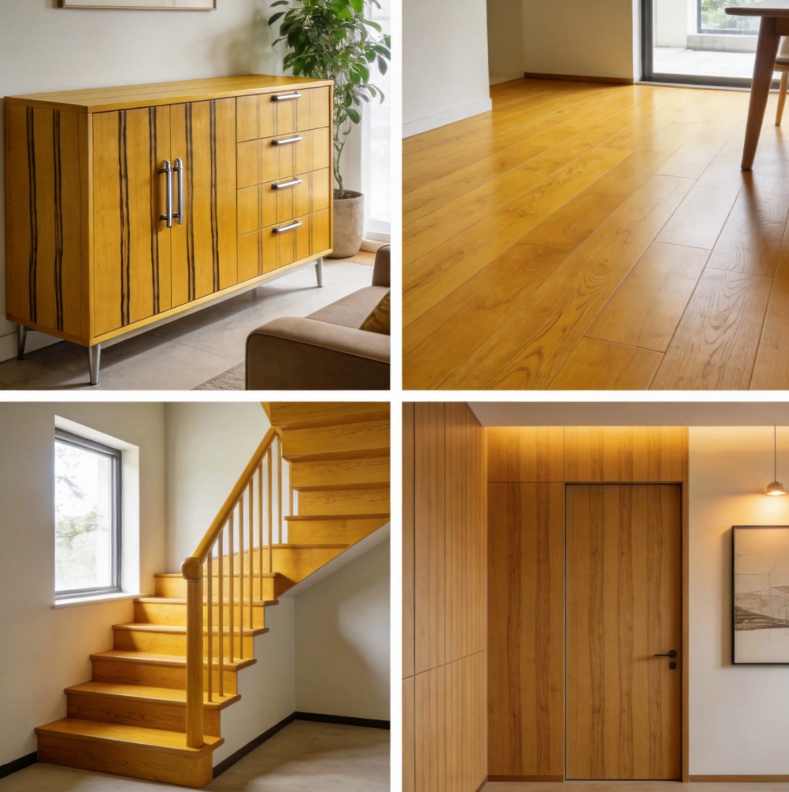
Movingui’s golden-yellow colour and natural lustre make it suitable for furniture components, cabinets, tables, chairs and other interior furniture products.
Manufacturers who want a warm natural wood appearance can use Movingui to create distinctive furniture without relying entirely on artificial colouring.
Flooring and Parquet
Movingui’s density and hardness make it a suitable option for solid wood flooring, parquet and other interior flooring products.
Its natural yellow-brown colour can also bring a warm appearance to residential and commercial interiors.
Doors, Windows and Joinery
Movingui is used in the production of doors, door frames, window components, stairs, skirting boards and other joinery products.
Its machining and finishing characteristics make it a practical choice for manufacturers producing both functional and decorative wood components.
Interior Decoration and Panelling
The natural colour and attractive surface of Movingui make it suitable for interior panelling, decorative fittings and other architectural woodworking applications.
Industrial and Specialised Applications
Movingui can also be used in certain industrial applications, including vehicle and container flooring, depending on the required specifications and service conditions.
For exterior applications, buyers should consider the exposure environment and whether preservative treatment or additional protection is necessary.
4. Processing and Drying: Important Considerations
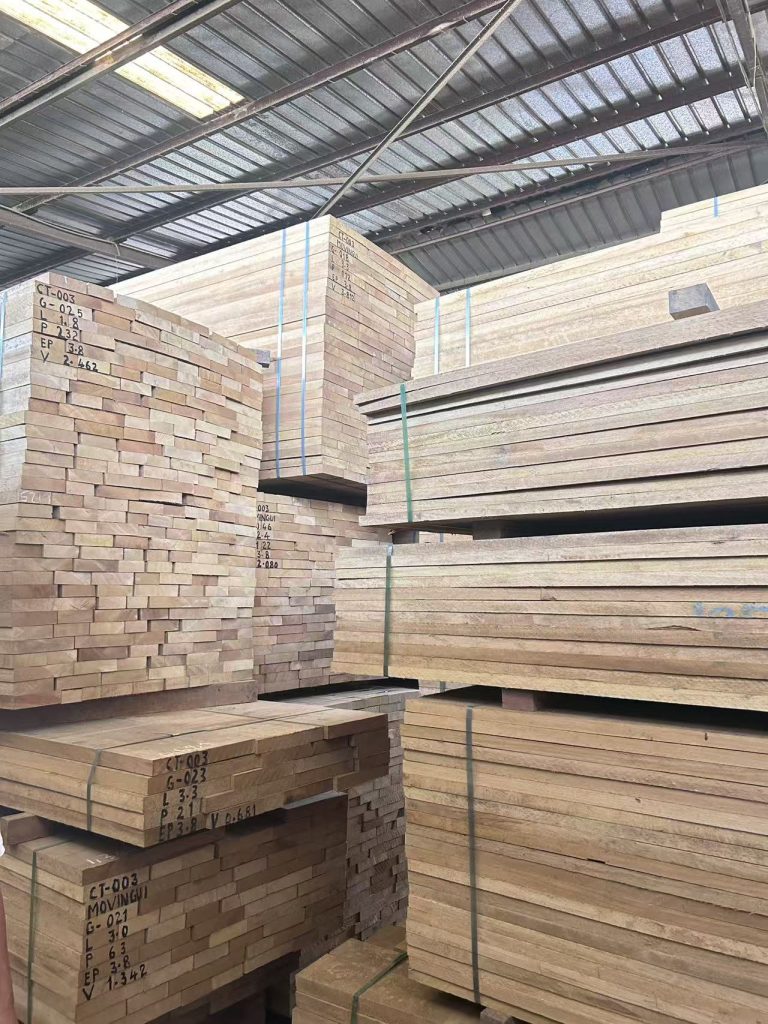
Although Movingui offers good working properties, proper processing and drying remain important for achieving consistent quality.
Sawing and Machining
Movingui can generally be processed with conventional woodworking machinery. However, its grain may be slightly interlocked, and some timber contains silica that can increase cutting-tool wear.
Using sharp cutting tools and suitable machining settings helps improve surface quality and reduce processing difficulties.
Kiln Drying
Movingui requires careful drying, particularly when processing thicker sections. Internal stresses may occur in some material, so controlling the drying schedule is important to reduce the risk of checking, splitting and deformation.
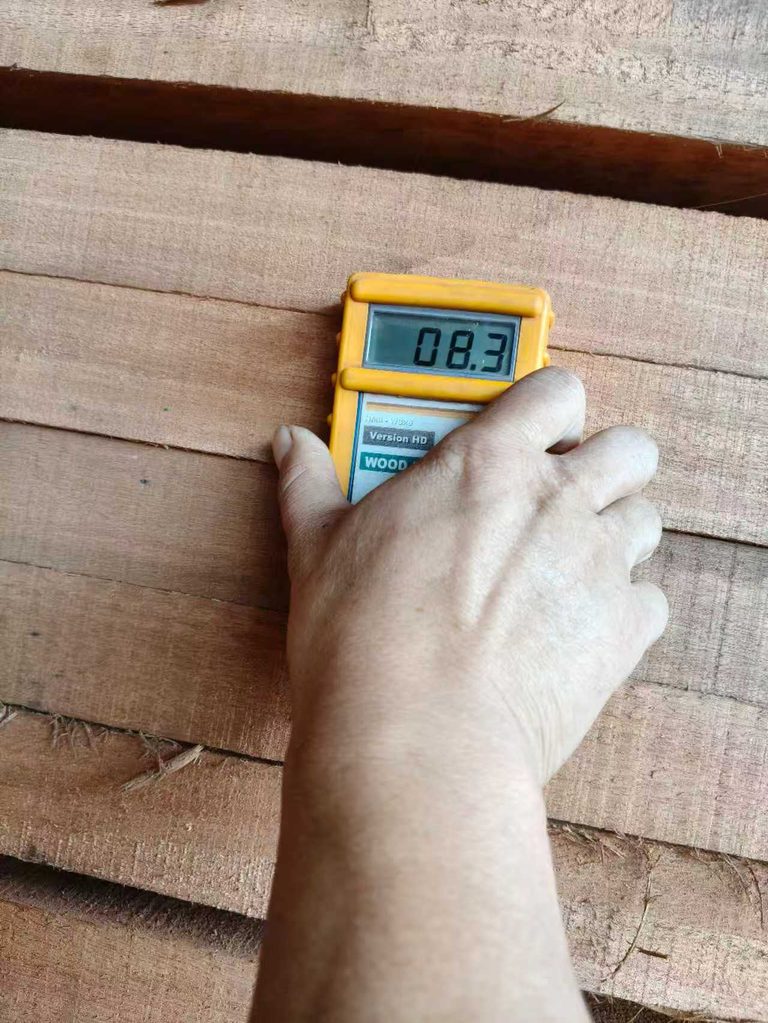
For buyers purchasing kiln-dried Movingui, the target moisture content should match the intended application and destination market.
A reliable supplier should also be able to discuss moisture measurement and quality inspection before shipment.
Colour and Moisture Considerations
Movingui contains natural yellow extractives. Under certain moist conditions, these substances may stain fabrics or materials in contact with the timber.
Manufacturers should consider this characteristic when selecting finishing materials and designing products that may come into contact with textiles or other light-coloured surfaces.
5. What Should Buyers Check Before Purchasing Movingui?
Before placing an order, timber importers and manufacturers should pay attention to several important details.
- Species identification: Confirm that the timber is Movingui, Distemonanthus benthamianus.
- Country of origin: Confirm the actual forest and processing origin, as timber characteristics may vary between sources.
- Moisture content: Specify whether you require air-dried (AD) or kiln-dried (KD) timber and agree on the target moisture content.
- Dimensions: Confirm thickness, width, length and dimensional tolerances according to your production requirements.
- Appearance: Discuss colour variation, sapwood allowance, grain characteristics and acceptable defects.
- Quality inspection: Agree on the grading requirements and inspection method before shipment.
- End-use suitability: Consider whether the timber’s natural durability is appropriate for the intended working environment.
Movingui is moderately durable rather than exceptionally durable. For applications exposed to persistent moisture or demanding outdoor conditions, buyers should assess the service environment carefully and consider suitable protective measures.
6. Sourcing African Movingui Sawn Timber from YYW Timber
At YYW Timber, we focus on African hardwood sawn timber and work with international buyers seeking suitable materials for different manufacturing and woodworking applications.
We understand that every buyer has specific requirements regarding timber dimensions, moisture content, appearance and quality. Our team works with buyers to discuss suitable specifications and supply arrangements.
Whether you are a timber importer, wholesaler, furniture manufacturer or woodworking company, we welcome enquiries about African Movingui sawn timber.
When contacting us, please share your required thickness, width, length, quantity and whether you prefer AD or KD timber. This will help us understand your purchasing requirements and discuss suitable supply options.
Looking for African Movingui sawn timber?
Contact YYW Timber to discuss your specifications and sourcing requirements.
Website: www.yywtimber.com