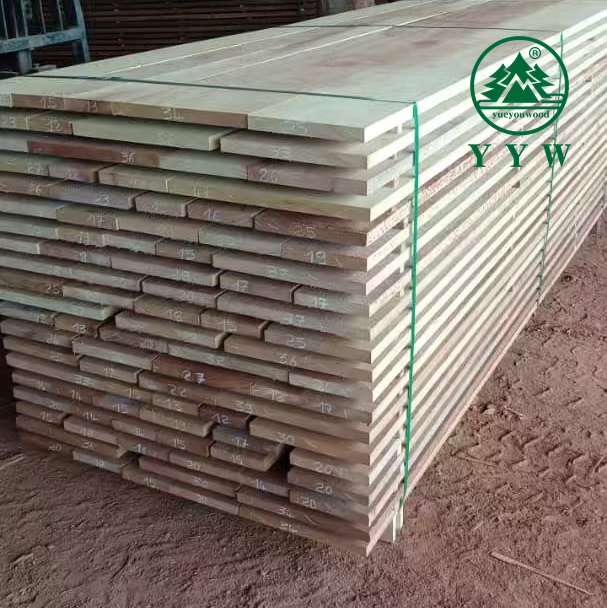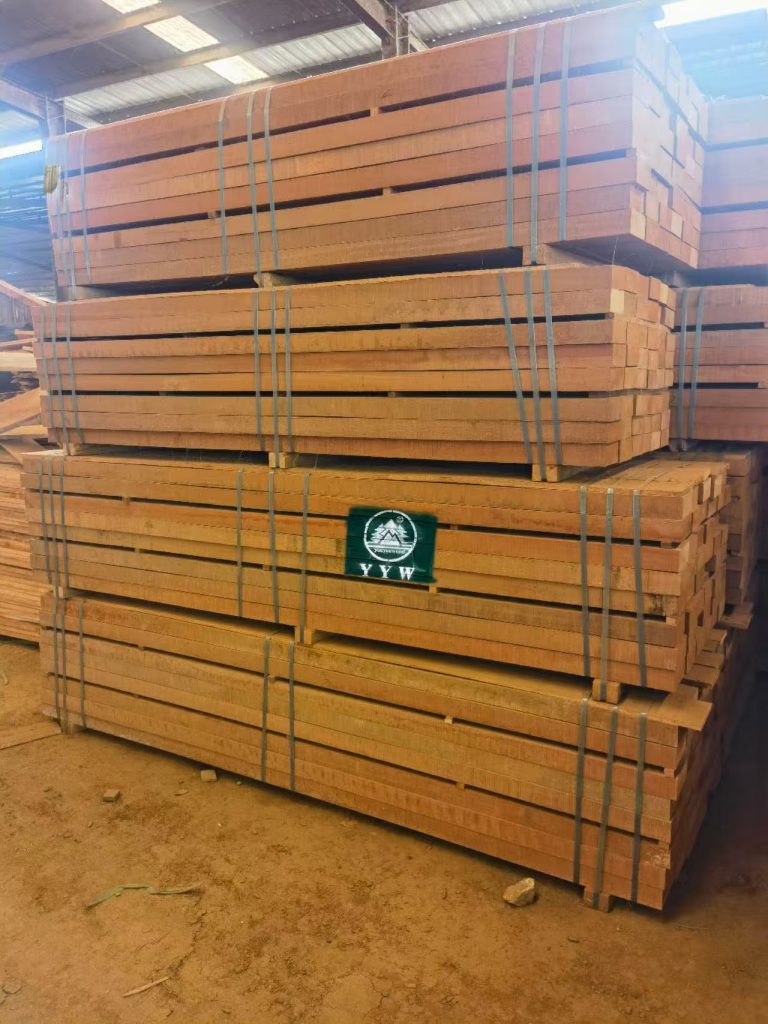
When purchasing African hardwood sawn timber, buyers often come across the term KD, which stands for Kiln-Dried. It is commonly used in timber specifications, quotations, product descriptions and international timber trade.
But what does kiln-dried actually mean? How does the process work, and why do timber buyers prefer KD timber for certain applications?
Kiln drying is an important part of timber processing. It helps reduce the moisture content of freshly sawn wood under controlled conditions, making the timber more suitable for manufacturing, furniture production, joinery and other applications where moisture control matters.
In this guide, YYW Timber explains what kiln-dried timber means, how the drying process works, the differences between KD and AD timber, and what buyers should check before purchasing kiln-dried African hardwood.
1. What Does Kiln-Dried Mean?
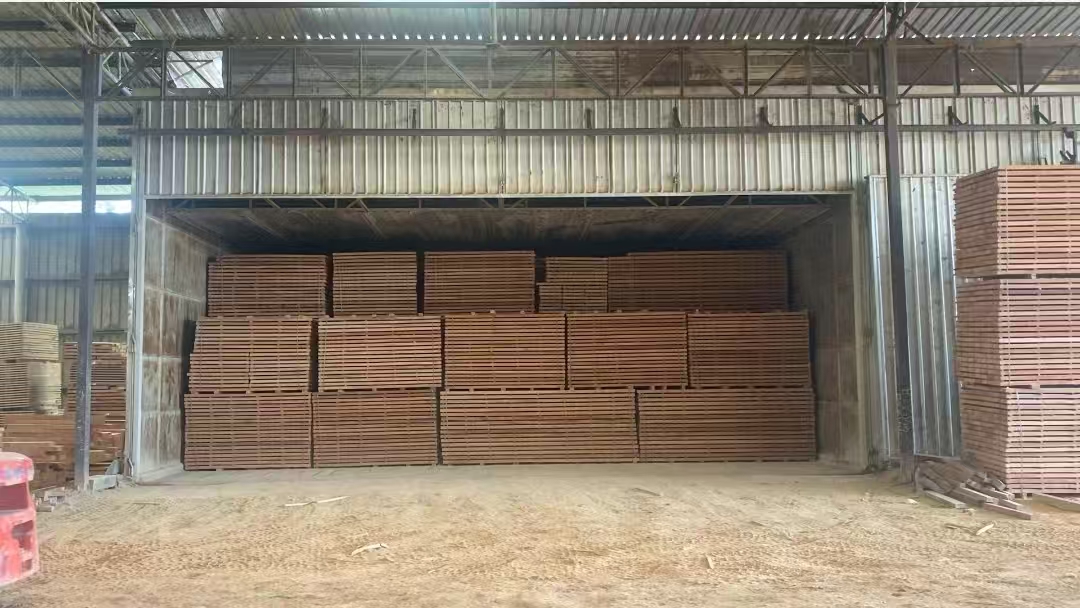
Kiln-dried timber is wood that has been dried inside a specially designed chamber, known as a drying kiln. During the process, operators control temperature, humidity and air circulation to remove moisture from the timber.
Freshly sawn wood naturally contains water. Some of this water exists in the spaces inside the wood structure, while some remains within the cell walls. If timber retains too much moisture, it may continue to shrink, swell or change shape as environmental conditions change.
Kiln drying helps reduce this moisture in a controlled way before the timber reaches its intended application.
In simple terms:
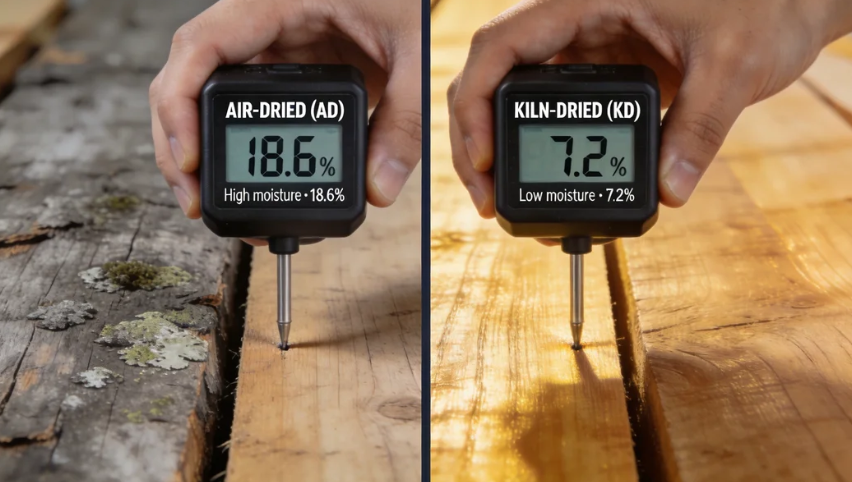
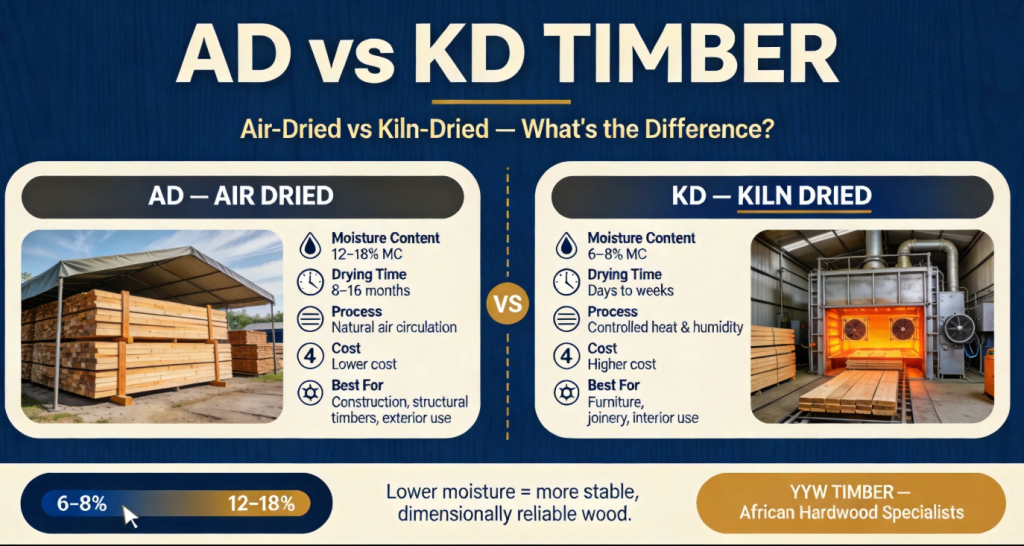
- KD (Kiln-Dried): Timber dried in a controlled drying chamber using regulated heat, humidity and airflow.
- AD (Air-Dried): Timber dried naturally through exposure to circulating air, without artificial heating.
The main difference is the drying method and the level of process control.
It is important to understand that KD describes how the timber has been dried. It does not automatically guarantee a specific moisture content. Buyers should always confirm the actual moisture content required for their orders.
2. How Does the Kiln-Drying Process Work?
Kiln drying is more than simply placing timber inside a heated room. A proper drying process requires careful control to remove moisture without causing unnecessary damage to the wood.
The process generally involves several stages.
Step 1: Preparing and Stacking the Timber
After sawing, workers sort the timber according to dimensions, thickness and other relevant specifications.
They then stack the boards inside the kiln with suitable spacers, allowing air to circulate between individual pieces. Correct stacking helps ensure more even drying throughout the load.
Step 2: Controlling Temperature and Humidity
Once the kiln is loaded, operators adjust the temperature, relative humidity and airflow according to the timber species, thickness and initial moisture content.
Different African hardwood species require different drying schedules. A schedule suitable for lighter timber may not be appropriate for a dense hardwood such as Iroko or Azobe.
The objective is to remove moisture gradually while reducing the risk of checking, splitting, warping and internal drying stresses.
Step 3: Reducing Moisture Content
As the drying process continues, moisture moves from the centre of each board towards its surface before evaporating into the surrounding air.
The kiln environment must support this movement. If the surface dries too quickly while the core remains wet, moisture differences can develop within the board and increase the risk of drying defects.
For this reason, operators monitor the drying process rather than relying on temperature alone.
Step 4: Equalisation and Conditioning
Depending on the species, thickness and drying schedule, the final stages may include equalisation and conditioning.
Equalisation helps reduce moisture differences between individual boards. Conditioning can help relieve certain drying stresses and improve the balance of moisture within the timber.
Step 5: Final Moisture Inspection
After drying, the timber should undergo moisture-content inspection.
Buyers can request moisture readings and agree on the inspection method, sampling quantity and acceptable moisture range before shipment.
A well-managed kiln-drying process helps produce timber with more consistent moisture conditions, which is important for further processing and manufacturing.
3. What Are the Main Benefits of Kiln-Dried Timber?
Kiln drying offers several advantages for timber buyers, particularly manufacturers who require better control over the condition of their raw materials.
Better Moisture Control
One of the main benefits of KD timber is its reduced and more controlled moisture content.
For furniture manufacturers, cabinetmakers and joinery workshops, excessive moisture can create problems during cutting, machining, assembly and finishing.
Using timber dried to a suitable moisture level helps reduce these risks.
Reduced Risk of Shrinkage and Warping After Processing
Wood naturally changes dimensions as its moisture content changes.
When timber dries below the fibre saturation point, it begins to shrink. If the wood continues losing moisture after manufacturing, finished components may become smaller or change shape.
Kiln drying reduces the amount of moisture that remains in the timber before production. This helps minimise subsequent dimensional changes when the timber is properly dried for its intended environment.
However, KD timber is not completely immune to shrinkage, swelling or warping. It can still absorb or release moisture after drying.
More Suitable for Furniture and Interior Manufacturing
Many furniture and interior woodworking applications require timber with relatively low and consistent moisture content.
KD timber is therefore commonly selected for:
- Solid wood furniture
- Tables and chairs
- Cabinets and wardrobes
- Doors and door frames
- Flooring and parquet
- Interior joinery
- Decorative wood products
The appropriate moisture content depends on the final application and the humidity conditions where the product will be used.
Shorter Preparation Time Before Production
Air-dried timber may require additional drying before reaching the moisture content needed for certain manufacturing processes.
Kiln drying can shorten the overall preparation period by removing moisture more quickly under controlled conditions.
This can help manufacturers plan their production schedules more efficiently.
4. KD vs. AD Timber: What Is the Difference?
Both kiln-dried and air-dried timber are commonly traded in the African hardwood market. However, they differ in their drying methods, moisture control and typical applications.
| Comparison | KD Timber | AD Timber |
|---|---|---|
| Full name | Kiln-Dried | Air-Dried |
| Drying method | Controlled drying chamber | Natural air circulation |
| Heat control | Artificially controlled | No artificial heating |
| Drying speed | Generally faster | Generally slower |
| Moisture control | More controllable | Depends more on weather and surrounding conditions |
| Typical applications | Furniture, flooring, joinery and interior manufacturing | Construction, general woodworking and further processing |
| Main consideration | Drying schedule and target moisture content | Drying period and actual moisture content |
Neither option is automatically better for every application.
For example, a furniture manufacturer producing finished indoor products may prefer KD timber with a specified moisture content. A buyer purchasing timber for further processing or a project with different moisture requirements may find AD timber more suitable.
The right choice depends on the intended use, production process, destination climate and purchasing specifications.
5. What Moisture Content Is Suitable for KD Timber?
This is one of the most important questions buyers should ask when purchasing kiln-dried timber.
There is no single moisture-content target that suits every wood species, application and destination market.
For example, furniture and cabinetmaking often require lower moisture content than some general construction applications. The USDA Forest Products Laboratory notes that hardwood used for furniture, cabinets and millwork is commonly dried to around 6–8% moisture content in the US context.
For some African hardwood export orders, buyers may specify a target range such as 8–12%, depending on the species, intended application and destination conditions.
| Intended Application | Moisture Content Consideration |
|---|---|
| Indoor furniture | Usually requires relatively low moisture content |
| Cabinets and wardrobes | Requires moisture suitable for the indoor environment |
| Doors and joinery | Depends on installation conditions and destination climate |
| Flooring | Requires careful moisture matching to the installation environment |
| General woodworking | Depends on the manufacturing process and final use |
These figures should be treated as purchasing references rather than universal standards.
For international timber transactions, buyers and suppliers should agree on the target moisture content before production. They should also specify whether the requirement refers to an average reading, a maximum permitted reading or both.
This helps avoid misunderstandings when the timber arrives at its destination.
6. Does Kiln-Dried Timber Still Shrink?
Yes. This is a common misunderstanding in the timber trade.
Kiln drying reduces the moisture content of wood, but it does not permanently prevent the timber from changing dimensions.
Wood is a natural hygroscopic material. This means it absorbs moisture from humid air and releases moisture when the surrounding air becomes drier.
For example, KD timber that has been dried to 10% moisture content may absorb moisture during storage in a humid warehouse. Its moisture content may then increase, potentially causing some swelling.
Similarly, timber stored in a very dry environment may lose additional moisture and shrink.
The actual dimensional change depends on several factors:
- Wood species and its shrinkage characteristics
- Initial and final moisture content
- Board thickness and width
- Grain orientation and sawing pattern
- Storage temperature and relative humidity
- Whether the timber has been properly dried and handled
For this reason, buyers should not assume that KD timber will retain exactly the same dimensions under all conditions.
Proper storage and moisture management remain important after the timber leaves the kiln.
7. What Should Buyers Check When Purchasing KD African Hardwood?
When sourcing KD African hardwood from overseas suppliers, buyers should pay attention to more than the KD label.
The following points can help make purchasing specifications clearer.
1. Timber Species
Confirm the exact timber species. Different African hardwoods have different densities, drying characteristics and processing requirements.
2. Moisture Content
Specify your required moisture content, such as 8–12%, if this range suits your application. Avoid using only the term KD without stating the actual requirement.
3. Moisture Measurement
Ask how the supplier measures moisture content. Electrical moisture meters are commonly used for inspection, while oven-dry testing provides a reference method for determining moisture content.
For important orders, buyers should agree on the testing method, sampling locations and acceptable tolerances.
4. Timber Dimensions
Confirm the required thickness, width and length. Timber thickness can influence the drying schedule and the time needed to reach the target moisture content.
5. Drying Quality
Inspect the timber for checking, splitting, excessive warping and other drying-related defects. A low moisture reading alone does not prove that the timber has been dried properly.
6. Packaging and Shipment
Proper stacking, ventilation and moisture protection during storage and transportation help maintain timber condition after drying.
For container shipments, buyers should also discuss packaging and moisture-control measures suitable for the shipping route and destination climate.
8. Sourcing KD African Hardwood from YYW Timber
At YYW Timber, we specialise in African hardwood sawn timber and understand the importance of moisture content, dimensions and processing quality in international timber supply.
Different species require different processing considerations. Whether buyers are sourcing Okoume, Iroko, Sapelli, Tiama or other African hardwoods, we discuss product specifications according to their purchasing and manufacturing requirements.
We welcome enquiries from timber importers, wholesalers, distributors and woodworking manufacturers looking for reliable African sawn timber supply.
When making an enquiry, please let us know:
- Timber species
- Required thickness, width and length
- AD or KD preference
- Target moisture content
- Required quantity
- Destination market
Providing these details helps us understand your requirements and discuss suitable supply options.
Looking for kiln-dried African hardwood sawn timber?
Contact YYW Timber to discuss your timber specifications and sourcing requirements.
Website: www.yywtimber.com