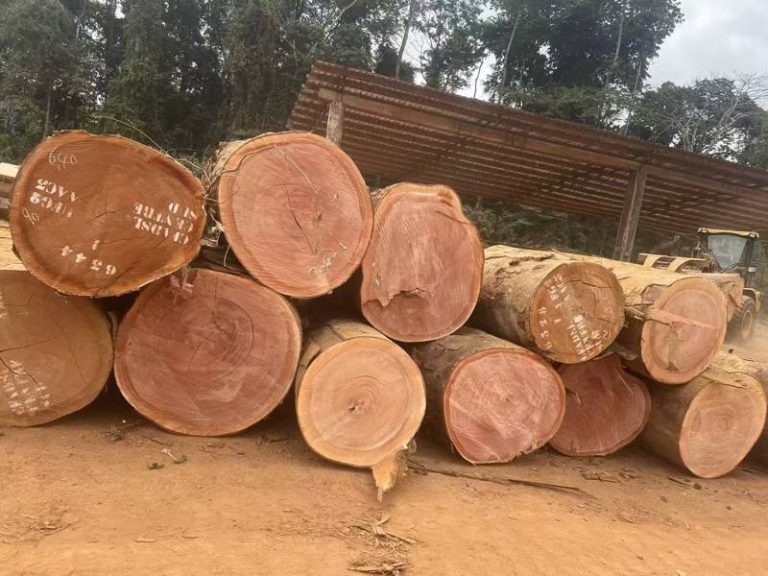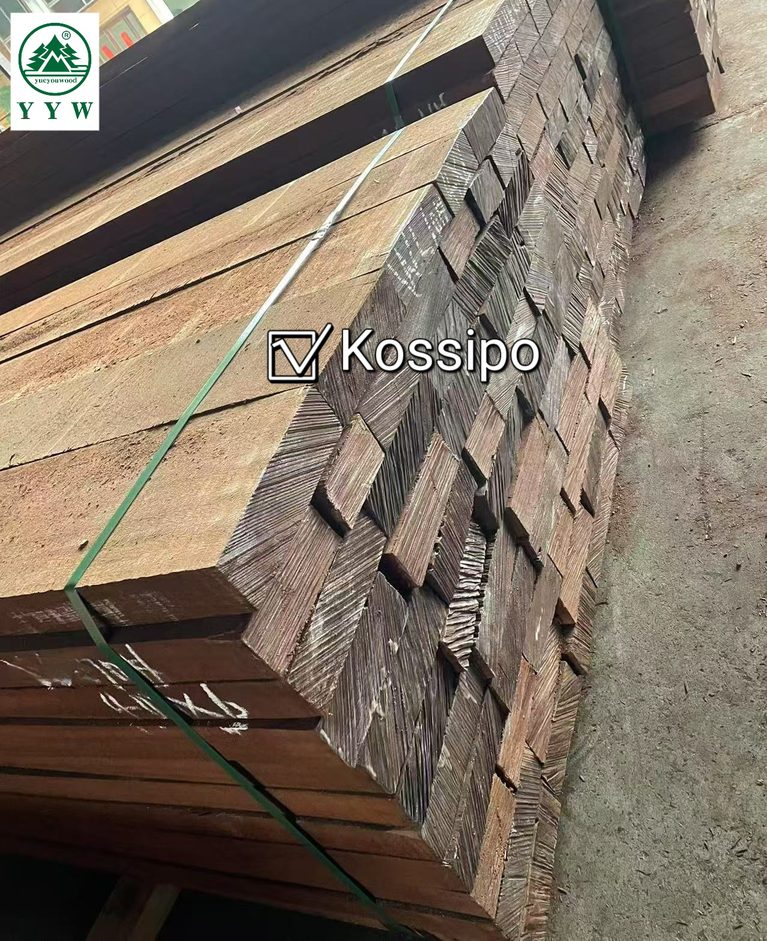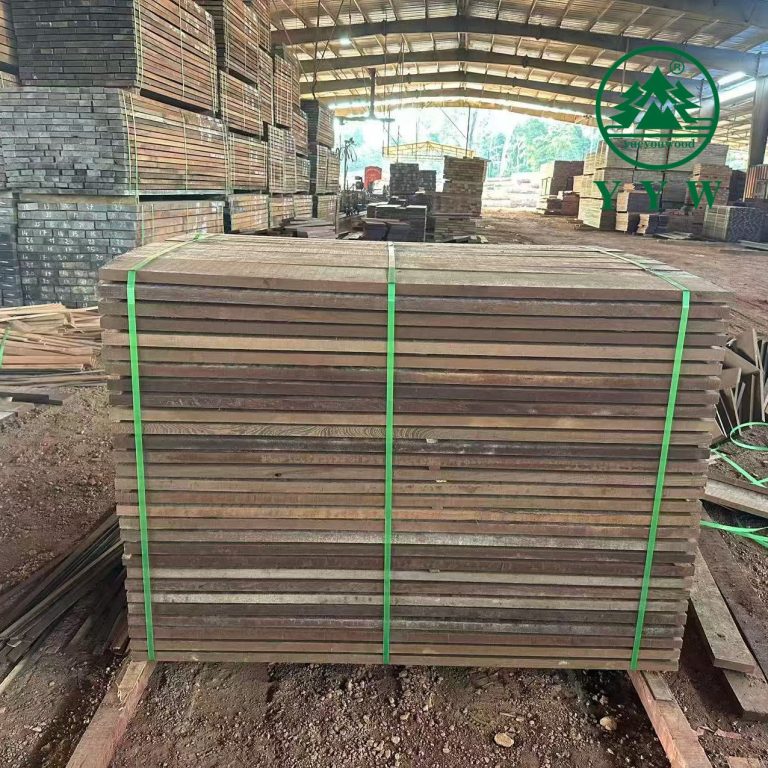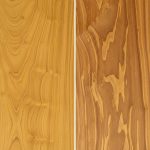
Choosing the right wood for a cutting board is a critical decision for both professional chefs and home cooks. Among the myriad of options available in the global timber market, Teak (Tectona grandis) has emerged as a premium contender. In this guide, we evaluate the teak cutting board pros and cons through a technical lens, leveraging our expertise at YYW Timber to help you understand the biological and mechanical properties that make this African-sourced hardwood unique.
Summary: Is a Teak Cutting Board Right for You?
Teak cutting boards are highly sought after due to their exceptional moisture resistance, natural antibacterial properties, and stunning aesthetic appeal. From a technical perspective, the high concentration of natural oils and silica within the wood fibers makes teak wood incredibly durable and resistant to warping. However, these same properties—specifically the silica content—can lead to faster dulling of kitchen knives compared to softer woods like maple or walnut. This article provides a comprehensive analysis of the teak cutting board pros and cons, comparing Janka hardness, maintenance requirements, and overall performance in a high-volume kitchen environment.
Key Takeaways
- Durability: Teak is one of the most durable hardwoods, resistant to rot, pests, and moisture.
- Knife Maintenance: The high silica content in teak can dull high-carbon steel knives faster than maple.
- Low Maintenance: Naturally high oil content means teak requires less frequent seasoning with mineral oil.
- Stability: Teak has a low shrinkage coefficient, making it highly resistant to warping and cracking.
- Sustainability: Most modern teak boards are made from plantation-grown teak, which is an eco-friendly B2B sourcing option.
What Are the Advantages of Teak Cutting Boards?
Teak’s primary advantages stem from its unique chemical composition, specifically its high oily resin content and natural density, which provide unmatched longevity and hygiene.
At YYW Timber, we often classify Teak as a “living” wood that excels in moisture-rich environments. The wood contains tectoquinone, a natural chemical that acts as a preservative and repellent to fungus and bacteria. For a tool that constantly comes into contact with raw meats and moisture, this biological advantage is significant.
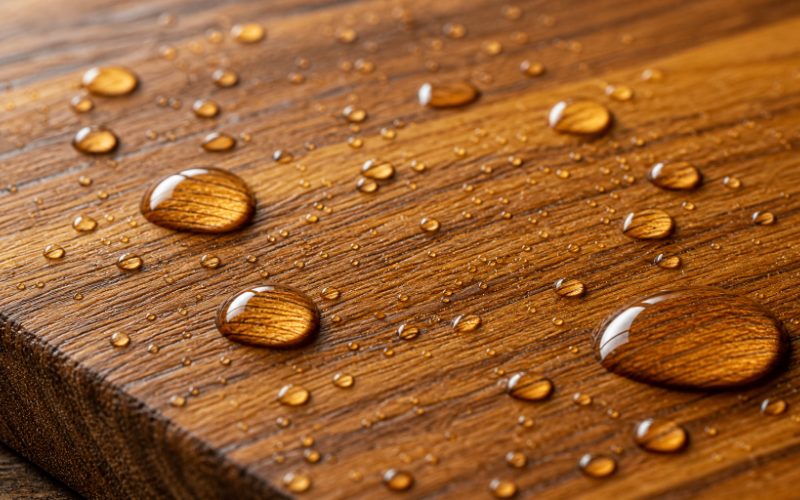
- Superior Water Resistance: Unlike maple or cherry, which can absorb water and swell, teak’s tight grain and high oil content create a hydrophobic barrier. This prevents the board from soaking up meat juices and liquids.
- Dimensional Stability: Teak has an incredibly low volumetric shrinkage rate. This means it is less likely to warp, cup, or crack when transitioning from a wet sink to a dry countertop.
- Aesthetic Longevity: Teak ages beautifully, developing a deep golden-brown patina over time. It masks knife scars better than lighter-colored woods.
- Weight and Density: With a Janka hardness rating of approximately 1,070 to 1,150 lbf, teak provides a solid, non-slip surface that doesn’t slide during heavy chopping.
What Are the Disadvantages of Teak Cutting Boards?
The main disadvantage of teak cutting boards is the presence of silica in the wood fibers, which can act as a mild abrasive and dull professional kitchen knives over time.
While durability is a pro, it comes with a trade-off. Silica is a mineral naturally absorbed by the Teak tree from the soil. In the lumber industry, we know teak for its ability to wear down saw blades quickly; in the kitchen, this translates to more frequent honing and sharpening of your knives. If you use expensive, high-hardness Japanese steel, this is a critical factor to consider.
- Knife Dulling: The mineral content (silica) can be tough on the fine edge of a blade. While not as damaging as glass or marble, it is harder on knives than North American Hard Maple.
- Weight: High density means these boards are heavy. Moving large teak blocks for cleaning can be a physical challenge for some users.
- Price Point: Teak is a premium global commodity. Due to export regulations and the slow growth cycle of the trees, teak boards generally carry a higher price tag than plastic or bamboo alternatives.
- Sustainability Concerns: Unless certified (FSC or similar), teak sourcing can be problematic. At YYW Timber, we emphasize the importance of sourcing from managed African teak plantations to ensure ethical supply chains.
Technical Comparison: Teak vs. Maple vs. Walnut
To understand where teak fits in the hierarchy of cutting board materials, we must look at the mechanical properties used in the timber industry.
| Property | Teak (African Plantation) | Hard Maple | Black Walnut |
|---|---|---|---|
| Janka Hardness | 1,070 – 1,150 lbf | 1,450 lbf | 1,010 lbf |
| Natural Oil Content | High (Excellent) | Low | Moderate |
| Silica Content | 0.5% – 1.0% | Trace | Trace |
| Warp Resistance | Excellent | Fair | Good |
| Knife Friendliness | Moderate | Excellent | Very Good |
Learn more about Acacia Wood vs Teak Flooring, Iroko vs Teak Timber, Padauk Wood vs. Teak Wood, Teak Wood Property
How Does Teak Protect Your Kitchen Knives?
Teak protects knives through its natural lubrication, though its silica content requires the user to balance durability with edge retention.
Contrary to some misconceptions, teak isn’t “bad” for knives; it simply requires a different maintenance cadence. The natural oils in the wood act as a lubricant, allowing the blade to glide through fibers more easily than dry woods. For most home cooks, the difference in knife dulling between teak and maple is negligible over a month of use, but for a professional chef performing thousands of cuts daily, the impact becomes visible.
What Is the Best Way to Maintain a Teak Cutting Board?
Effective maintenance involves regular cleaning with mild soap and periodic seasoning with food-grade mineral oil to preserve the wood’s internal moisture balance.
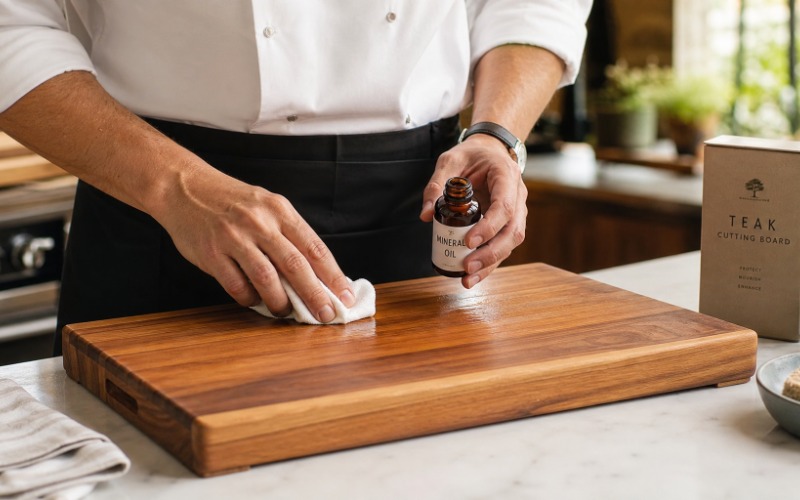
Based on our timber processing experience, we recommend a “seasoning” process when the board first arrives. Even though teak is naturally oily, adding a layer of food-safe mineral oil or a beeswax blend fills the surface pores, providing an additional layer of protection against staining and odors.
- Wash: Use warm water and mild dish soap. Never submerge the board in water or put it in a dishwasher.
- Dry: Wipe dry immediately and stand the board on its edge to allow even air circulation on both sides.
- Oil: Once a month (or when the wood looks “thirsty”), apply a generous coat of food-grade mineral oil. Let it sit overnight and wipe off the excess.
- Sanitize: Use a 1:1 mixture of white vinegar and water for natural disinfection without stripping the oils.
Edge Grain vs. End Grain Teak Boards: Which Is Better?
For teak cutting boards, end grain construction is technically superior for knife health, while edge grain is more affordable and showcases the wood’s beautiful linear patterns.
In an end grain board, the wood fibers stand vertically. When your knife hits the board, the fibers part and then close back up—a “self-healing” process that protects both the board and the knife. In edge grain construction, the knife cuts across the wood fibers, which can lead to more visible scarring over time. However, because teak is so stable, even edge grain teak boards outperform edge grain maple in terms of longevity.
FAQ
Yes, teak can dull knives slightly faster than maple or walnut due to its natural silica content. Silica is a mineral that acts like tiny particles of sand within the wood structure. While this makes the wood exceptionally tough and resistant to wear, it creates friction against the blade’s edge. Most users find this a fair trade-off for a board that doesn’t warp and lasts for decades.
Teak contains natural oils and resins that inhibit the growth of bacteria and fungi. Studies on wood hygiene show that hardwoods like teak move moisture away from the surface, trapping bacteria inside the wood where they eventually die off. Teak’s high oil content adds an extra layer of protection by preventing the initial absorption of liquids.
No, you should never use olive oil, vegetable oil, or any food-based oil on a teak cutting board. These oils are organic and will eventually go rancid, creating a foul smell and a sticky surface that can harbor bacteria. Always use food-grade mineral oil or specialized butcher block conditioners.
With proper care, a high-quality teak cutting board can last a lifetime. Its resistance to rot and warping means it doesn’t suffer from the common failure points of other wood boards. Many families pass down teak kitchenware as heirlooms.
Sustainability depends on the source. While old-growth teak from Southeast Asia is often protected or restricted, plantation-grown teak from Africa and South America is a renewable and sustainable resource. At YYW Timber, we prioritize transparency in the timber supply chain to ensure environmental compliance.
Conclusion: Balancing Performance and Longevity
Understanding the teak cutting board pros and cons is essential for any serious kitchen enthusiast. Teak offers a unique combination of beauty, moisture resistance, and extreme durability that few other woods can match. While the silica content requires a more mindful approach to knife maintenance, the reduced need for seasoning and the board’s immunity to warping make it a premier choice for high-volume environments.
If you prioritize a board that remains flat, hygienic, and visually stunning for decades, teak is the definitive winner. For those who demand the absolute sharpest edges for specialized tasks, pairing a teak board with a regular honing routine is the professional’s secret to success.
Ready to Upgrade Your Kitchen with Professional Grade Timber?
At YYW Timber, we specialize in sourcing the finest African hardwoods for manufacturers and wholesalers worldwide. Whether you are looking for bulk teak supplies or technical guidance on timber species, our team is here to help.
Contact YYW Timber Today for a Bulk Quote
About the Author: This article was authored by the Senior Content Strategist at YYW Timber. With over 15 years of experience in the African timber export industry, YYW Timber is a leading authority on tropical hardwood species, grading standards, and sustainable sourcing for global markets.