Bottom Line Up Front: For B2B buyers, the choice between logs and sawn timber hinges on your in-house processing capabilities, supply chain control, and end-product requirements. Logs offer raw material flexibility and cost savings at scale but demand sawmilling infrastructure and expertise. Sawn timber provides standardized dimensions, consistent grading, and immediate usability, reducing capital expenditure on processing equipment. This article dissects the technical, logistical, and economic factors to guide your procurement strategy.
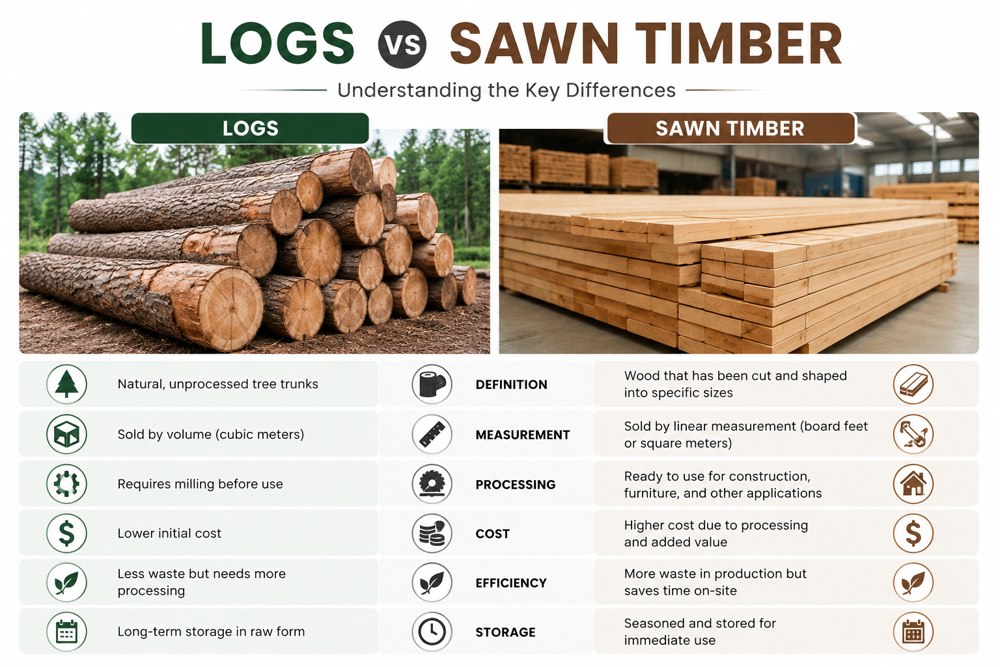
Key Takeaways
- Processing Investment: Logs require sawmill setup; sawn timber is ready-to-use.
- Grading and Certification: Sawn timber offers standardized grades; logs need in-house evaluation.
- Logistics: Logs ship dense and heavy; sawn timber can be containerized efficiently.
- Cost Efficiency: Logs cheaper per cubic meter; sawn timber incurs processing premium.
- Supply Chain Control: Logs give you control over yield; sawn timber transfers risk to supplier.
- System Integration: Choice impacts production line design, inventory, and quality assurance.
Why System Integrators Must Understand This Choice
System integrators in the timber industry design and manage production lines that transform raw wood into finished goods. The form of incoming material—whether logs or sawn timber—dictates machine configuration, workflow, storage, handling, and workforce skills. Selecting the appropriate material form enables optimizing throughput, minimizing waste, and controlling cost.
1. What Are Logs? Raw, Unprocessed Timber
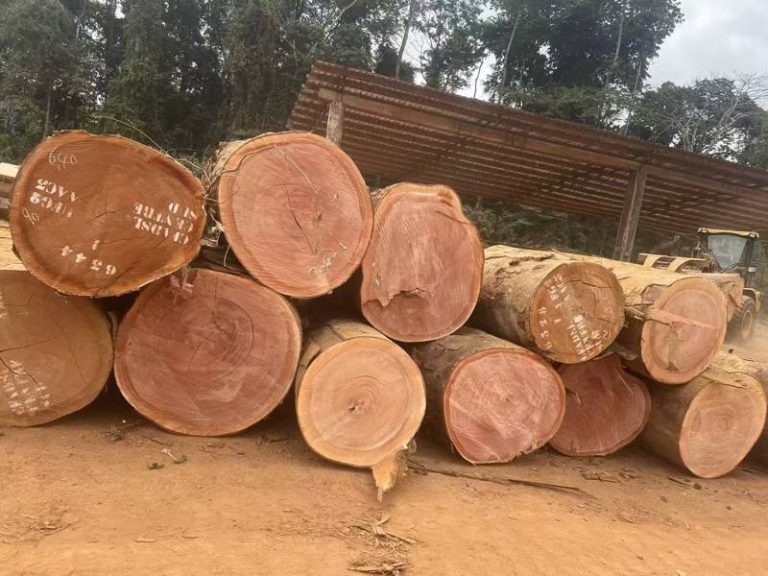
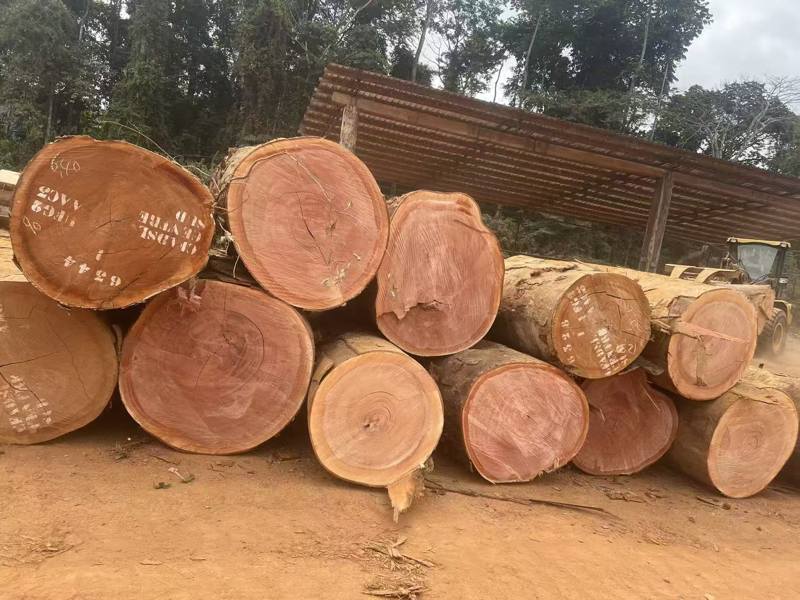
Logs are whole tree trunks after felling, delimbing, and cross-cutting. They are typically sold in length classes (e.g., 2–6 meters) and diameter ranges (e.g., 30–80 cm). For B2B buyers, logs represent the lowest-cost entry point into wood raw material but require substantial downstream processing capacity. It can be divided into round log and square log.
Key Characteristics of Logs
- Variable dimensions: Taper, wane, and sweep affect usable volume.
- No moisture control: Logs are green with high moisture content (typically 60–100% MC dry basis).
- Uncertain internal quality: Defects like knots, rot, and heart cracks are invisible from the outside.
- Need for sawing equipment: Requires bandsaws, circular saws or woodmizer to convert to lumber.
- Higher handling cost: Heavy, irregular shapes require specialized loading/unloading.
2. What Is Sawn Timber? Standardized and Ready for Manufacturing
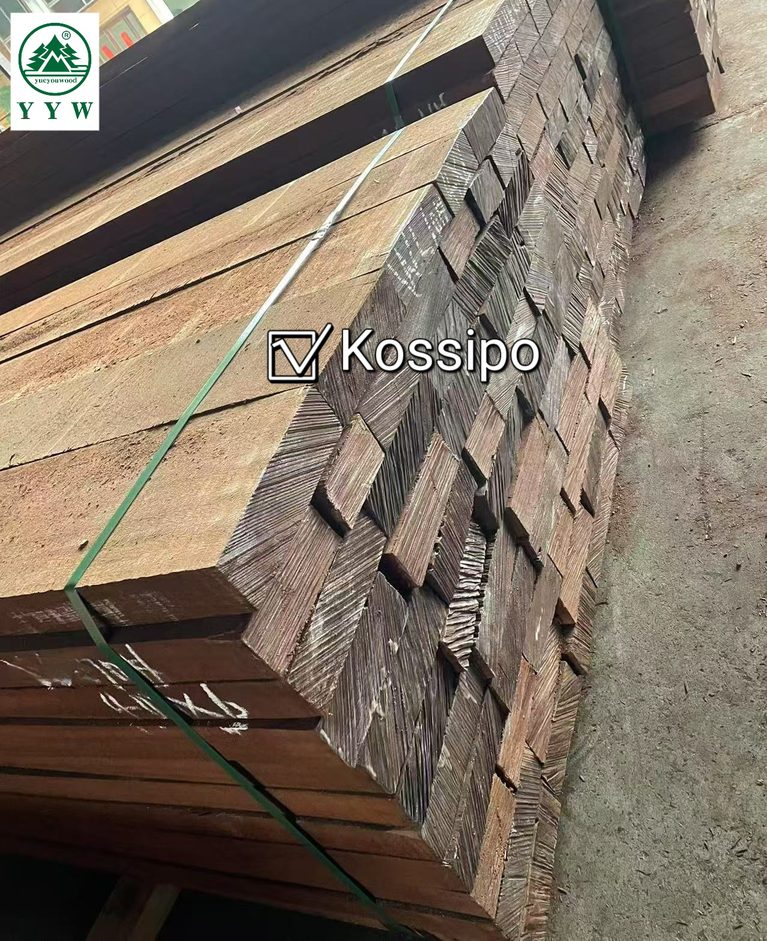
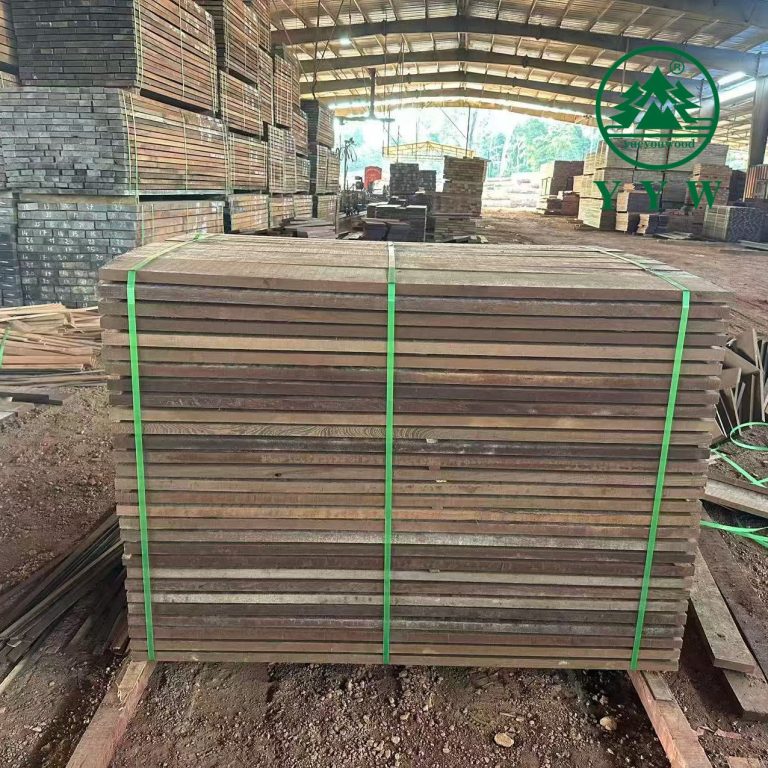
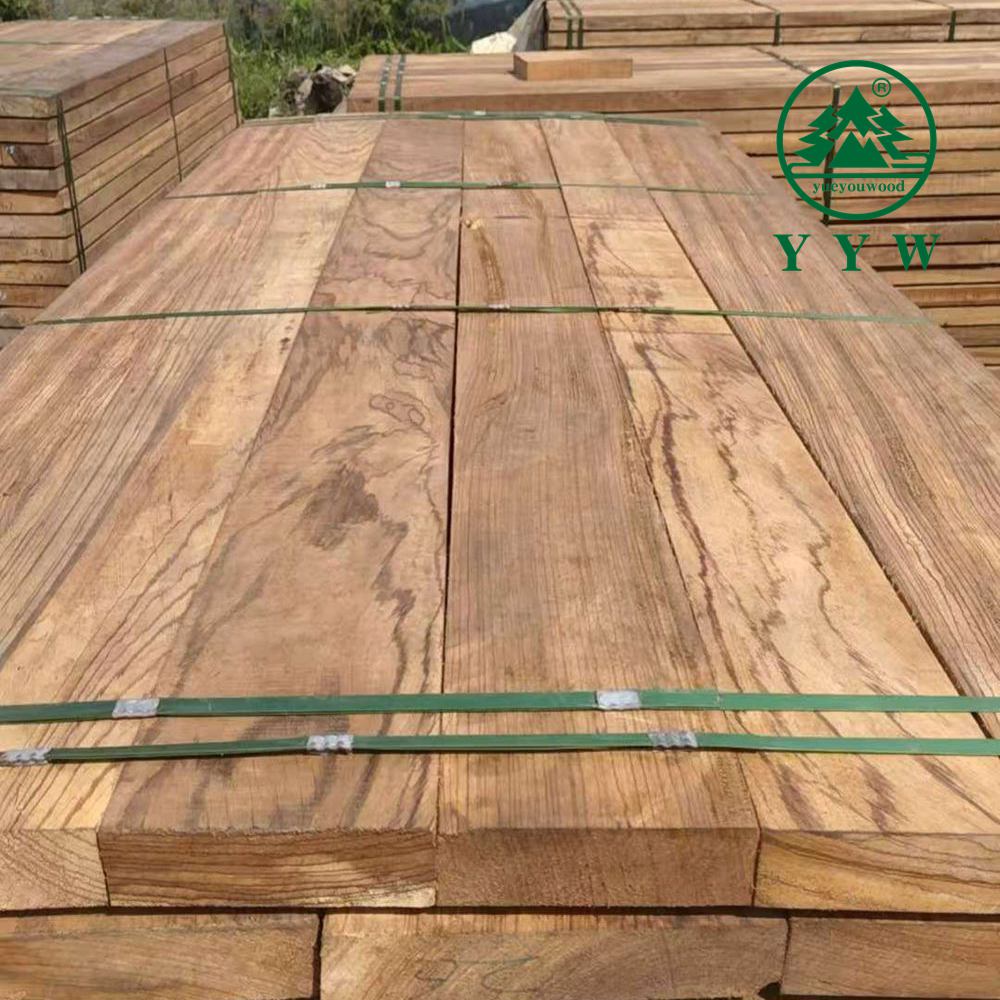
Sawn timber, also known as lumber, is logs that have been sawn into standardized dimensions such as 2×4, 2×6, 4×4 (nominal sizes) or metric equivalents. It undergoes primary processing including sawing, edging, trimming, and often drying. This form offers consistency, traceable grading, and immediate usability.
Key Characteristics of Sawn Timber
- Standard dimensions: Consistent cross-section and length after trimming.
- Moisture management: Can be supplied green, air-dried, or kiln-dried (typically 12–18% MC for export).
- Graded according to standards: NHLA, ISPM 15, or national grading rules.
- Immediate use: No on-site sawing needed; can go directly into manufacturing.
- Lower transportation efficiency: More volume per weight compared to logs.
3. Core Differences: A Systematic Comparison
3.1 Processing Requirements
Logs require sawmilling. A typical sawmill for small-scale integration costs $50,000 – $500,000, while medium industrial mills exceed $2M. Sawn timber eliminates this capital expenditure but carries a higher per-unit material cost that reflects the supplier’s processing expenses.
3.2 Grading Consistency
Sawn timber from reputable suppliers comes with official grade stamps (e.g., FAS, #1 Common, etc.). Logs lack such certification; internal defects remain hidden until sawing. This unpredictability can disrupt production planning for system integrators.
3.3 Logistics and Handling
Logs are typically shipped loose in containers or on bulk vessels, often requiring fumigation. Sawn timber can be packaged and containerized as break-bulk, facilitating multimodal transport. The density of logs (approx. 800–1100 kg/m3) vs sawn timber (500–700 kg/m3 dried) significantly affects freight costs.
3.4 Cost Analysis
On a pure raw material basis, logs are cheaper per cubic meter. However, after accounting for sawing losses (40–60% yield), drying costs, and waste disposal, the effective cost per usable board foot can be similar to—or even exceed—that of pre-sawn timber. System integrators should model total landed cost, not just purchase price.
3.5 Supply Chain Resilience
Buying logs locks you into a sawing supply chain; any disruption at the sawmill stops production. Sawn timber provides flexibility to source from multiple suppliers globally, buffering against local disruptions. Conversely, logs can offer better control over species and quality consistency if you own the sawing process.
Technical Comparison Table
| Attribute | Logs | Sawn Timber |
|---|---|---|
| Dimensional Control | Variable; depends on log shape | Standardized; exact lengths and cross-sections |
| Moisture Content | Green; 60–100% MC | Controlled (12–18% MC typical for export) |
| Grading Standard | In-house assessment only | NHLA, ISPM 15, other national grades |
| Logistics Cost per m3 | Higher weight → higher freight | Lower weight → lower freight |
| Capital Investment | High (sawmill and drying equipment) | None (pre-processed) |
| Yield / Recovery | 50–60% typical | 100% of purchased volume |
| Lead Time | Seasonal; can be stored at source | Usually shorter, dependent on processing |
| Application Fit | 2″+ thick, heavy structural | Fine furniture, flooring, light construction |
4. How to Choose for Your System Integration
The decision matrix for system integrators should weigh the following factors:
- Volume Stability: Consistent, large volumes favor logs due to scale. Variable demand favors sawn timber.
- Capital Capacity: If investment in sawing and drying equipment is feasible, vertical integration with logs can reduce long-term cost.
- Quality Control: For high-visual-grade products, sawn timber with grading certification is safer.
- Logistics Network: If your facility is inland, sawn timber (packaged containers) may be easier to handle than bulk logs.
- Value-Add Potential: Logs enable custom sawing patterns for specialty products; sawn timber restricts to standard sections.
We recommend conducting a total cost analysis including procurement, processing, drying, waste, and logistics before committing to a material strategy.
Supply Chain Integration Strategies
For system integrators, integrating logs or sawn timber into the supply chain affects inventory management, material handling systems, and quality assurance departments. Logs require yard space, log decks, and possibly a sorting system. Sawn timber can be stored in racks and handled with forklifts, reducing infrastructure complexity.
Partnering with a reliable supplier like YYW Timber can simplify the choice. We offer both log and sawn timber options from premium African hardwoods, with certified grading and consistent supply. Our team advises on the optimal material form for your integration project.
Frequently Asked Questions
Conclusion: Making the Right Choice with YYW Timber
Ultimately, the logs vs sawn timber decision is not about which is inherently better—it is about alignment with your system integration goals. YYW Timber provides expert consultation to match your production needs with the right material form. Whether you require logs for custom sawing or graded sawn timber for immediate manufacturing, we deliver consistent quality from well-managed African sources.
Contact YYW Timber today for a no-obligation discussion on log and sawn timber supply options tailored to your integration project.