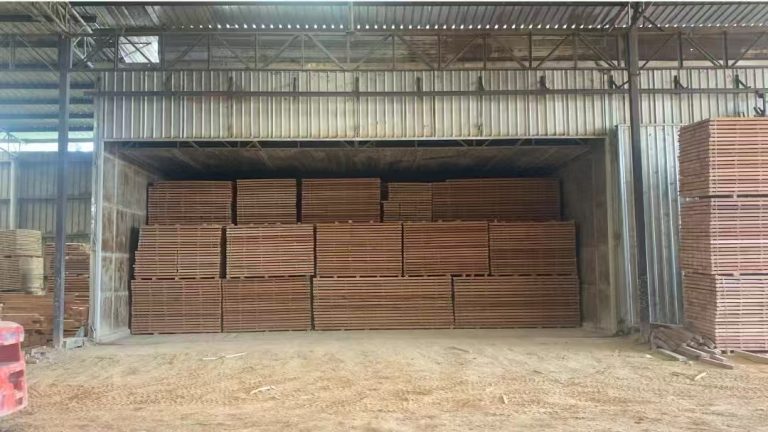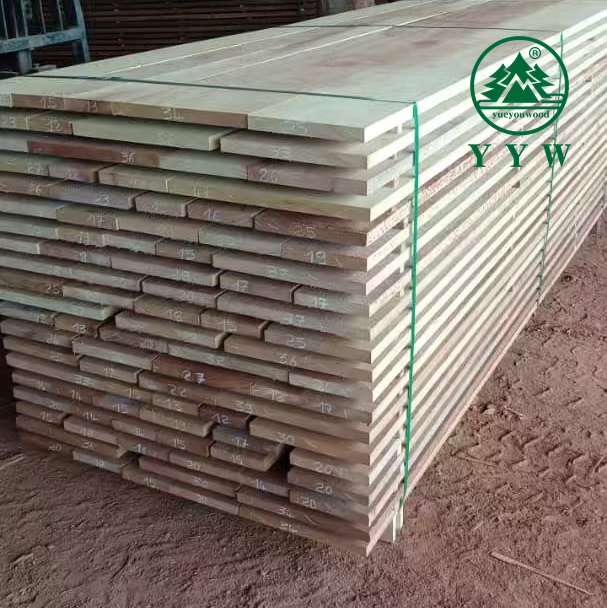
When purchasing or processing sawn timber, one common question is why wood becomes smaller after drying. Buyers may notice that timber dimensions change during the drying process, particularly in thickness and width.
This is a natural characteristic of wood. As timber loses moisture, its internal structure changes, causing it to shrink. The amount of shrinkage depends on several factors, including wood species, moisture content, grain orientation, board dimensions and drying conditions.
For timber manufacturers and importers, understanding wood shrinkage is important when selecting raw materials, confirming finished dimensions and planning further processing.
In this article, YYW Timber explains why timber shrinks during kiln drying, how moisture affects wood dimensions and what buyers should consider when purchasing dried African hardwood.
1. Why Does Timber Shrink When It Dries?
Wood is a natural material that contains moisture even after it has been cut into boards.
This moisture exists in two main forms:
- Free water: Water stored in the cavities inside wood cells.
- Bound water: Water held within the cell walls.
During the early stages of drying, wood mainly loses free water. Removing this water generally causes little direct shrinkage in the wood structure.
However, once the moisture content falls below the fibre saturation point (FSP), bound water begins to leave the cell walls. As the cell walls lose moisture, they contract, causing the timber to shrink.
The fibre saturation point is commonly estimated at around 30% moisture content for many wood species, although the actual value varies.
This explains why timber dimensions generally begin to change significantly as moisture content drops below the fibre saturation point.
2. Does Timber Shrink in Thickness, Width and Length?
Yes, but not equally in every direction.
Wood has three main anatomical directions of shrinkage:
Tangential Shrinkage
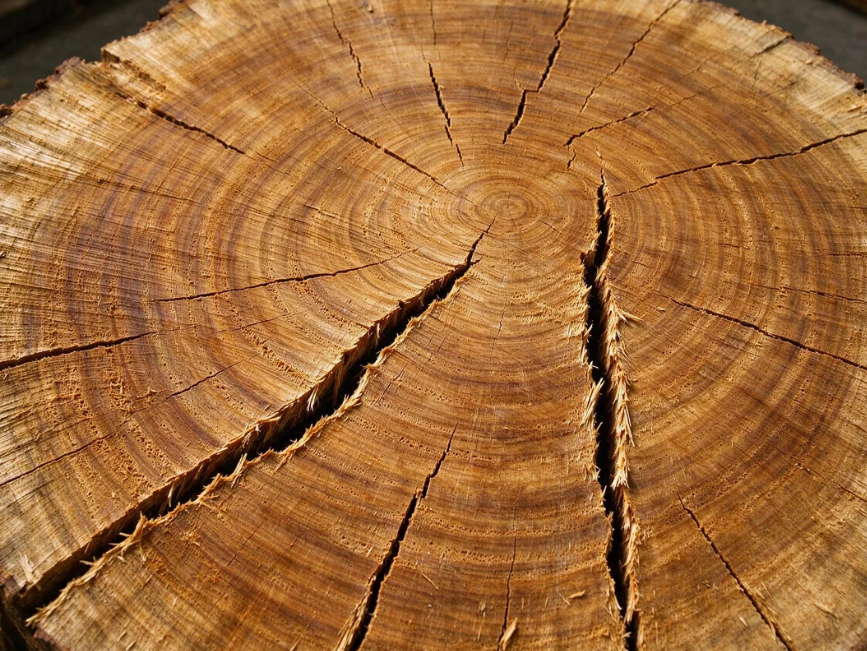
Tangential shrinkage occurs parallel to the annual growth rings. It is generally the largest type of shrinkage and is particularly relevant to flat-sawn boards.
Radial Shrinkage
Radial shrinkage occurs perpendicular to the annual growth rings, running from the centre of the tree towards the bark.
It is generally smaller than tangential shrinkage.
Longitudinal Shrinkage
Longitudinal shrinkage occurs along the grain, following the length of the tree.
For normal wood, this type of shrinkage is usually very small compared with changes across the grain.
In general, tangential shrinkage is approximately 1.5 to 2 times greater than radial shrinkage. Actual values depend on the species and individual piece of timber.
This is why a board may lose more width than length during drying.
3. Why Does Timber Width Change More Than Length?
The main reason is the natural structure of wood.
Wood cells are arranged mainly along the length of the tree. Their structure and arrangement mean that dimensional changes across the grain are generally much greater than changes along the grain.
For example, when a wide board dries, its width may decrease noticeably, while its length remains relatively stable.
This is particularly important for buyers ordering African hardwood sawn timber in specific widths.
If a manufacturer requires a finished width of 200 mm, purchasing green timber at exactly 200 mm may not provide sufficient allowance for drying and subsequent machining.
Buyers should therefore consider the drying process and required machining allowance when confirming their initial dimensions.
4. What Factors Affect Timber Shrinkage?
Not all timber shrinks at the same rate. Several factors influence the amount of dimensional change.
Wood Species
Different species have different cellular structures, densities and shrinkage characteristics.
For example, Okoume, Iroko, Sapelli and other African hardwoods do not necessarily respond to drying in the same way.
A drying schedule suitable for one species should not automatically be applied to another.
Initial and Final Moisture Content
The greater the moisture loss below the fibre saturation point, the greater the potential shrinkage.
For example, timber dried from a moisture content of 25% to 10% will generally experience more shrinkage than timber dried from 15% to 10%, assuming comparable material and conditions.
Board Thickness and Width
Thicker boards usually require more time for moisture to move from the centre towards the surface.
Wide boards can also experience greater visible distortion when shrinkage occurs unevenly.
Grain Orientation
The way a board is sawn from the log influences how it responds to moisture changes.
Flat-sawn and quarter-sawn boards have different growth-ring orientations, which affect the direction and amount of shrinkage.
Drying Conditions
Temperature, relative humidity, airflow and drying speed all influence the drying process.
If the surface dries too quickly while the core remains wet, moisture gradients and internal stresses can develop.
Properly controlled kiln drying helps reduce these risks.
5. Can Improper Kiln Drying Cause Cracks and Warping?
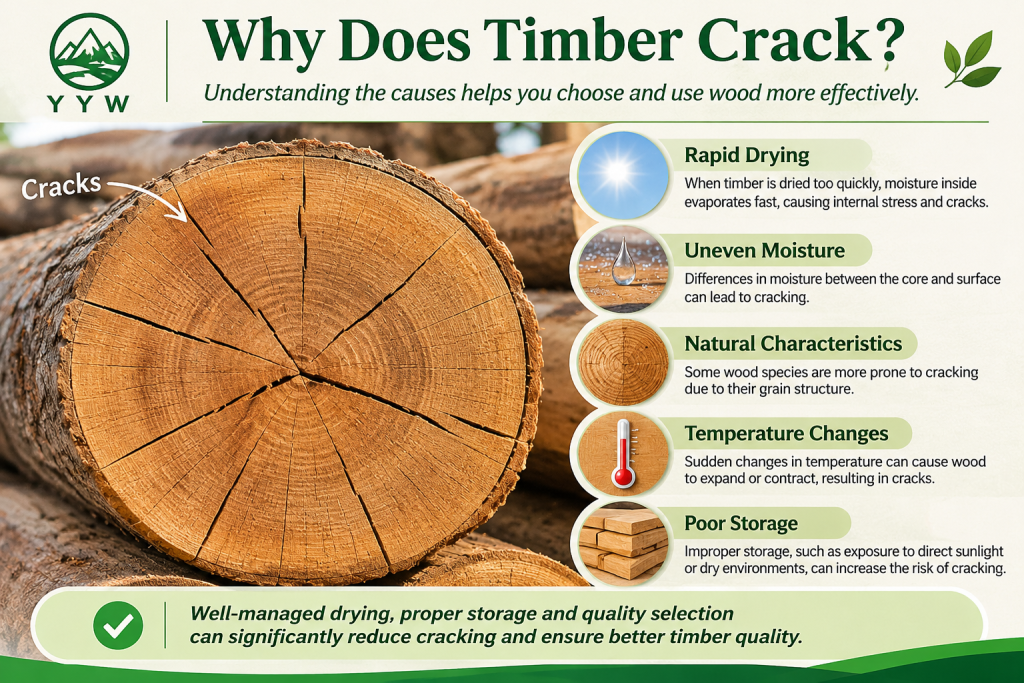
Yes. Uneven moisture loss can create stresses inside the timber and lead to several drying defects.
Common defects include:
| Drying Defect | Description |
|---|---|
| Surface checking | Small cracks that develop on the timber surface |
| End checking | Cracks that appear at the ends of boards |
| Warping | Changes in the original shape of the board |
| Bow | Curvature along the length of a board on its face |
| Crook | Curvature along the length of a board on its edge |
| Cup | Curvature across the width of a board |
| Twist | A spiral distortion along the length |
| Honeycomb checking | Internal cracks that may not be visible from the outside |
One important cause is the difference in moisture content between the surface and the core.
During early drying, the outer layer loses moisture and begins to shrink while the inner section remains wetter. The wet core restrains the surface, creating drying stresses.
If these stresses become excessive, cracks and other defects may develop.
A suitable drying schedule, correct stacking and regular moisture monitoring help reduce the risk of these problems.
6. Does Kiln Drying Make Timber Dimensions Smaller?
Kiln drying can reduce timber dimensions, but the actual amount depends on the initial moisture content, final moisture content, species and grain orientation.
Consider a simple example:
A timber board has an initial width of 200 mm. During drying, it loses moisture below the fibre saturation point.
If the board experiences 2% width shrinkage, its final width becomes:
200 mm × (1 − 2%) = 196 mm
This is only an illustrative calculation, not a fixed shrinkage rate for any particular African hardwood.
The actual dimensional change should be determined from species-specific shrinkage characteristics and the moisture conditions involved.
For timber buyers, this means that ordering dimensions should account for the required final size after drying and machining.
7. How Can Buyers Reduce Problems Caused by Timber Shrinkage?
Although shrinkage is a natural process, buyers and manufacturers can take practical steps to manage it.
Choose the Appropriate Moisture Content
The target moisture content should suit the final application and destination environment.
Confirm Dimensions Before Production
Clearly specify whether the dimensions refer to rough-sawn, dried or finished timber. This helps avoid misunderstandings between suppliers and buyers.
Use Suitable Drying Schedules
Different species and thicknesses require different drying conditions. Controlled drying helps reduce uneven moisture loss and drying defects.
Inspect Timber After Drying
Check the boards for cracks, excessive warping and other defects. Moisture content alone does not determine the overall quality of dried timber.
Store Timber Properly
After drying, timber should be protected from rain, ground moisture and unsuitable storage conditions. Exposure to humid air can cause the wood to absorb moisture again.
8. Understanding Timber Drying at YYW Timber
At YYW Timber, we understand that timber drying is an important part of supplying African hardwood sawn timber for international markets.
Different species have different drying characteristics, and buyers may have specific requirements for thickness, width, length and moisture content.
Whether you are sourcing Okoume, Iroko, Sapelli, Tiama or other African hardwoods, it is important to confirm the required dimensions and moisture specifications before production and shipment.
We welcome enquiries from timber importers, wholesalers, distributors and woodworking manufacturers looking for African hardwood sawn timber.
Need African hardwood sawn timber with specific dimensions and moisture requirements?
Contact YYW Timber to discuss your purchasing specifications.
Website: www.yywtimber.com